
When clients come to us for custom drapery, they usually start with fabric and color. That makes sense, since those are the fun parts. But one decision shapes how your drapery looks, hangs and works every day more than almost any other: the heading style.
The heading is the top of the panel, where the fabric meets the hardware. It sets how the folds fall, how much fabric the panel needs, how easily it opens and closes, and whether the room reads as tailored, traditional or relaxed. Choose it well and even a simple fabric looks finished. Choose it poorly and an expensive fabric can look flat.
Here's a plain-language guide to the most common styles and how to pick the right one for your space.
The main drapery styles, explained
Our consultation style library shows more than 20 heading styles. These are the ones clients ask about most.
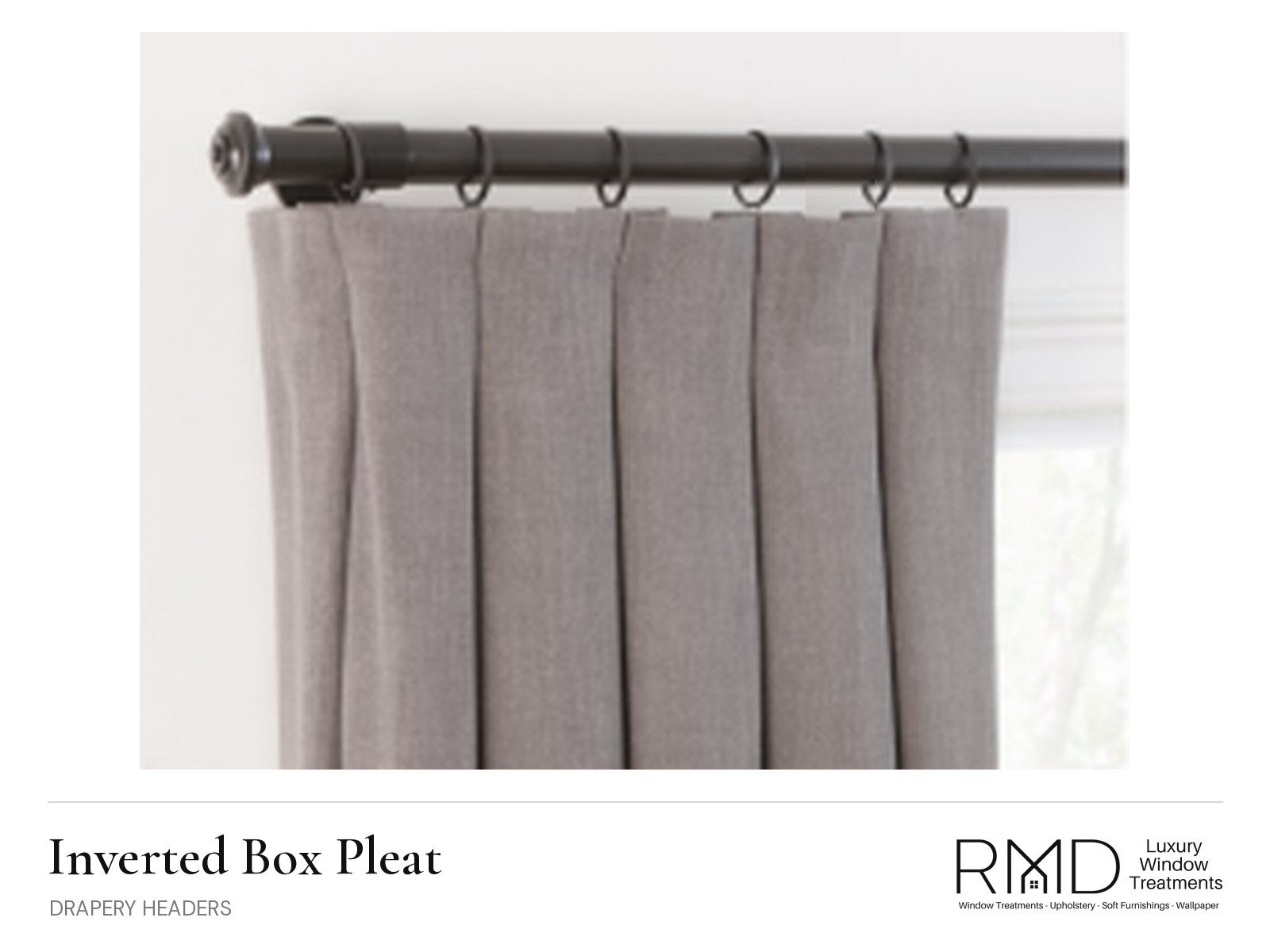
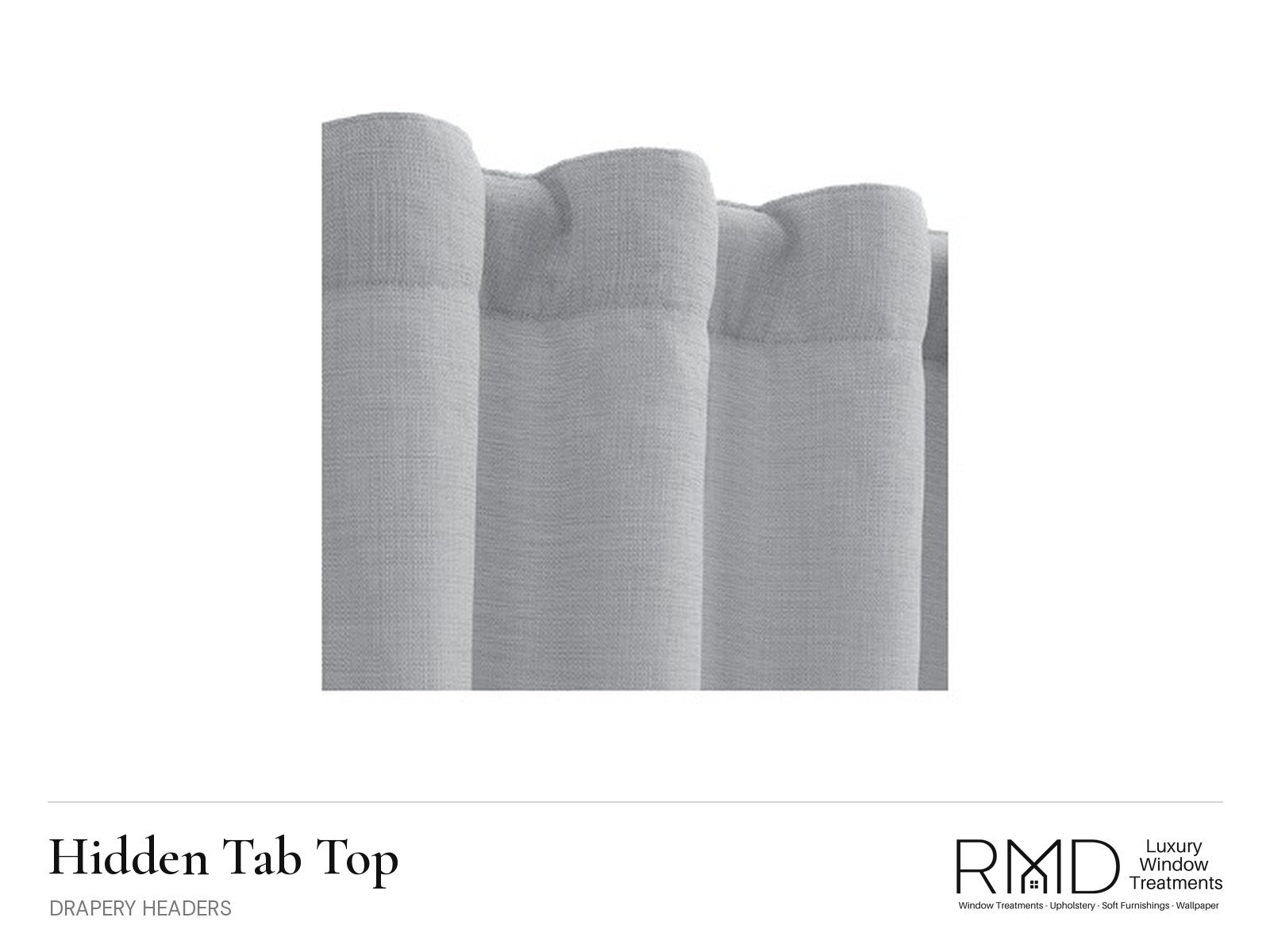
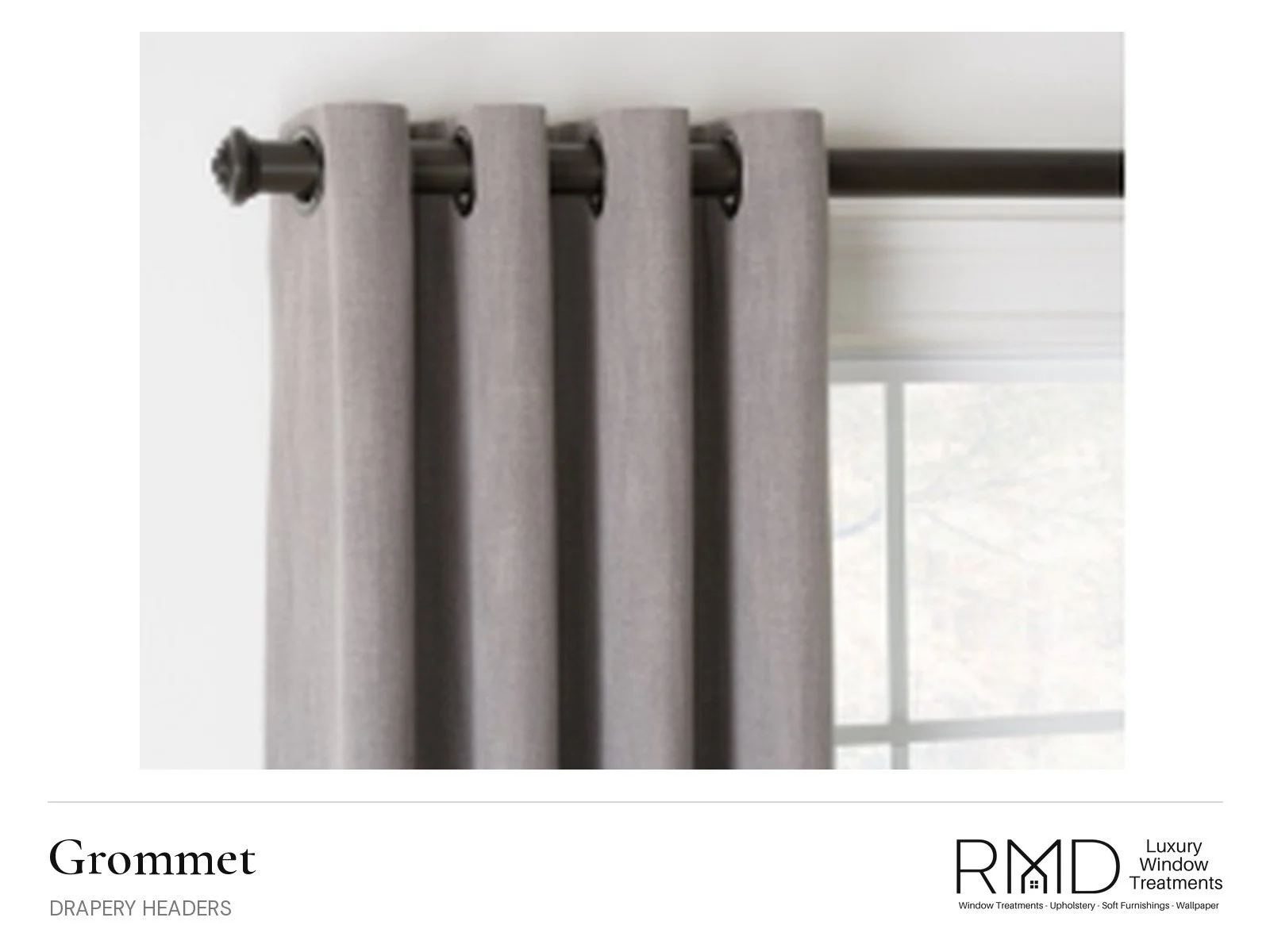
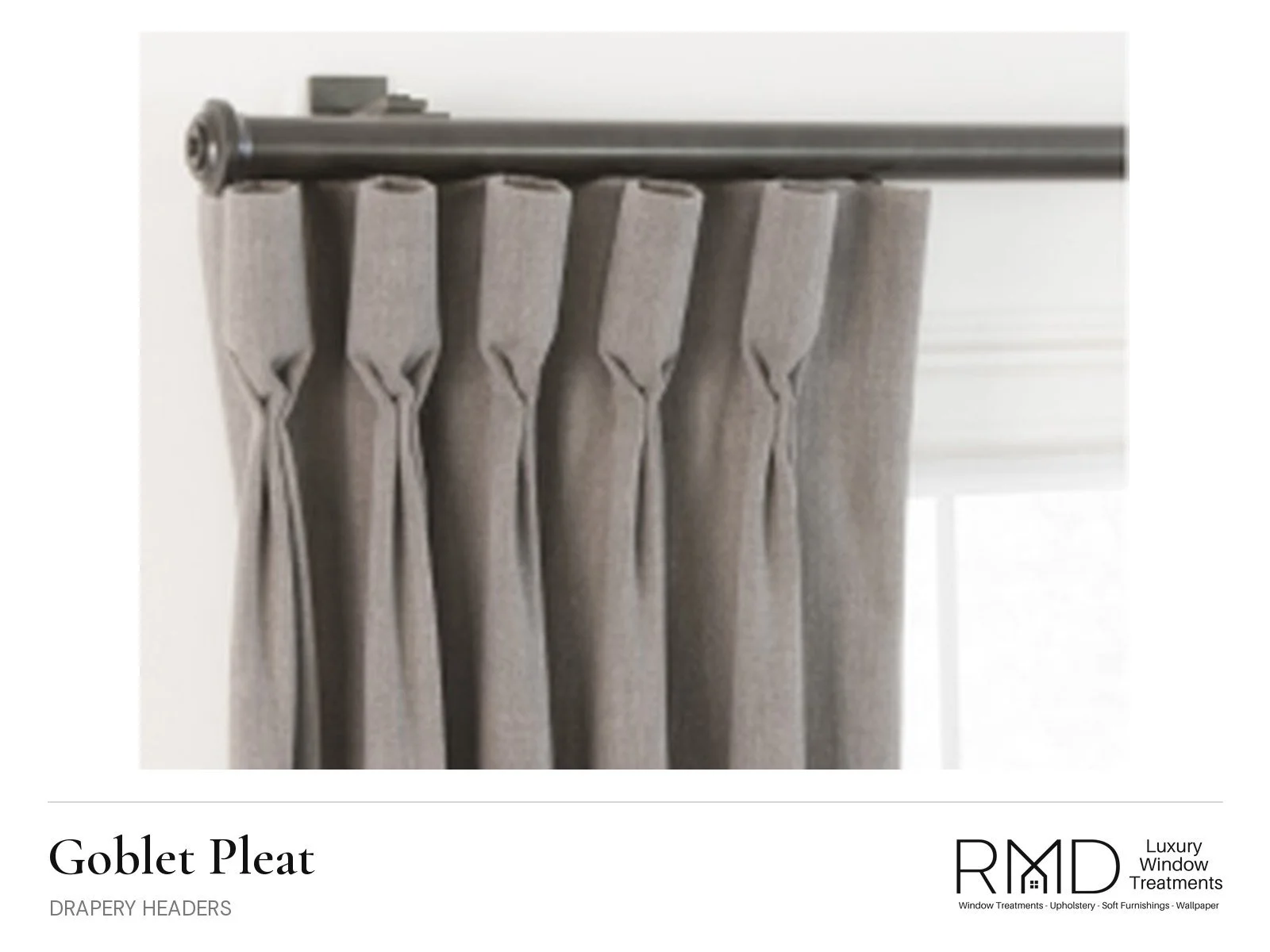
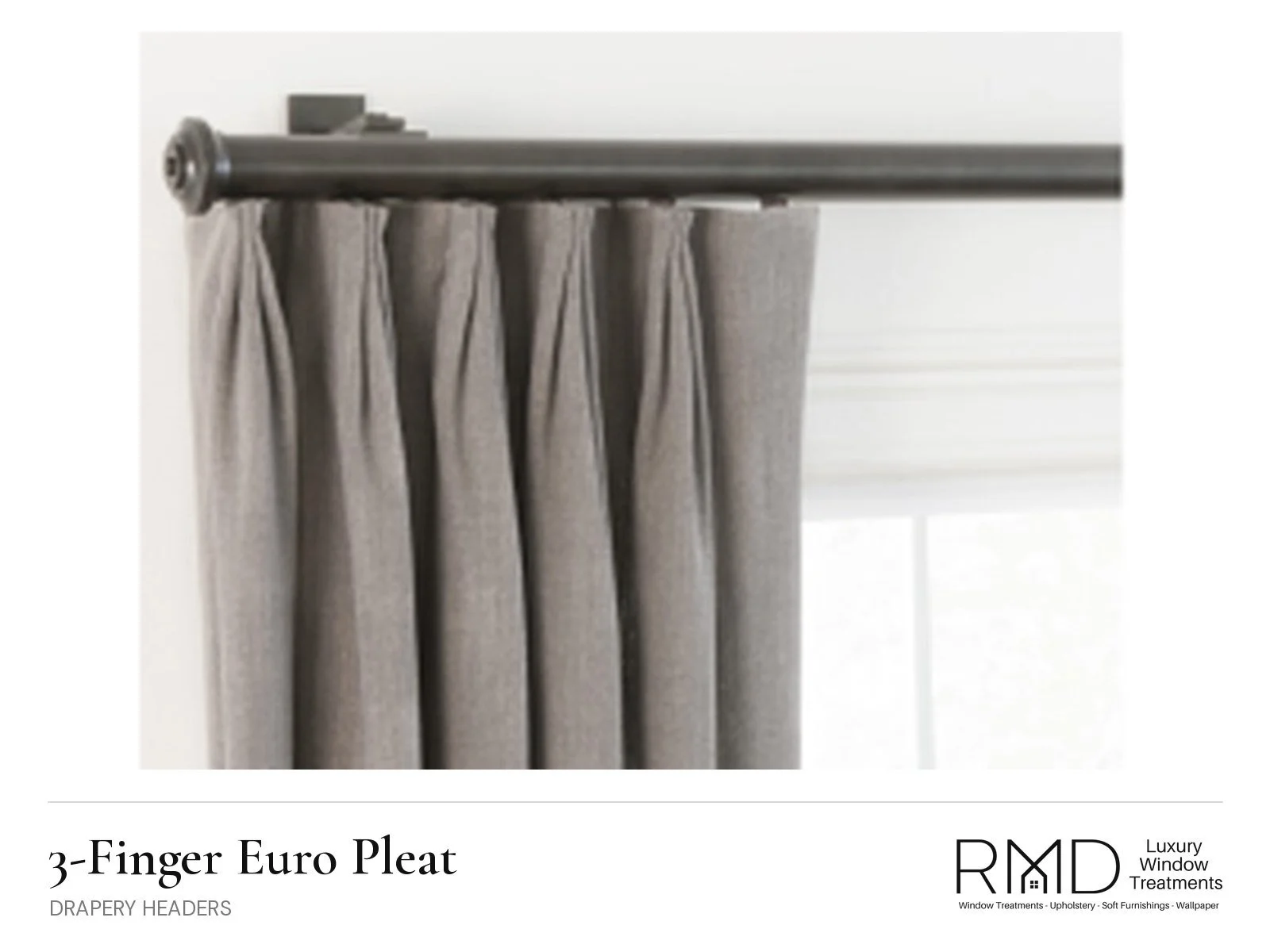
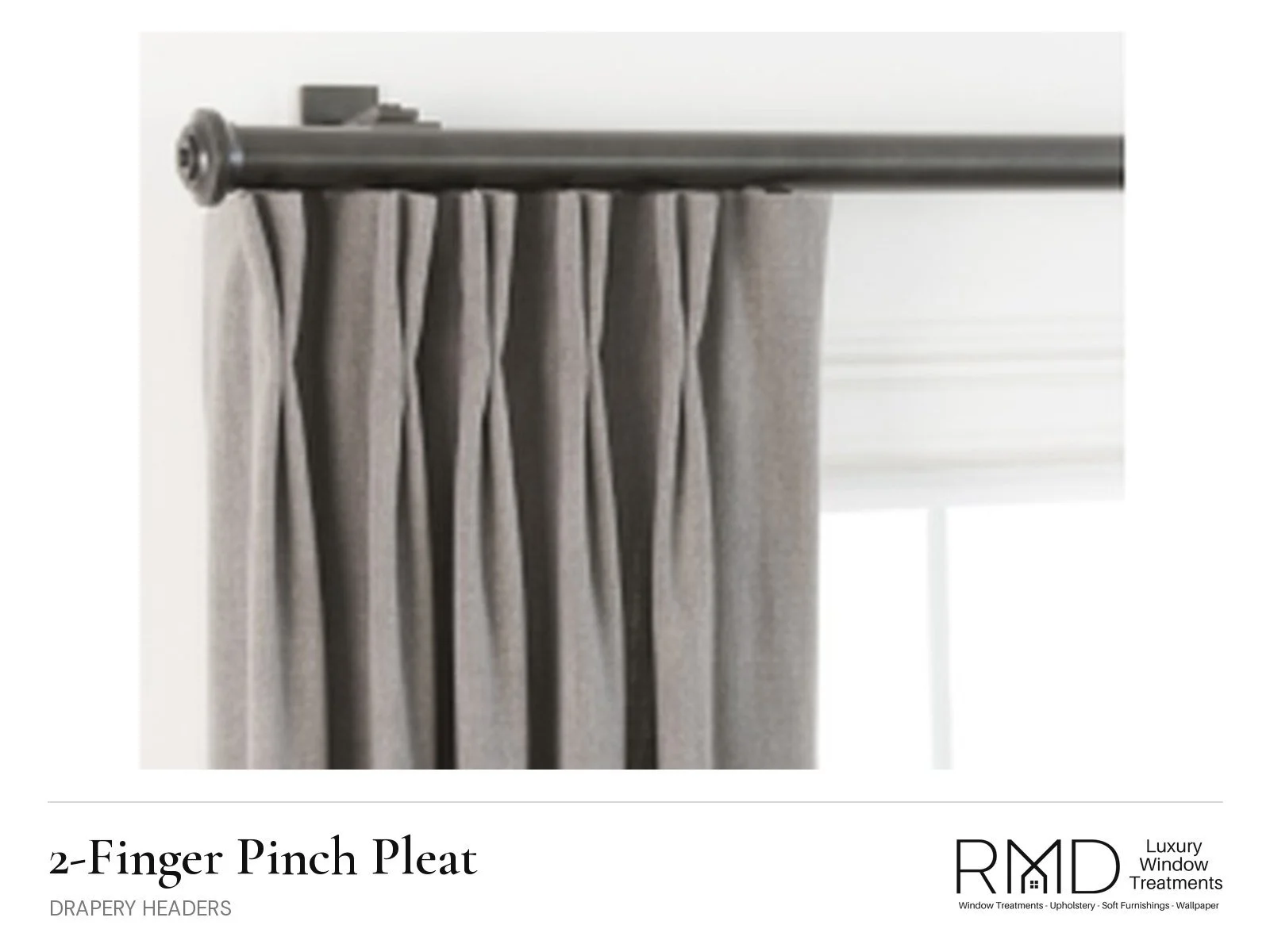
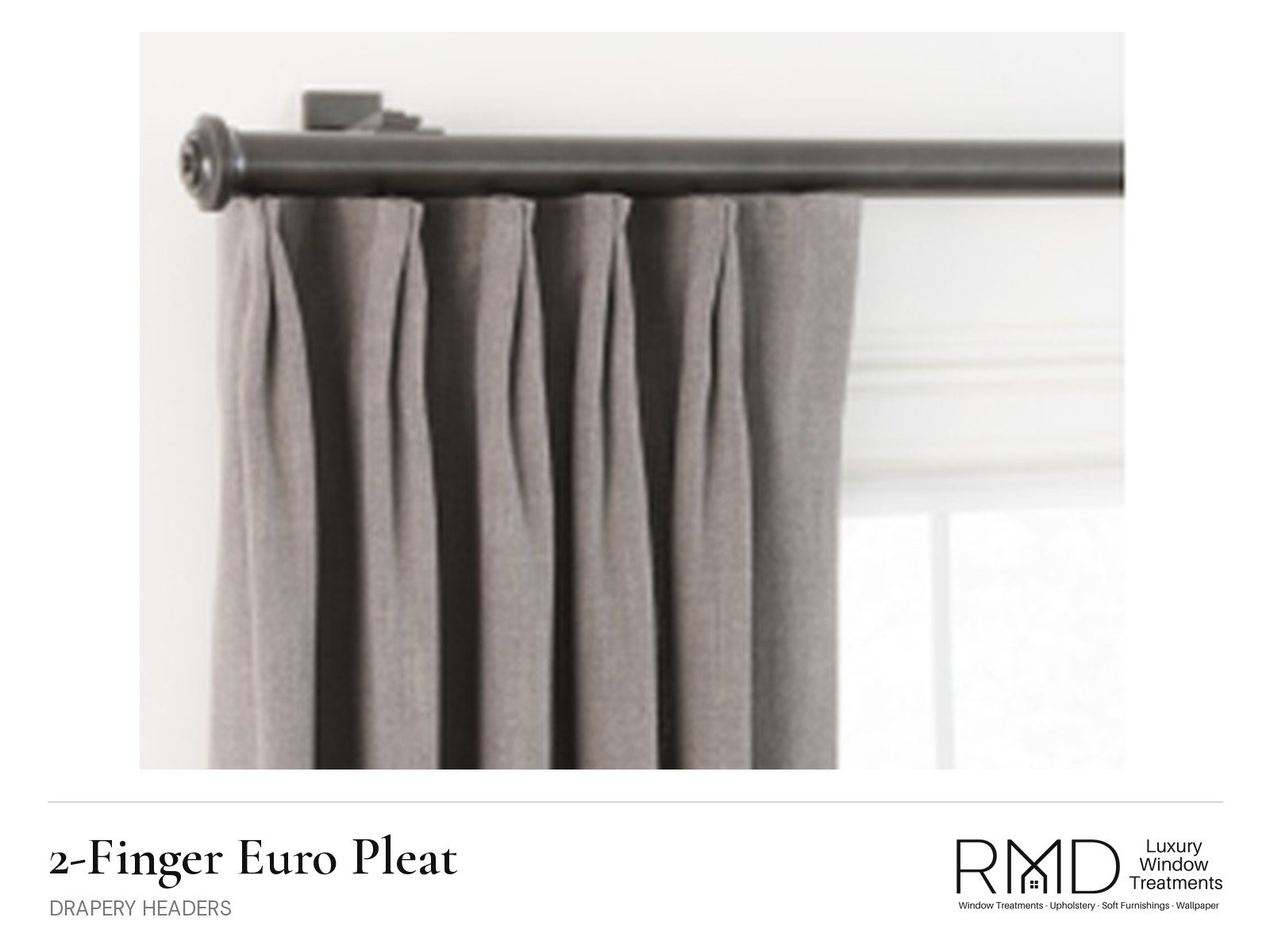
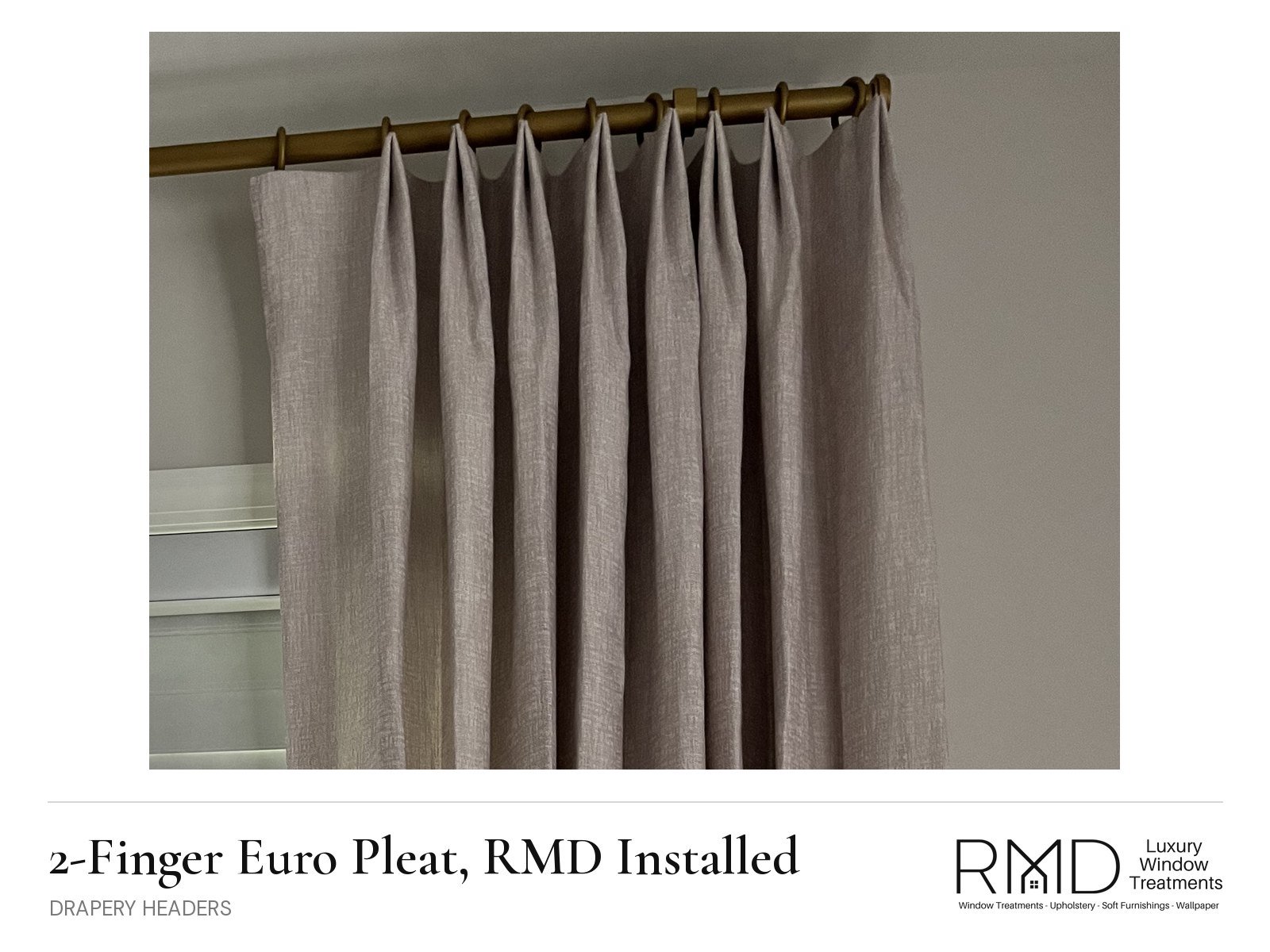
Ripplefold
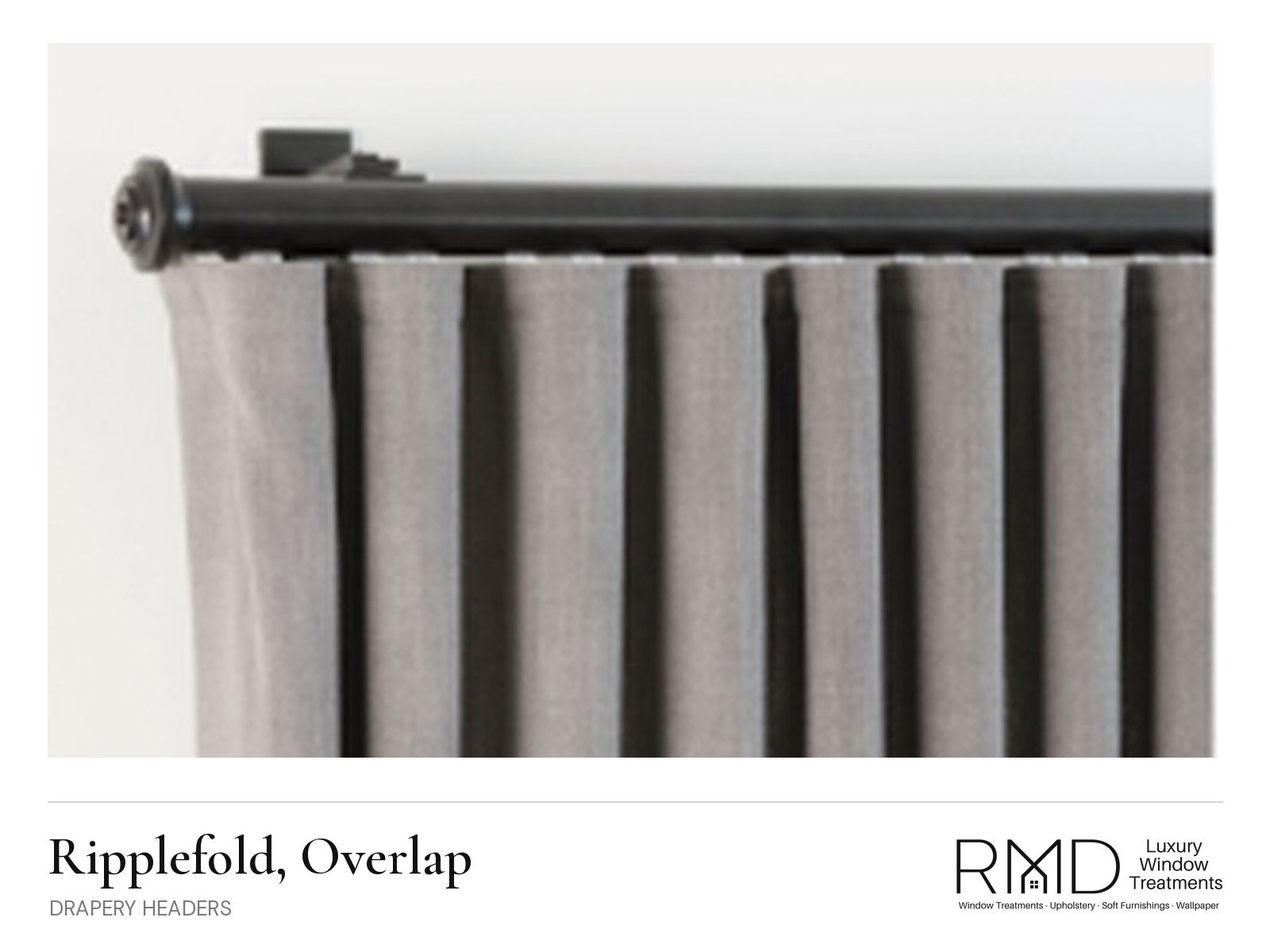
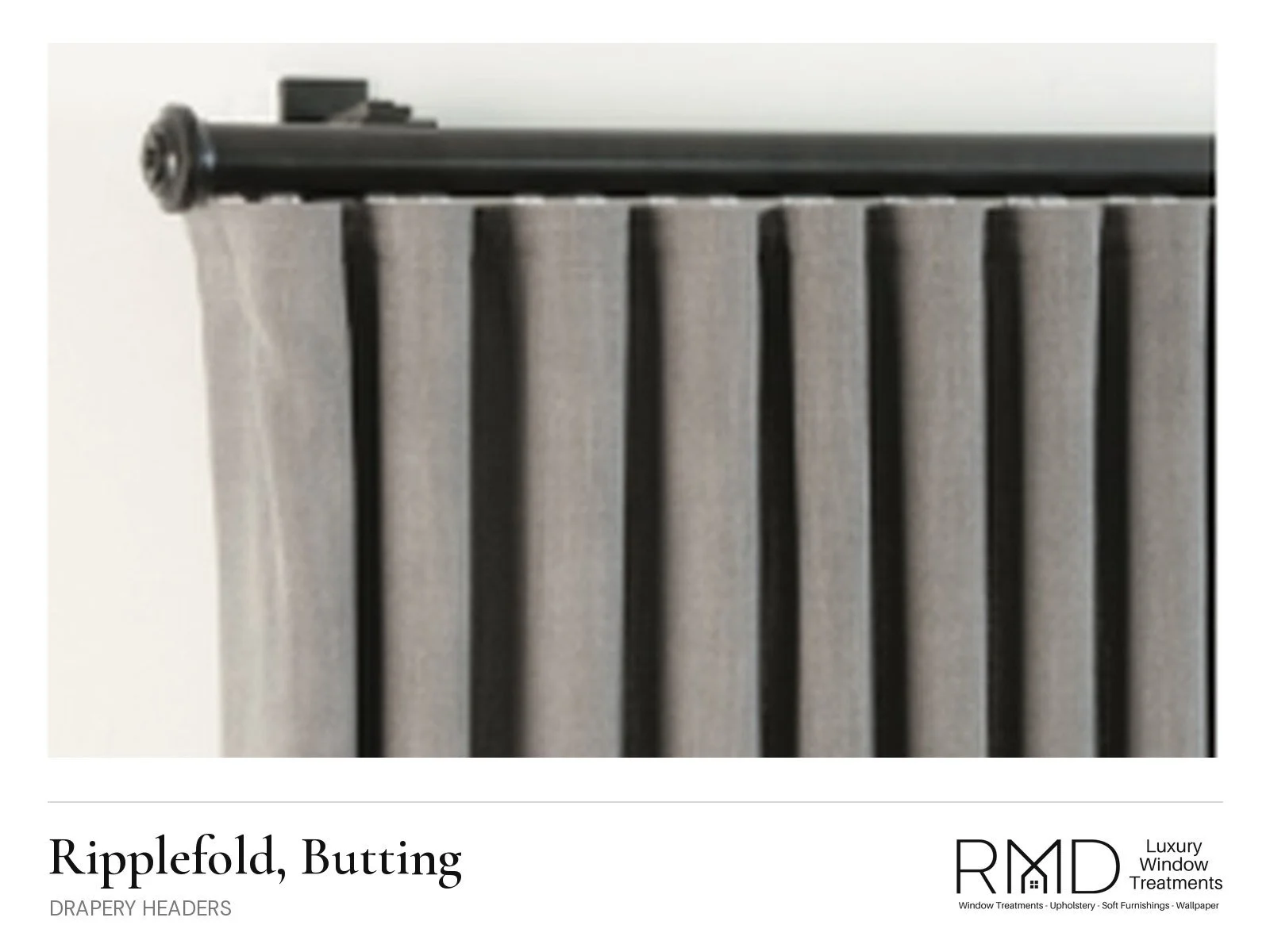
Ripplefold drapery hangs from carriers that snap onto a track, so the fabric falls in soft, even S-shaped waves from top to bottom. The look is clean, modern and very consistent. We build ripplefold at 60% to 120% fullness: lower fullness gives a flatter, more minimal wave, and higher fullness gives deeper, richer folds.
At the center of a pair, ripplefold can be butting, where the two panels meet edge to edge, or overlap, where one panel crosses in front of the other to close the gap and block more light. Ripplefold glides smoothly and stacks back neatly. That makes it a favorite for wide windows, sliding doors and motorized systems.
Pinch pleat
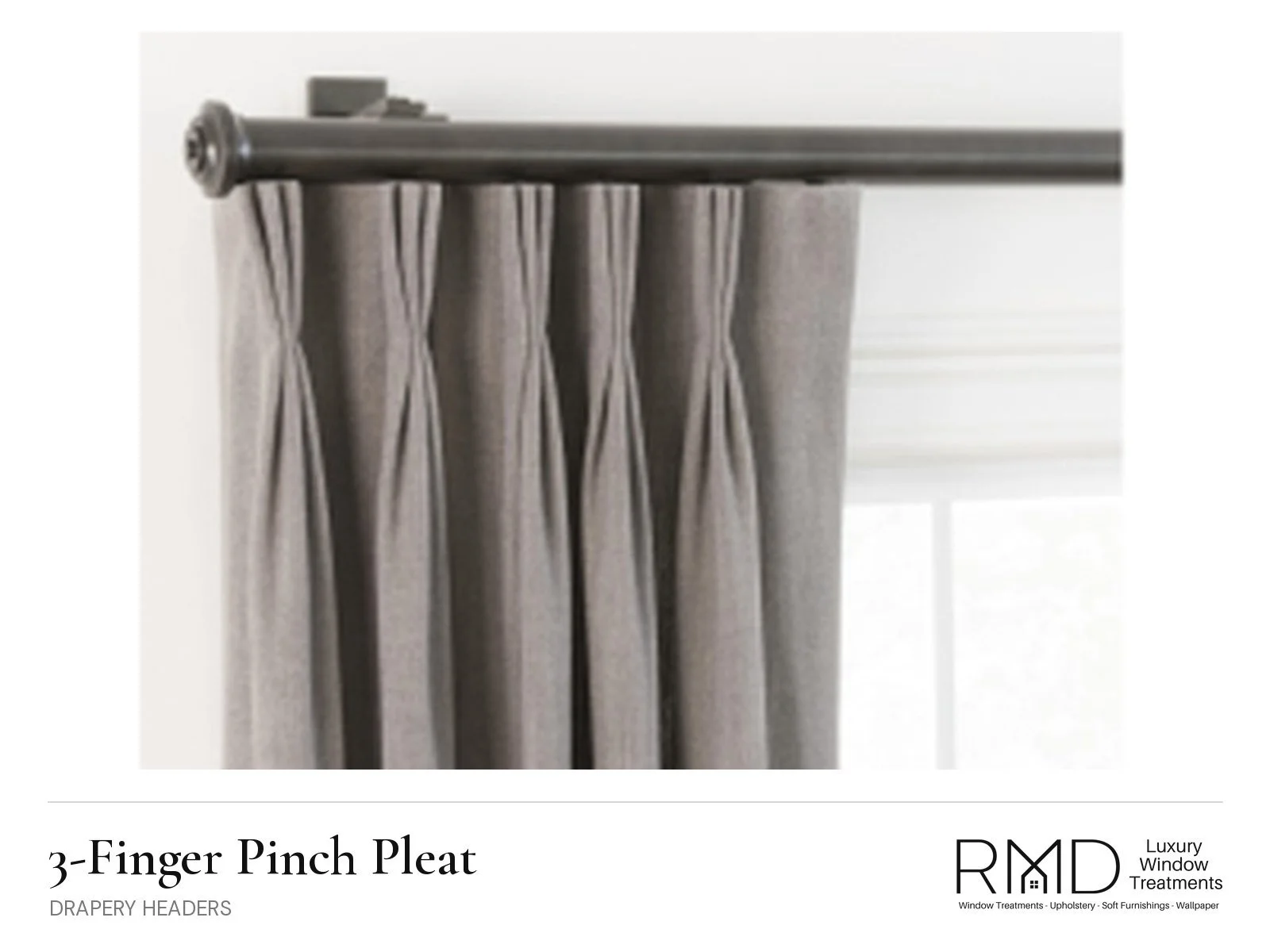
Pinch pleat is the classic tailored drapery. Fabric is gathered into groups of pleats stitched together at the top and spaced evenly across the panel. A 2-finger pinch pleat is crisp and a little more modern. A 3-finger pinch pleat is fuller and more traditional. Pleated drapery is typically built at 2 to 2½ times the width it covers, which gives it structured, upright fullness on a decorative rod with rings or a traverse rod.
Euro pleat
A Euro pleat is tacked at the very top only, so the folds open out freely below. It reads tailored but softer and more contemporary than a pinch pleat, and it comes in 2-finger and 3-finger versions. It's one of our favorite headings for transitional rooms.
Goblet pleat
Goblet pleats are rounded at the top like the bowl of a wine glass and filled to hold their shape. They're formal and dramatic, and they look best on stationary panels in rooms with taller ceilings, such as dining rooms, entries and primary bedrooms.
Box, inverted box and relaxed box pleats
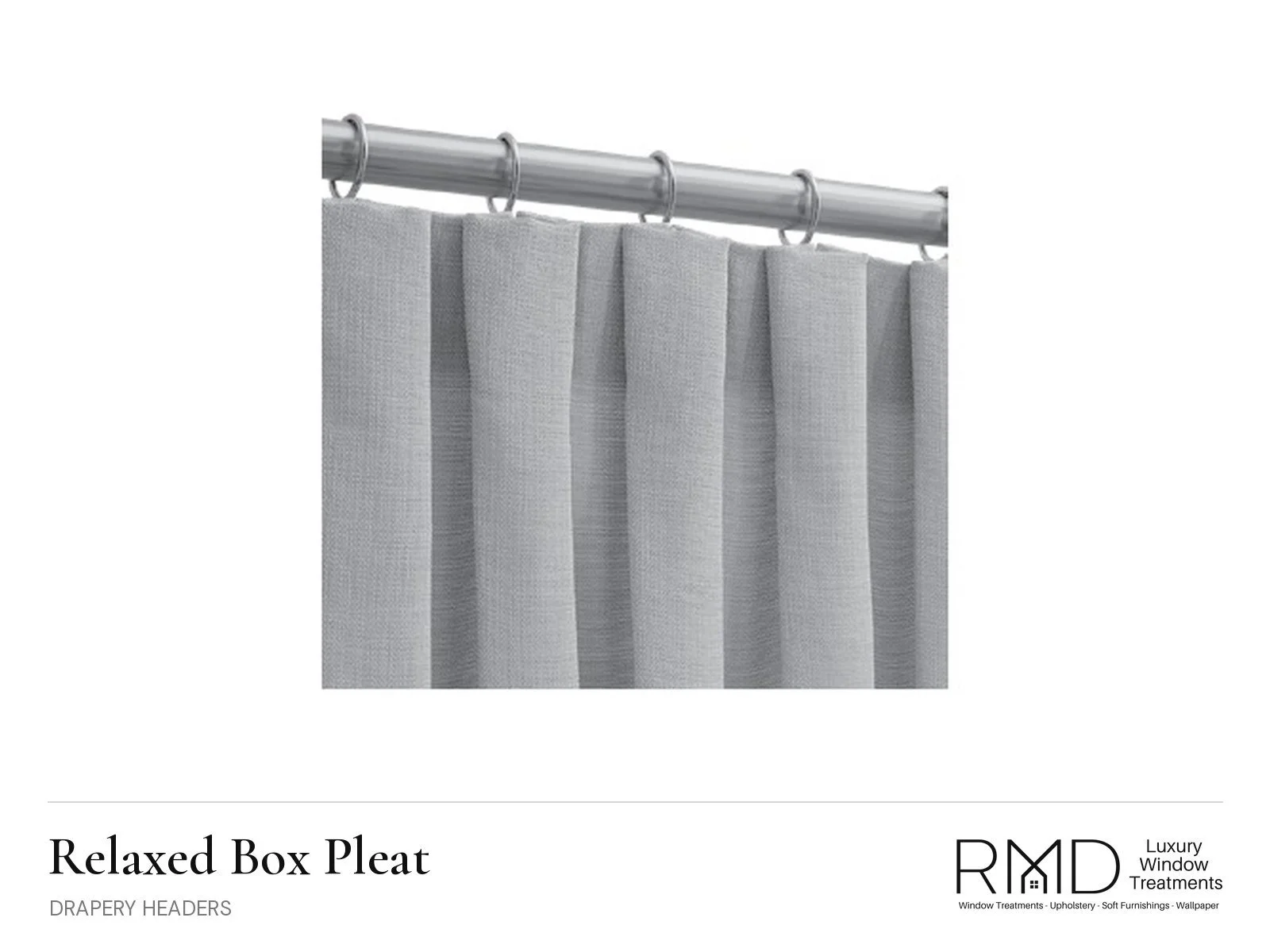
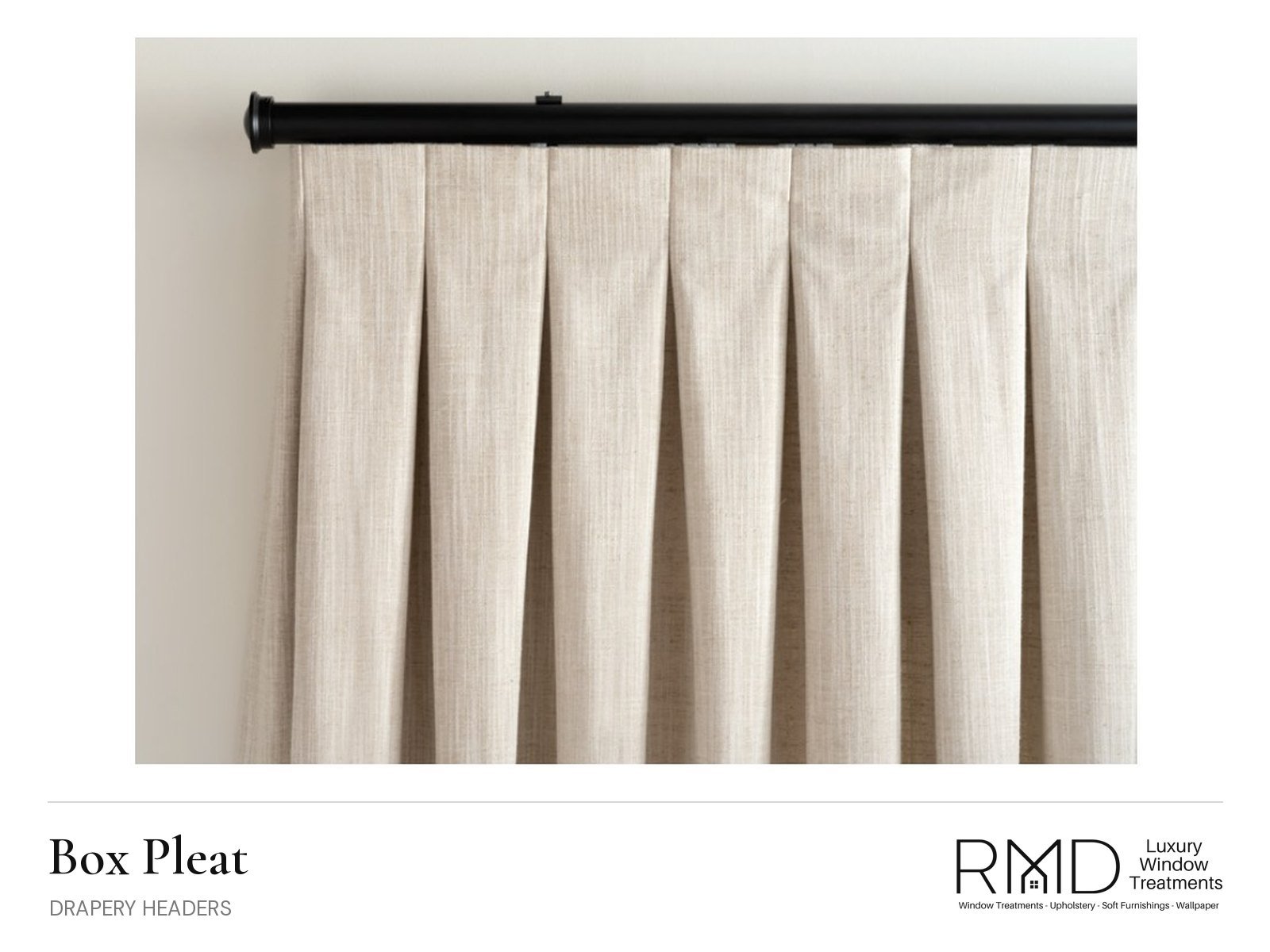
Box pleats fold the fabric into flat, evenly spaced boxes across the top. An inverted box pleat turns those folds to the back for a smooth, tailored face. A relaxed box pleat lets the folds soften below the header. All three suit stationary panels and board-mounted drapery.
Specialty pleats
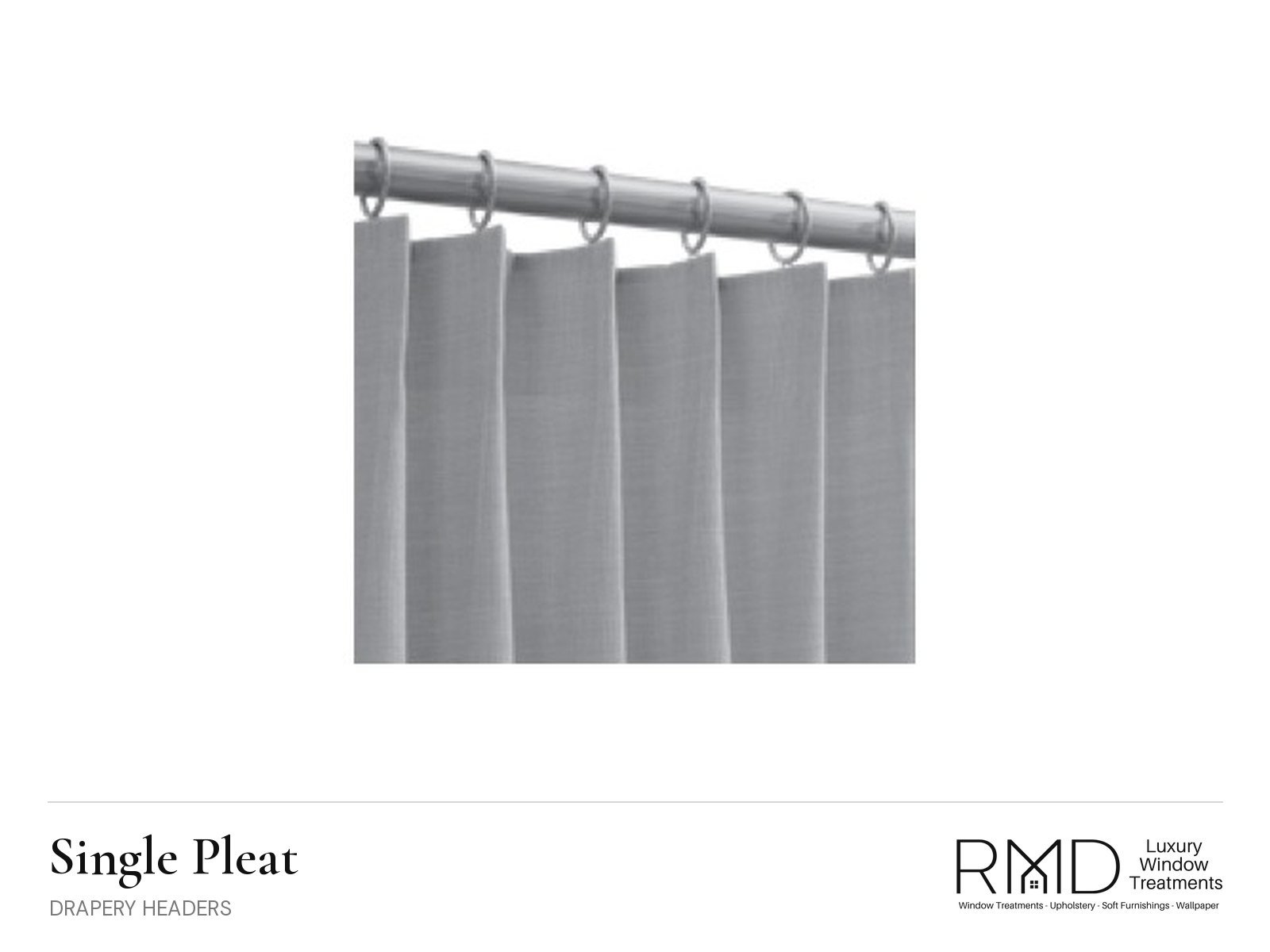
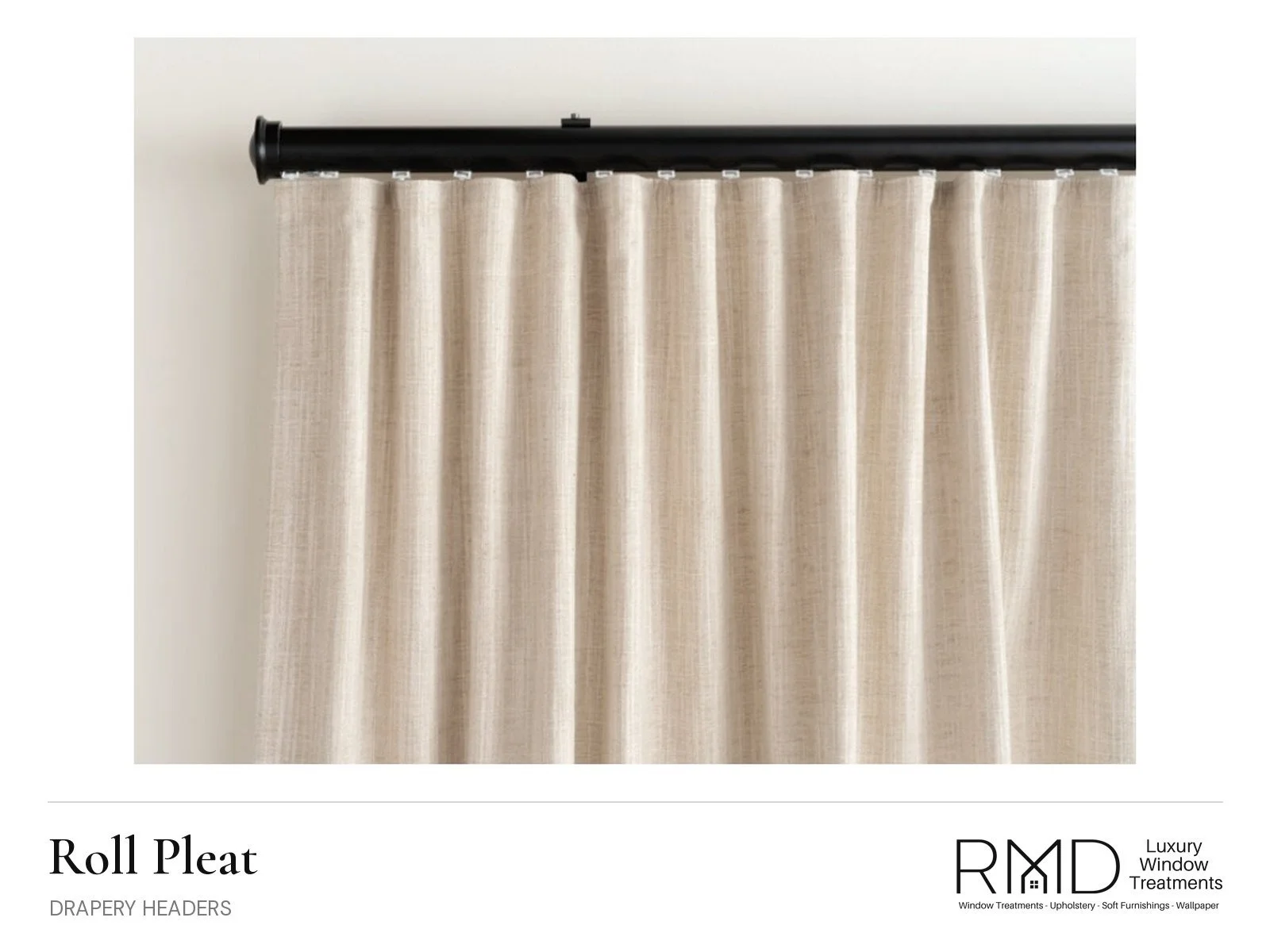
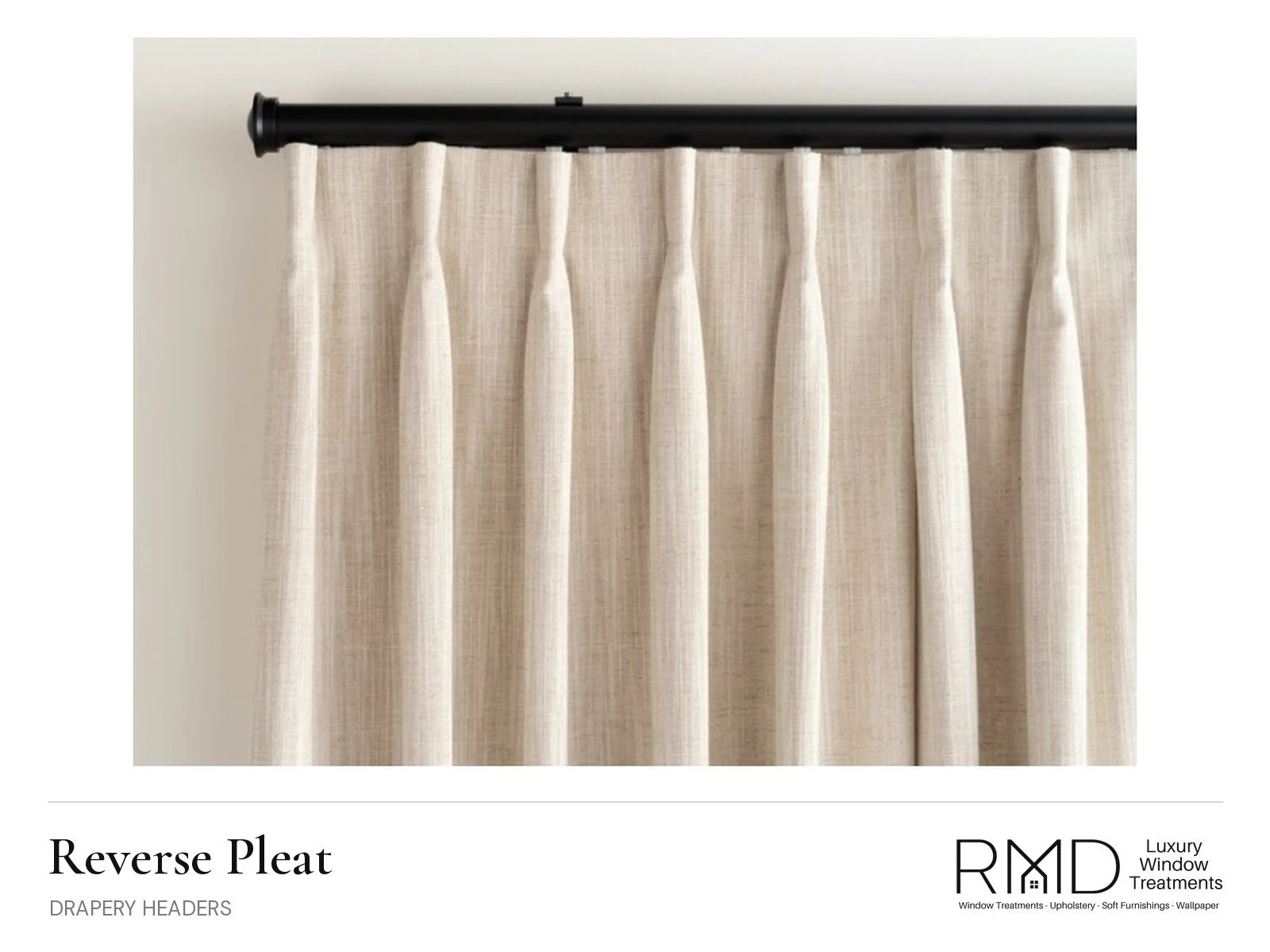
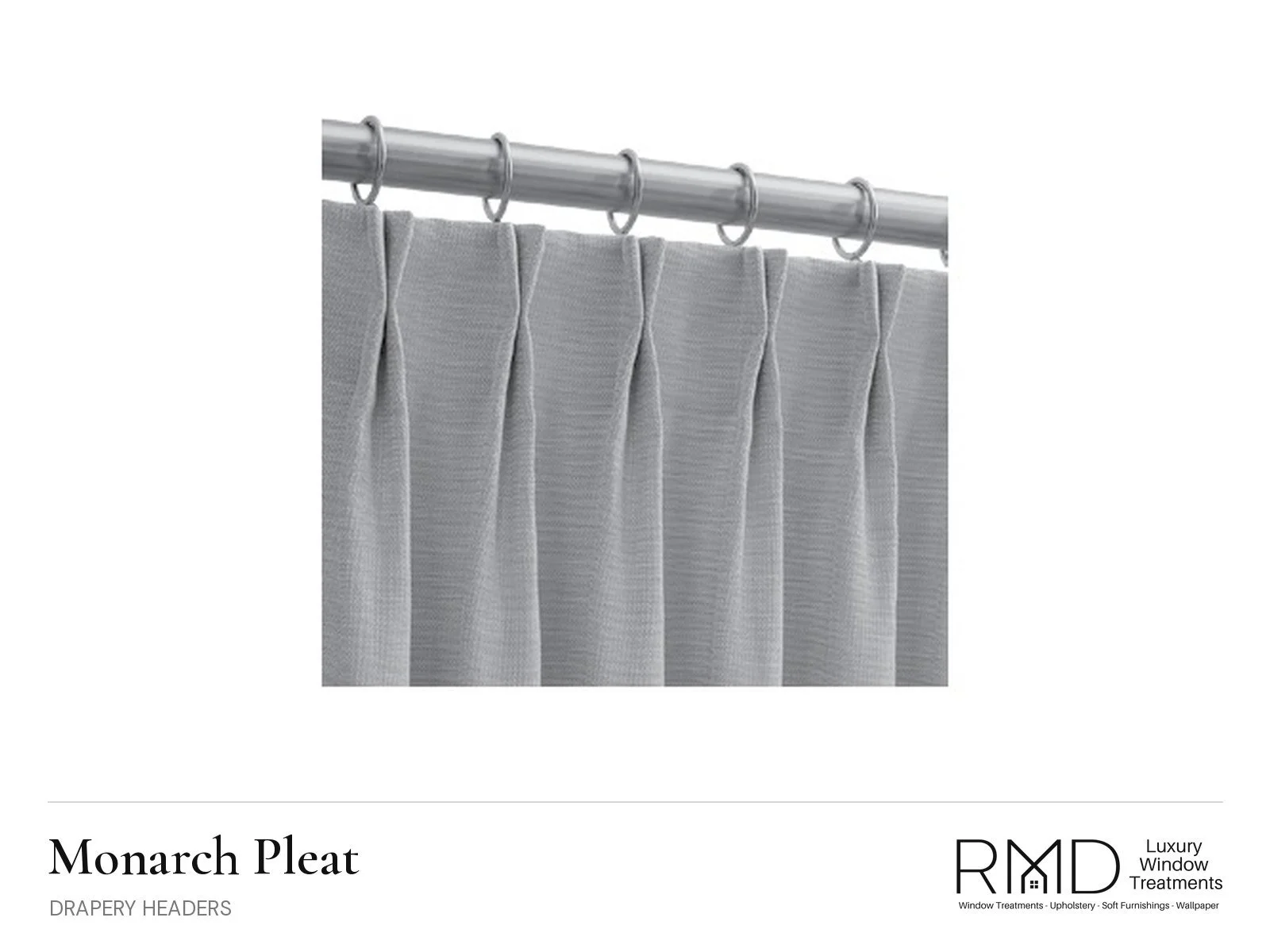
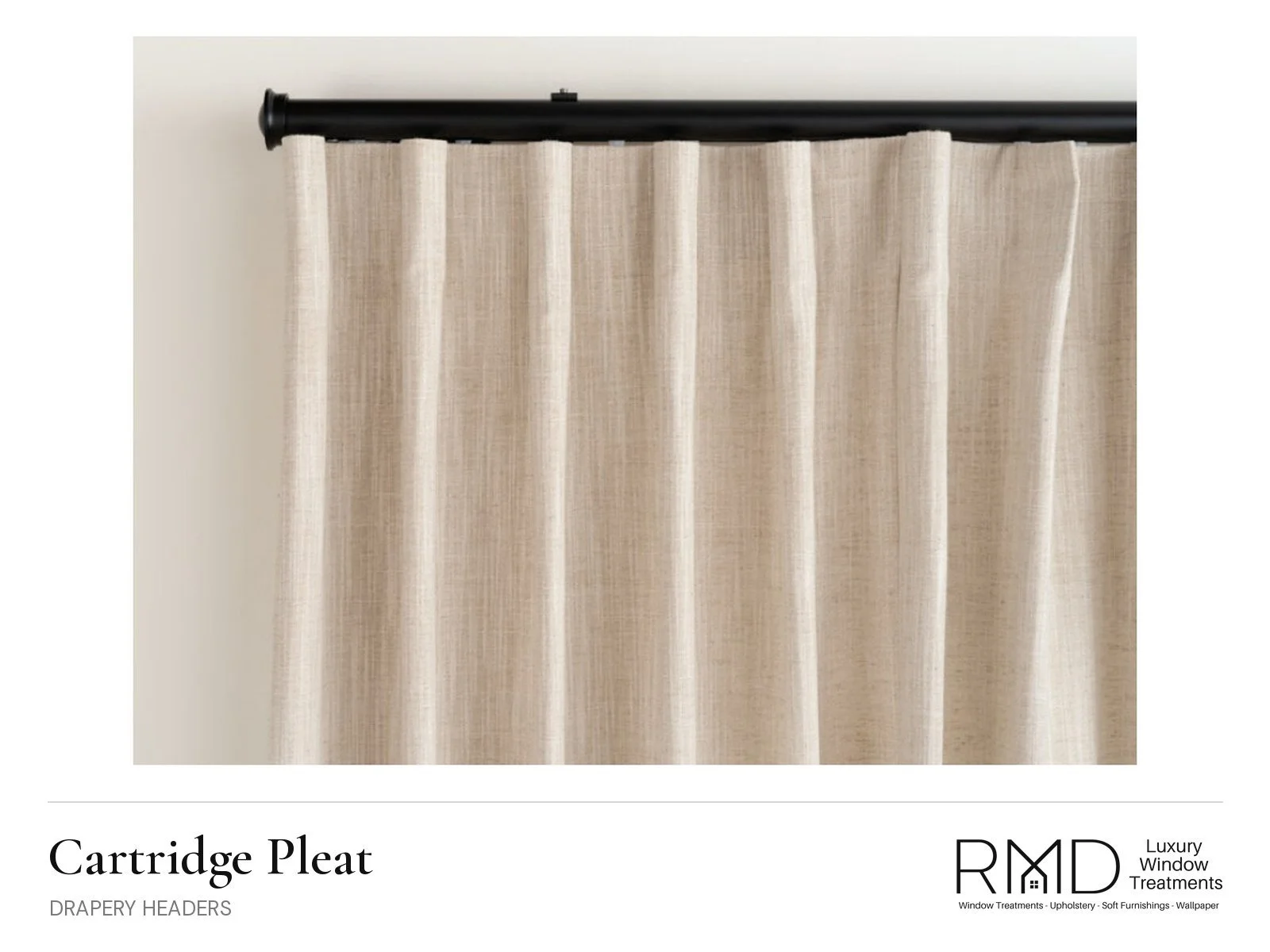
For something distinctive, we also make cartridge pleats (rounded tubes), roll pleats, reverse pleats, monarch pleats and single pleats. Each gives the top of the panel its own rhythm, and we're happy to show samples in person.
Casual headings
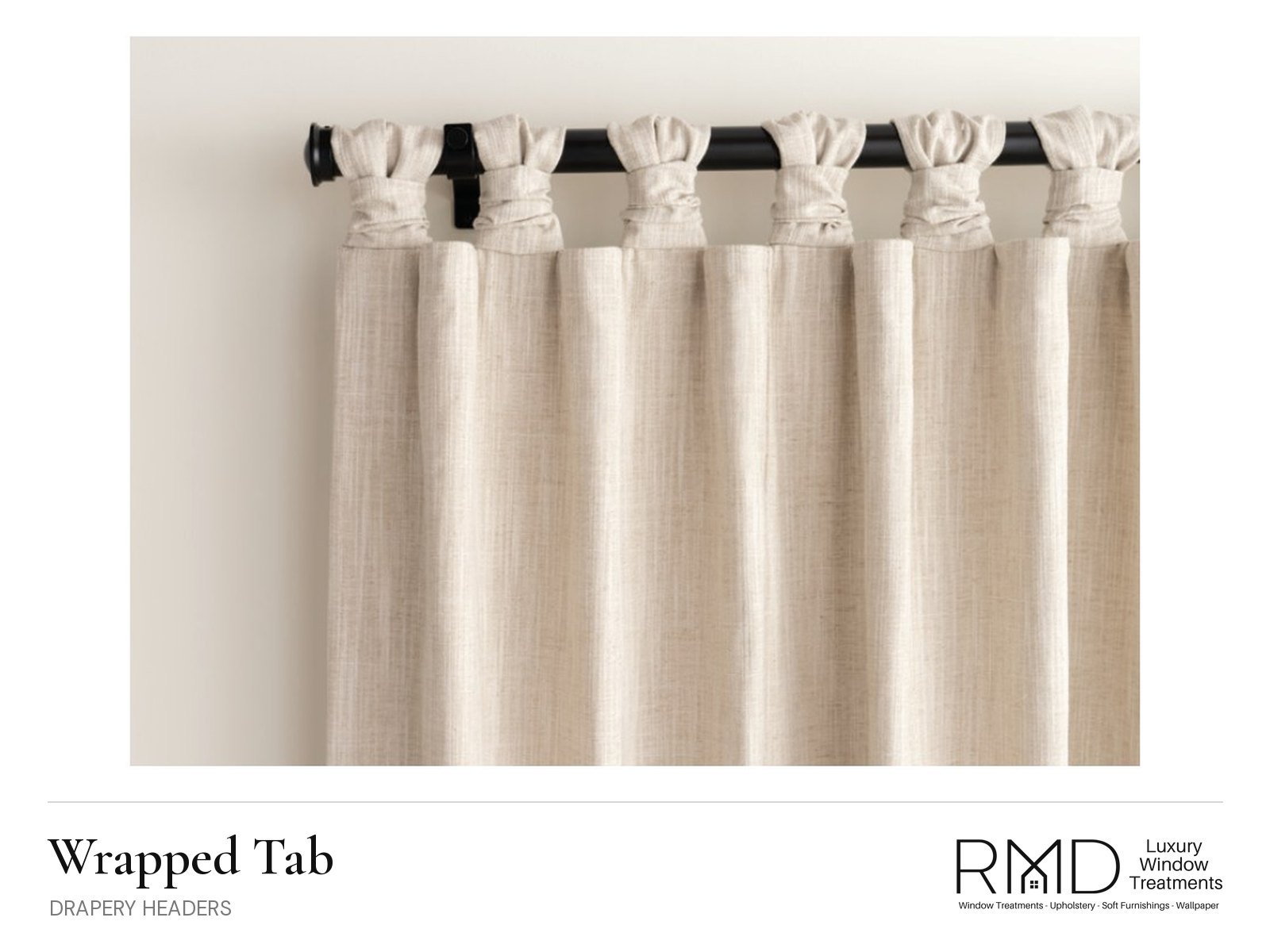
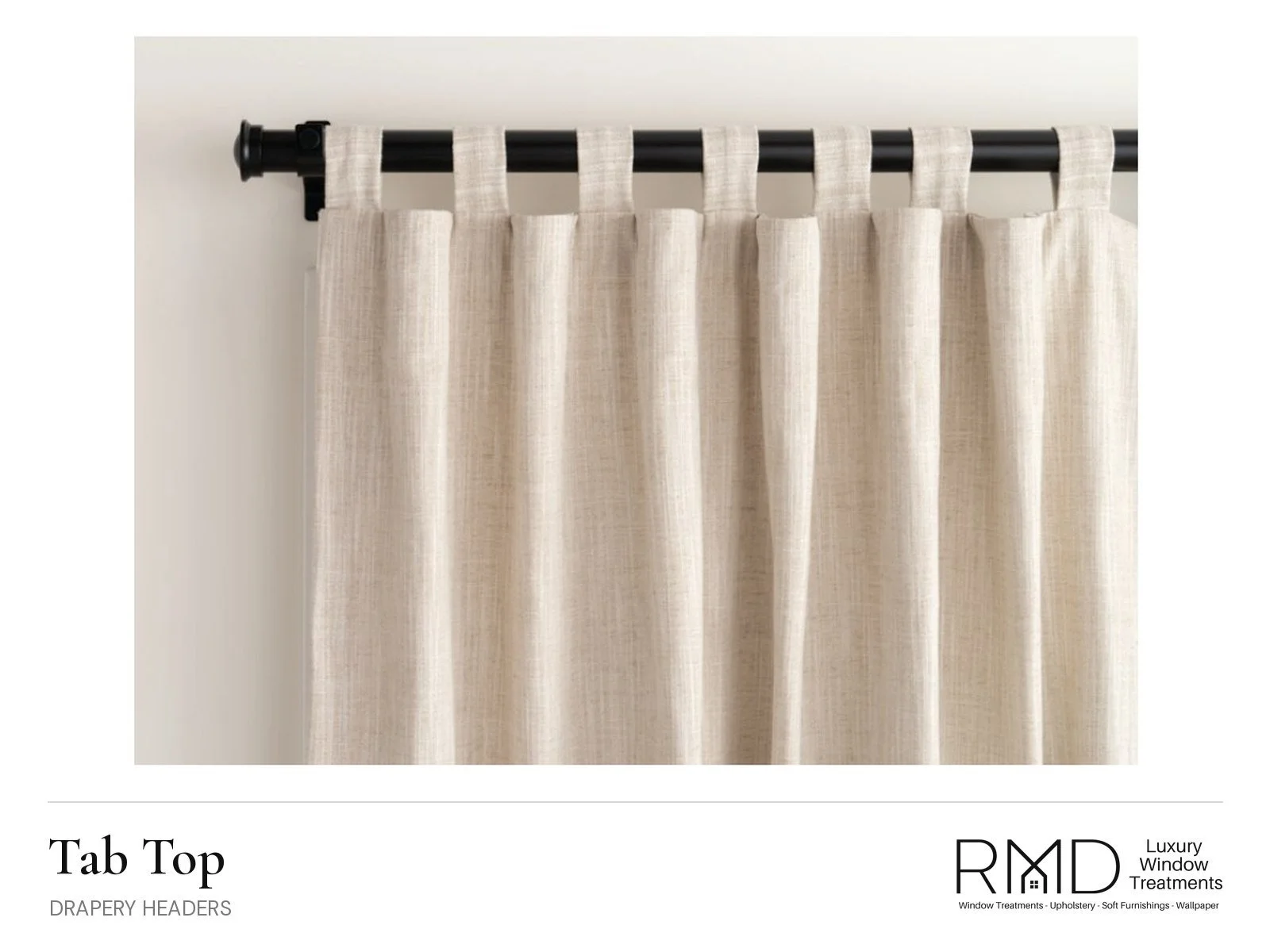
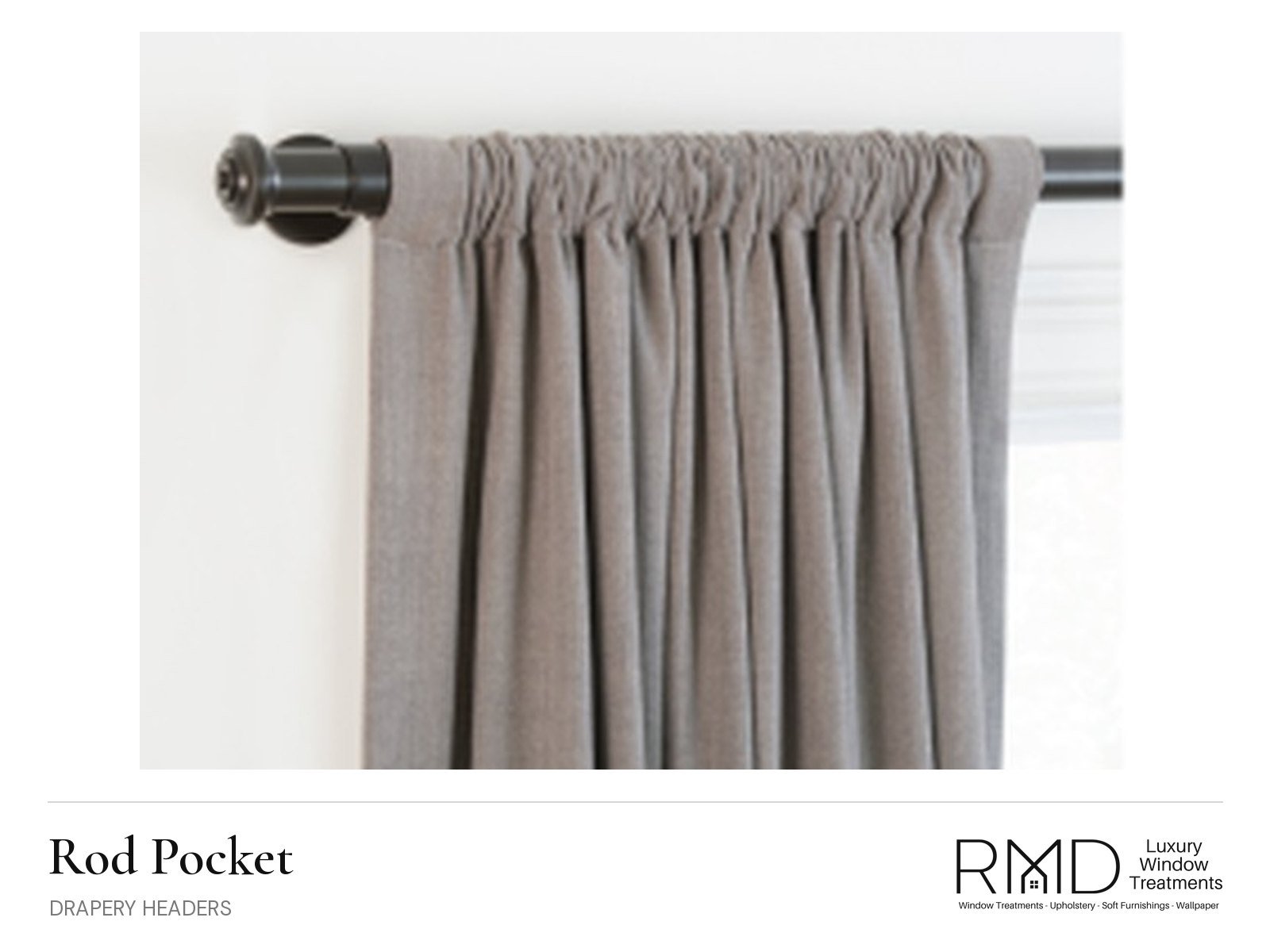
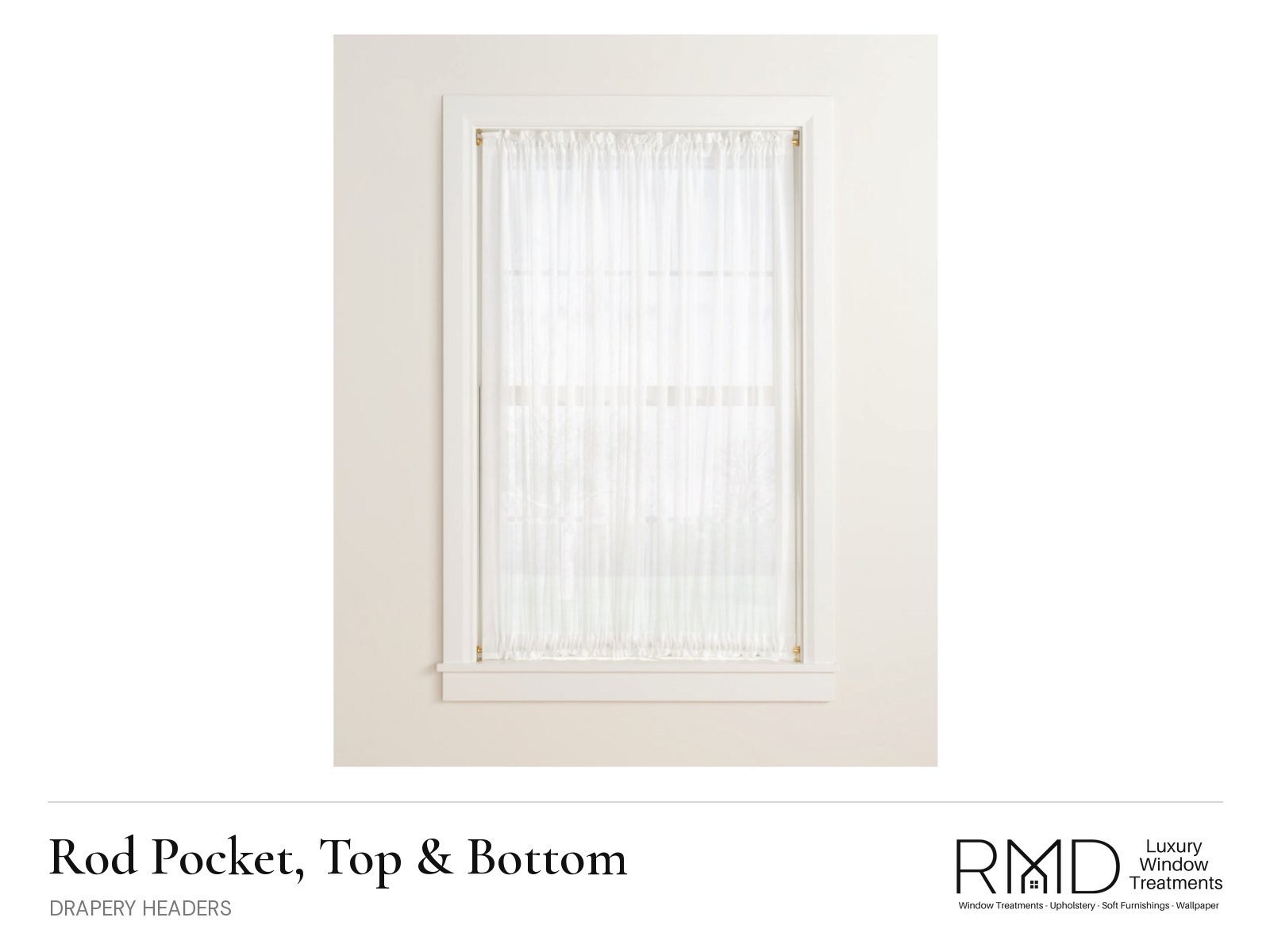
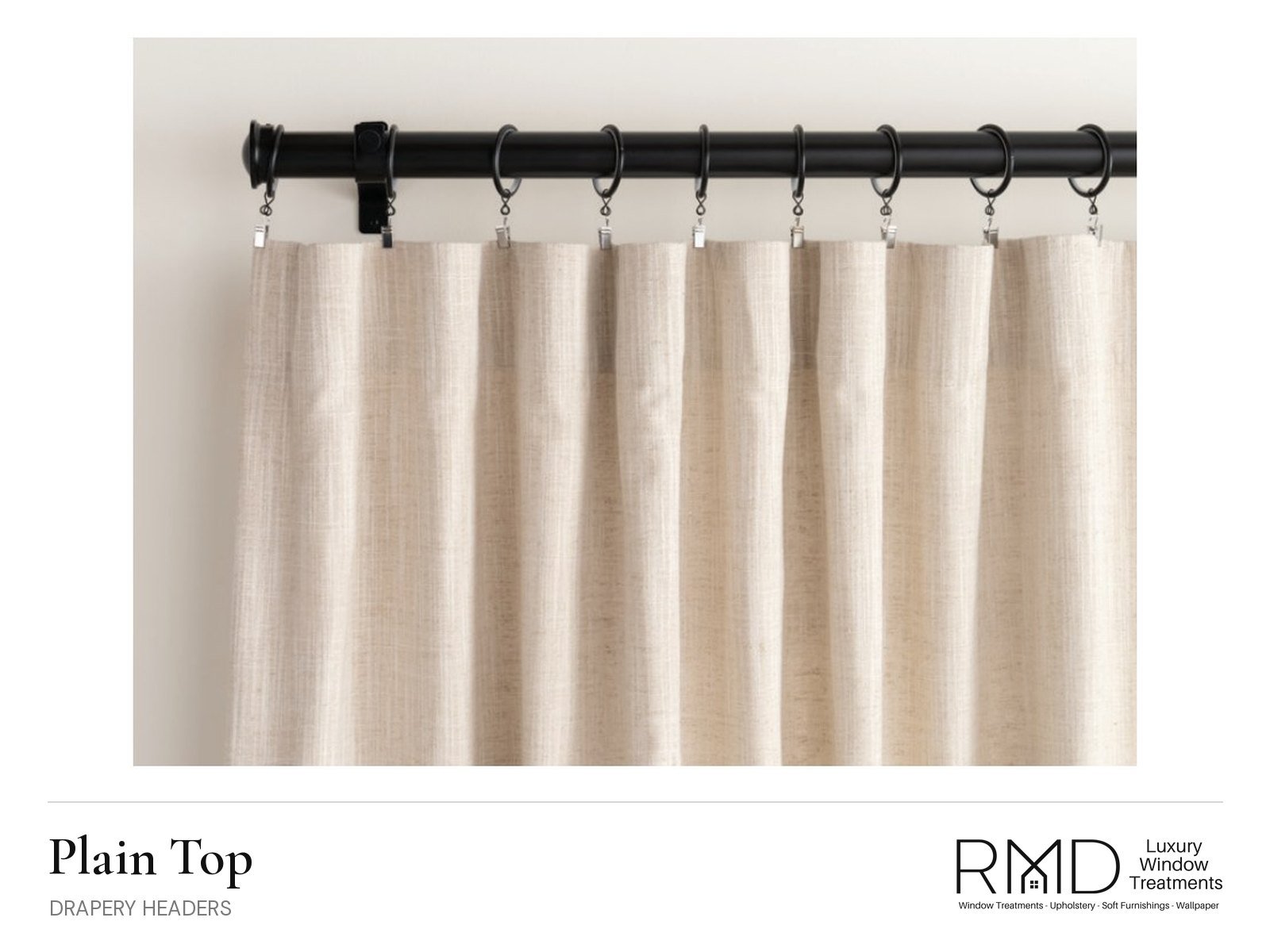
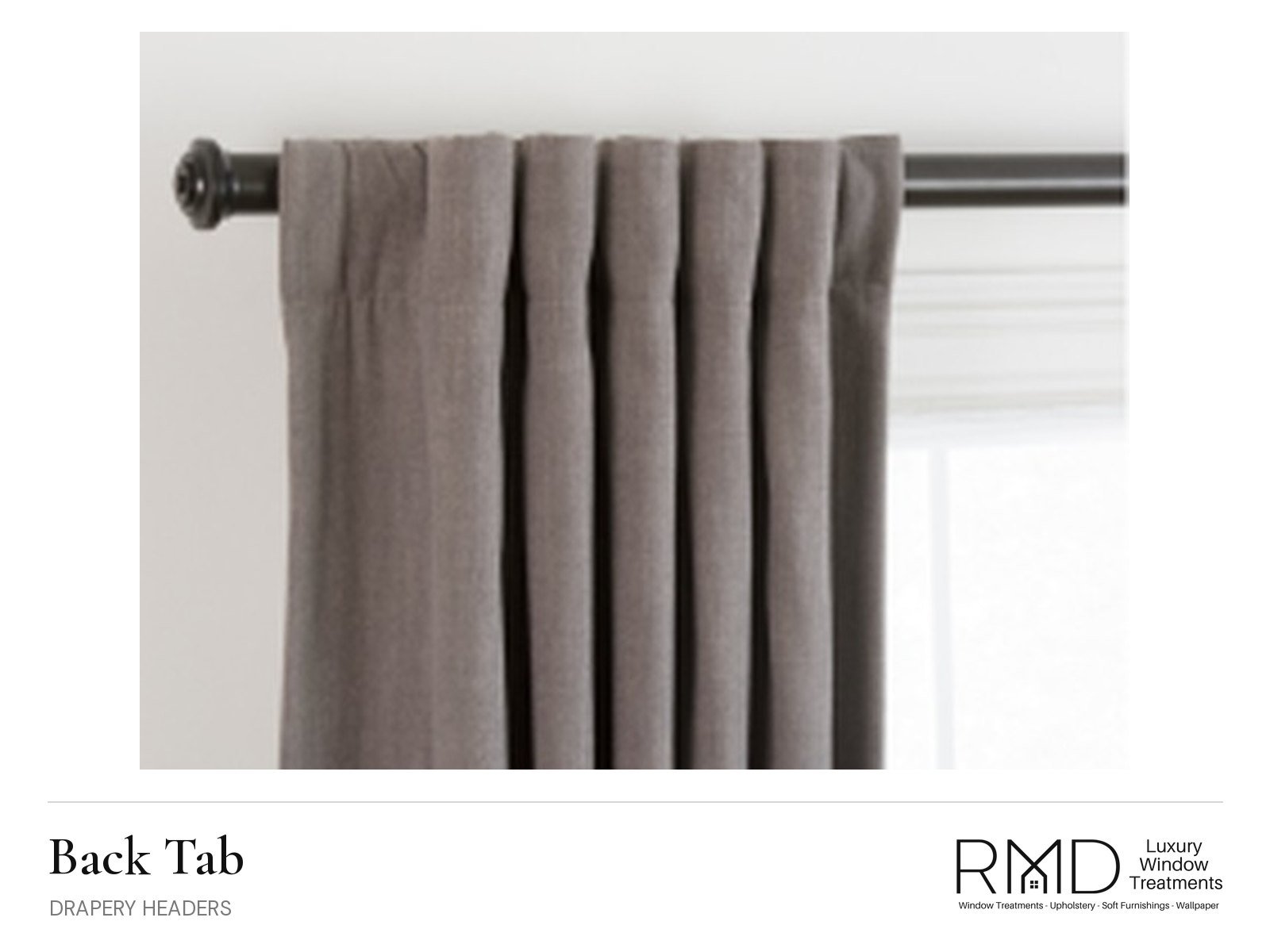
Grommet, tab top, hidden tab, back tab, rod pocket and plain top headings hang directly on a rod for a relaxed look. Grommets come in round, square and diamond shapes and in finishes including black, bronze, golden bronze, brushed nickel, satin brass, vintage gold and aged pewter. These styles work well for family rooms, kids' rooms and stationary side panels.
Five questions to help you choose
How often will you open and close them? For drapery you use every day, especially on wide windows or patio doors, ripplefold on a track or pinch pleat on a traverse rod will glide the most smoothly. For purely decorative side panels, almost any style works.
What's the feel of the room? Clean and modern points to ripplefold or euro pleats. Traditional or formal points to pinch or goblet pleats. Casual and relaxed points to grommet, rod pocket or flat panels.
How tall are the ceilings? Taller windows can carry more structured headings like goblet and pinch pleats. Mounting hardware high and wide makes any window feel bigger, whatever the style.
What hardware do you want to see? Ripplefold usually hangs on a slim track, often ceiling-mounted or tucked into a cornice, so the fabric is the star. Pleated styles pair with decorative rods and rings if you want the hardware to be part of the design.
What fabric are you using? Heavier fabrics and linings hold crisp pleats well. Sheers and lightweight linens look lovely in ripplefold or euro pleats. Bold patterns can look best with flatter, more even folds so the pattern stays readable.
At a glance
Ripplefold (butting or overlap): modern, even waves. Best for wide windows, sliders and motorized drapery. Opens very smoothly.
Pinch pleat (2- or 3-finger): classic and tailored. Best for living and dining rooms. Smooth on a traverse rod or rings.
Euro pleat (2- or 3-finger): tailored but softer. Best for transitional and modern rooms. Smooth on rings.
Goblet pleat: formal and dramatic. Best for tall, stationary panels.
Box, inverted box, relaxed box: flat and tailored. Best for stationary and board-mounted panels.
Grommet: casual, deep folds. Best for family rooms and kids' rooms. Opens easily.
Tab top, rod pocket, plain top: relaxed, cottage feel. Best for stationary side panels.
Finishing details that complete the look
Once you've picked a heading, a few more choices finish the design.
Draw: a split draw opens from the center as a pair, a one-way draw stacks to one side, and stationary panels frame the window without moving.
Length: sill and apron lengths suit shorter windows. Floor length is crisp and easy to live with, a trouser break adds a slight fold at the floor, and a puddle pools fabric for a romantic, formal look.
Lining: standard lining protects fabric and helps it hang well. Blackout lining darkens bedrooms and media rooms, and interlining adds body, insulation and a luxurious drape.
Embellishments: banding, decorative trim, color blocking and tiebacks add a custom touch. Board-mounted drapery hides the hardware for a clean line.
Hardware and motorization: choose from decorative wood and metal rods, finials and rings, or a slim track. Motorized track lets you open and close drapery at the touch of a button.
Every RMD panel is finished with a hand-sewn hem as standard, so the details are as good up close as they are across the room.
Why custom makes the difference
Ready-made panels come in a few fixed widths and lengths, with whatever heading the factory chose. Custom drapery is built for your exact windows. We measure precisely, calculate the right fullness for the style you pick, line and finish each panel, and install the hardware so everything hangs true. That's what gives custom drapery its finished, effortless look.
Not sure which style is right for your space? That's exactly what we're here for. We'll look at your windows, how you live in the room and the fabrics you love, then recommend the heading and hardware that bring it all together.
Make an appointment today. That's the RMD Way.
