
Ripplefold, Pinch Pleat or Something Else? How to Choose the Right Drapery Style
Ripplefold, pinch pleat, Euro pleat or goblet? A plain-language guide to drapery heading styles and how to choose the right one for your windows.
When clients come to us for custom drapery, they usually start with fabric and color. That makes sense, since those are the fun parts. But one decision shapes how your drapery looks, hangs and works every day more than almost any other: the heading style.
The heading is the top of the panel, where the fabric meets the hardware. It sets how the folds fall, how much fabric the panel needs, how easily it opens and closes, and whether the room reads as tailored, traditional or relaxed. Choose it well and even a simple fabric looks finished. Choose it poorly and an expensive fabric can look flat.
Here's a plain-language guide to the most common styles and how to pick the right one for your space.
The main drapery styles, explained
Our consultation style library shows more than 20 heading styles. These are the ones clients ask about most.
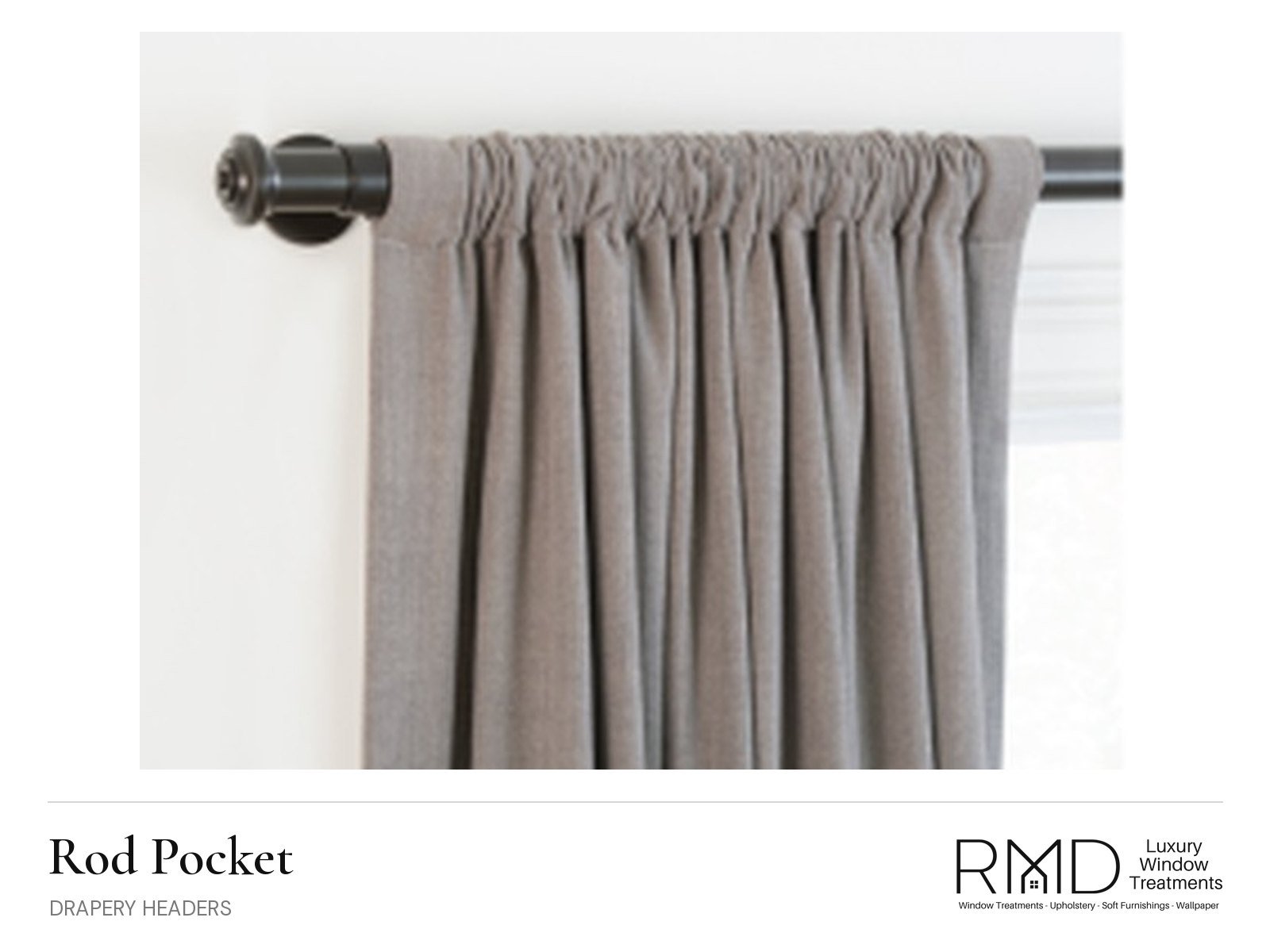
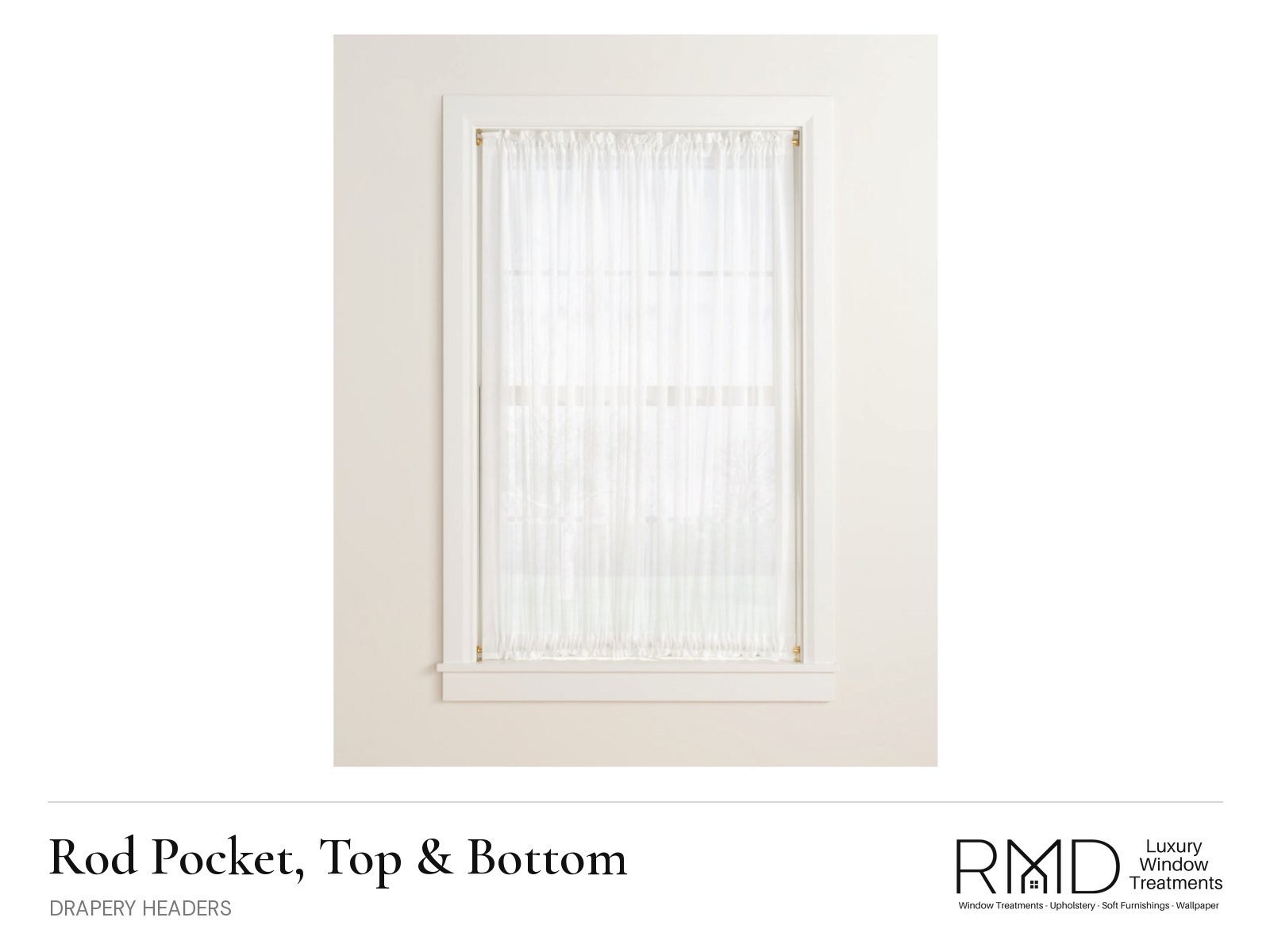
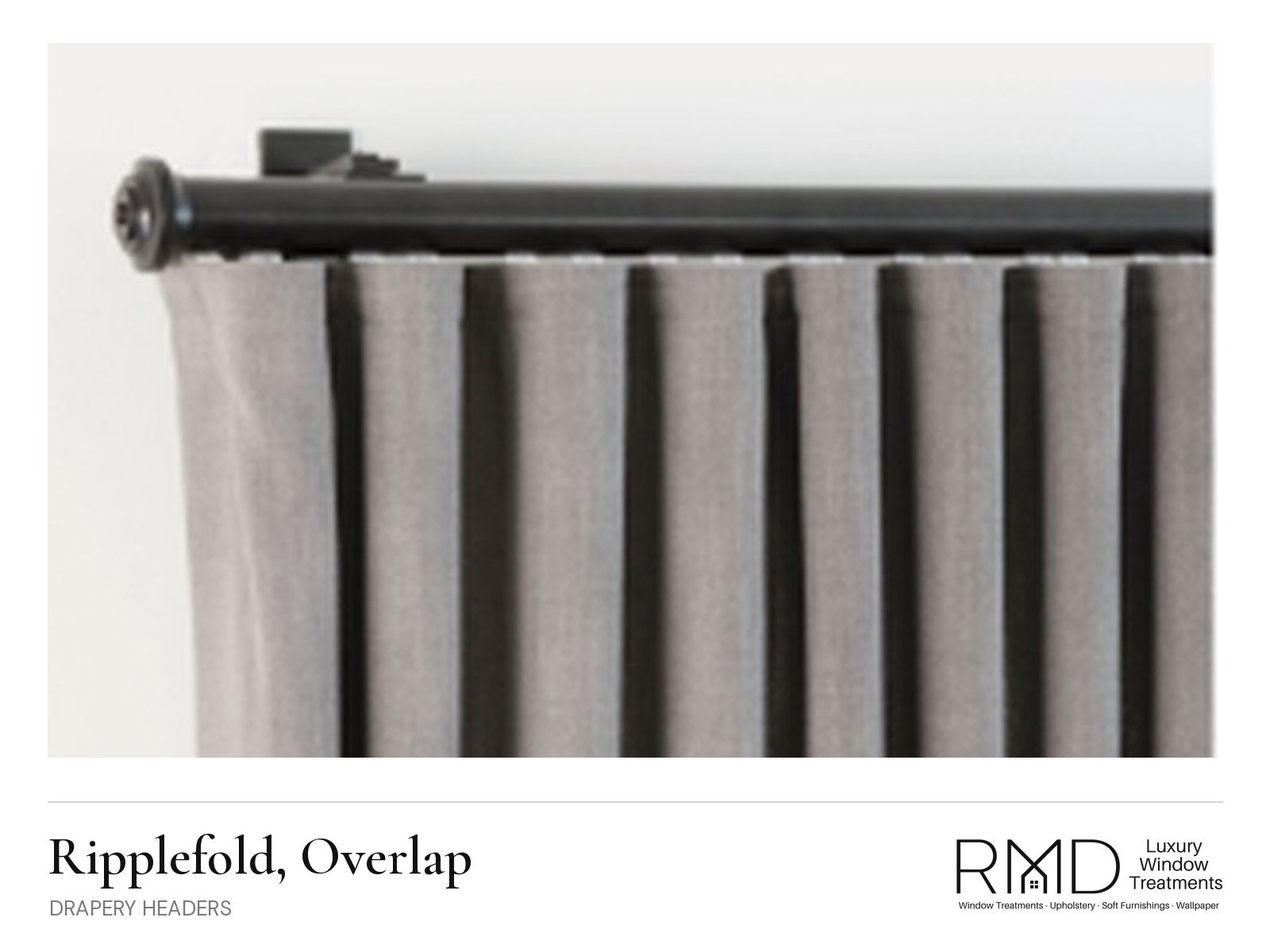
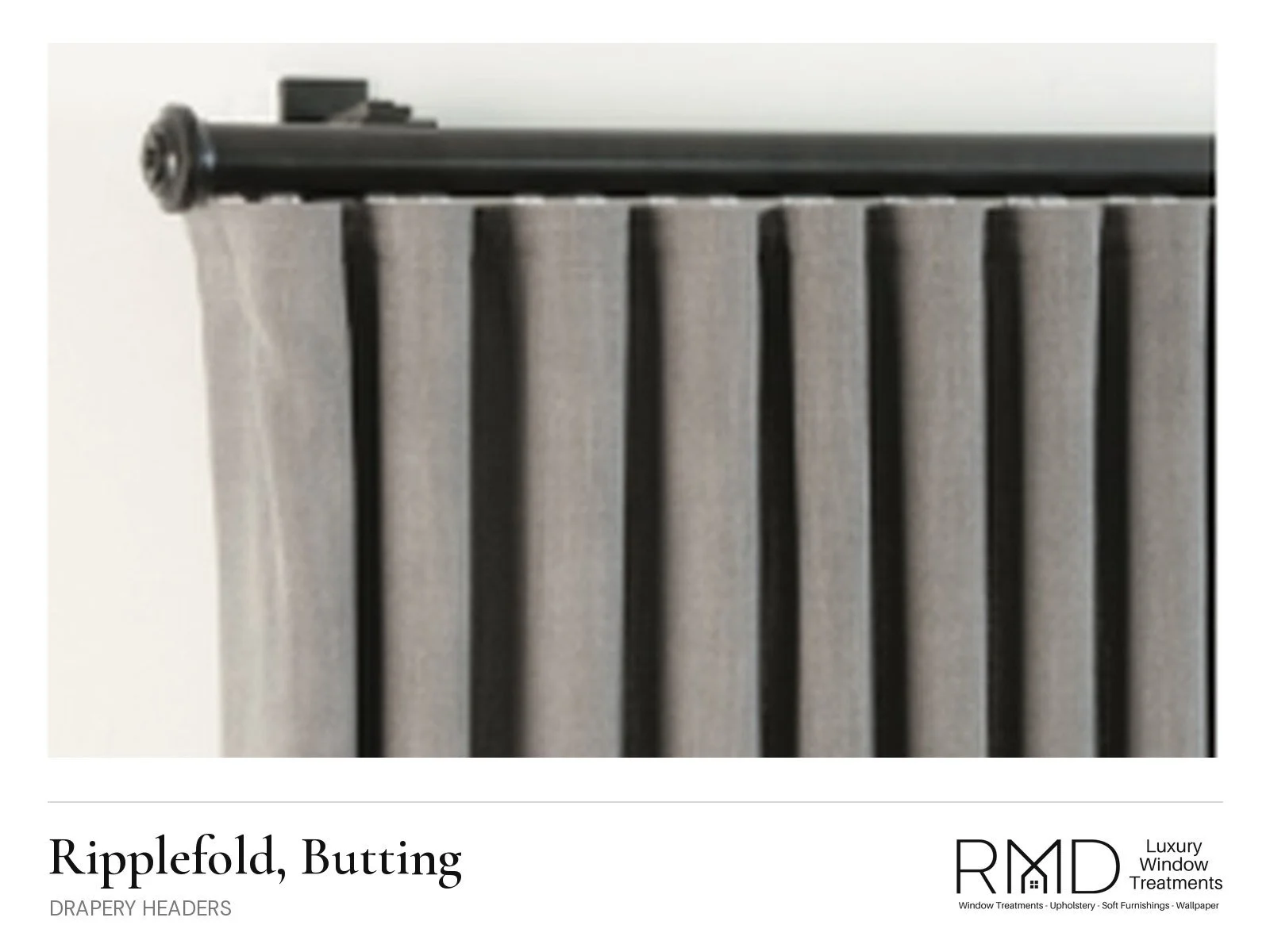
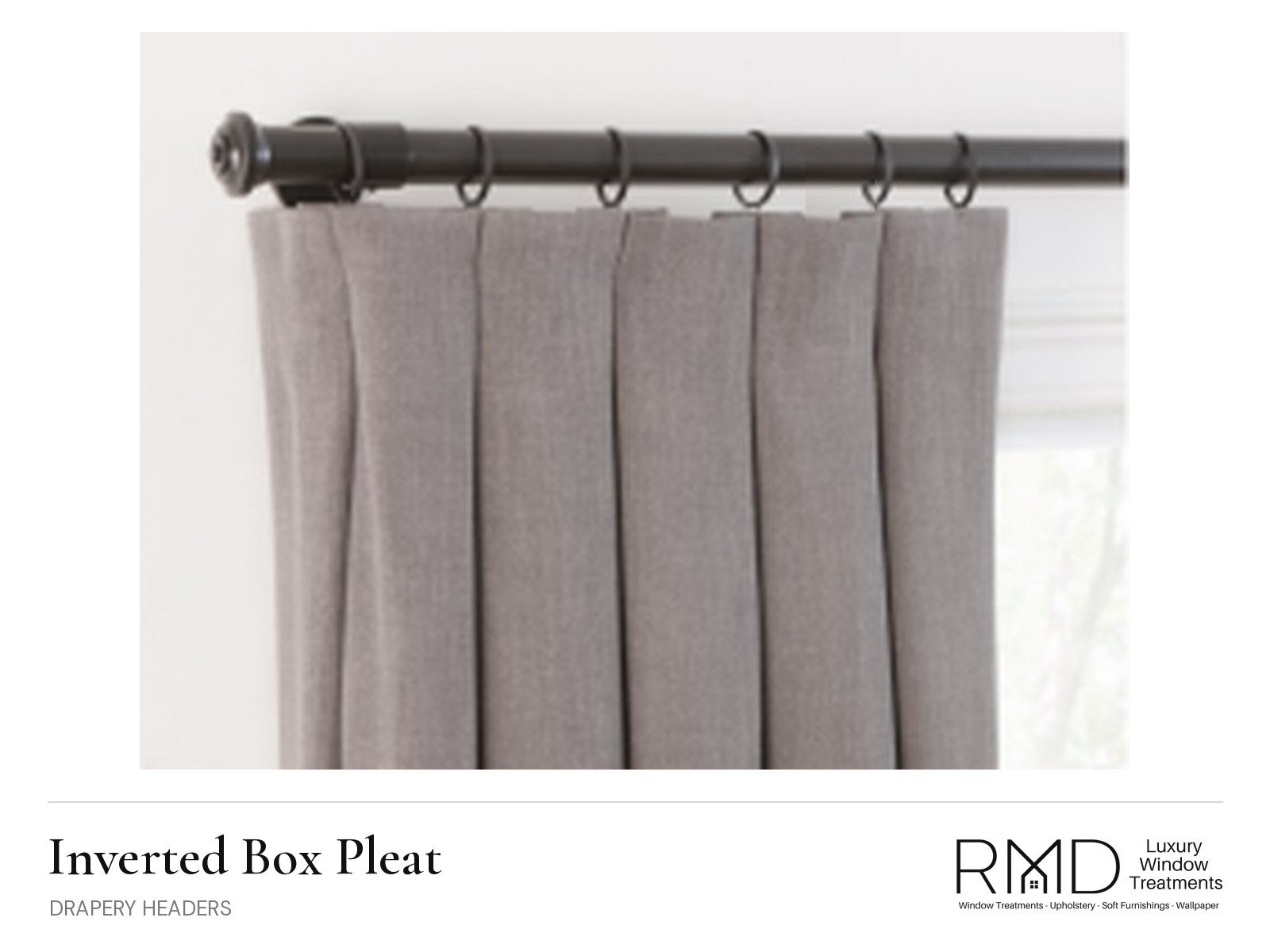
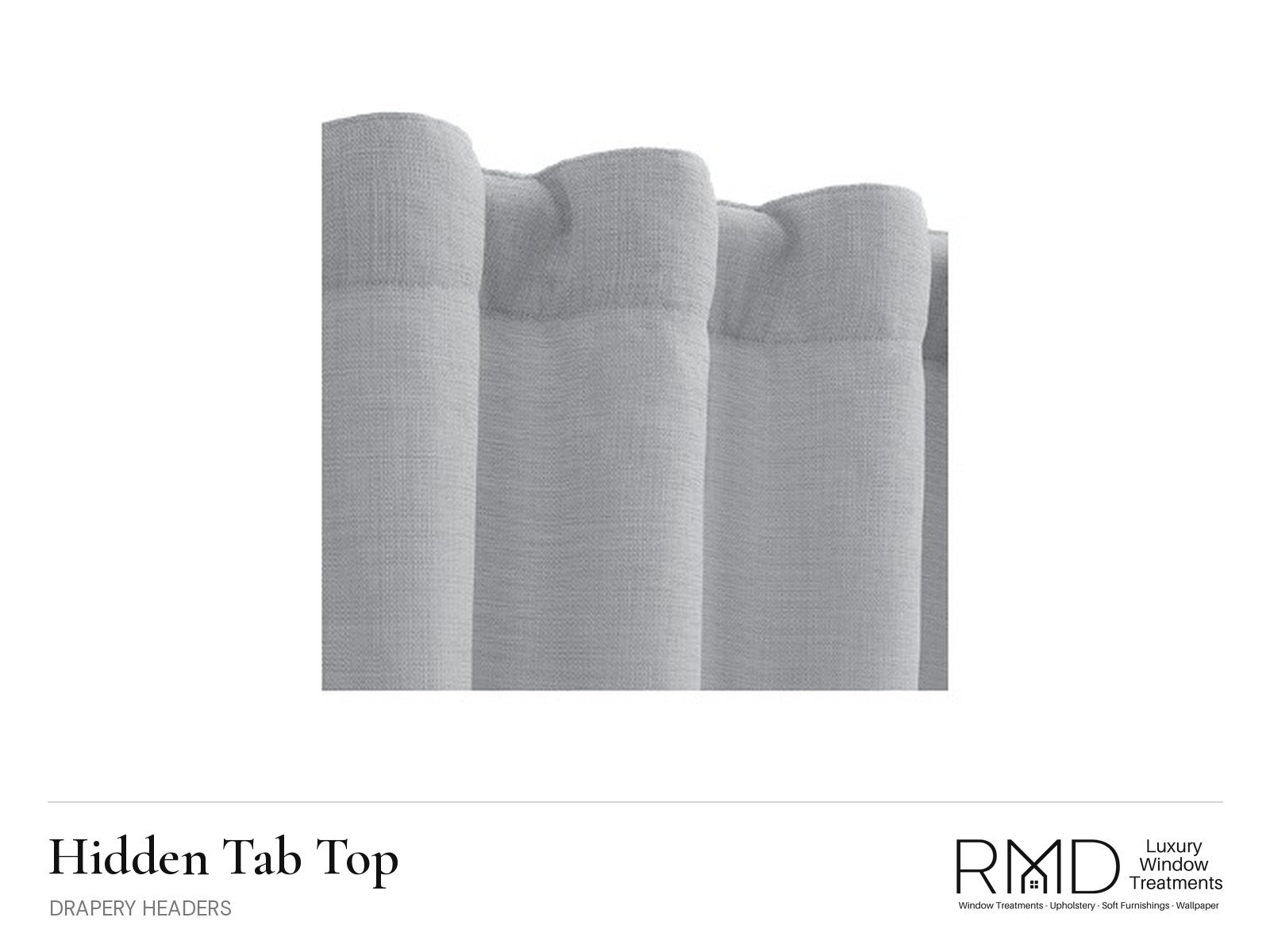
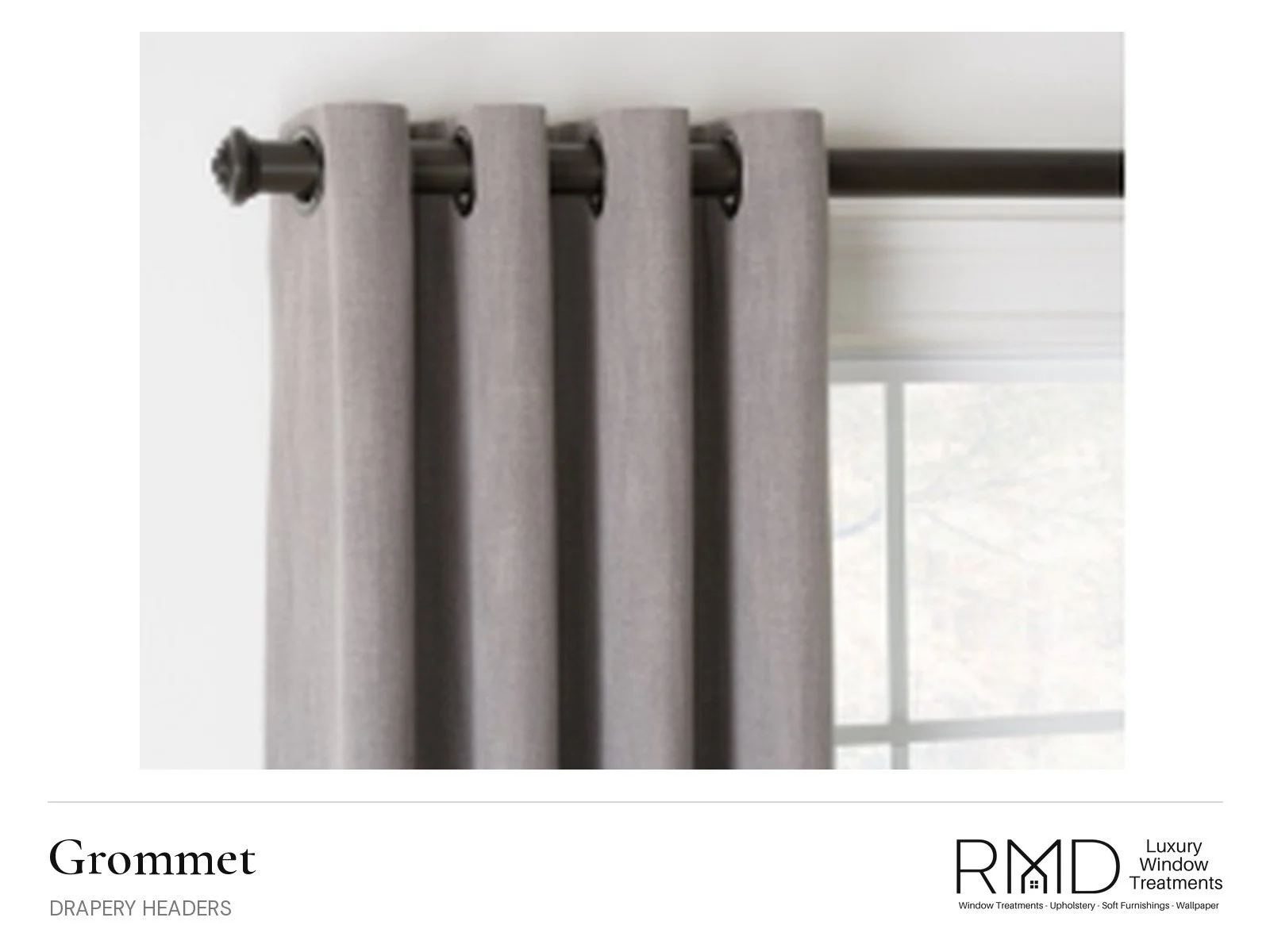
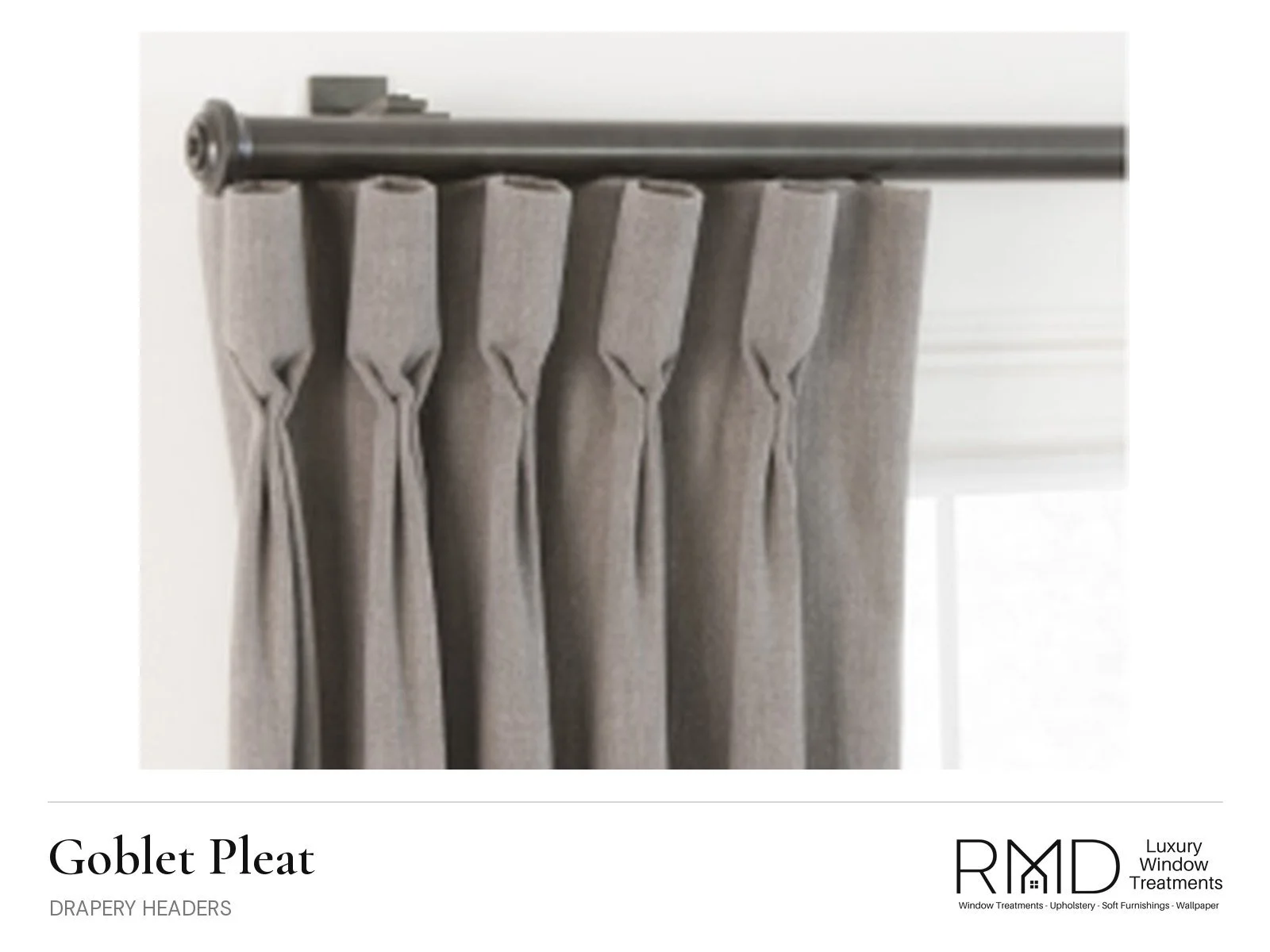
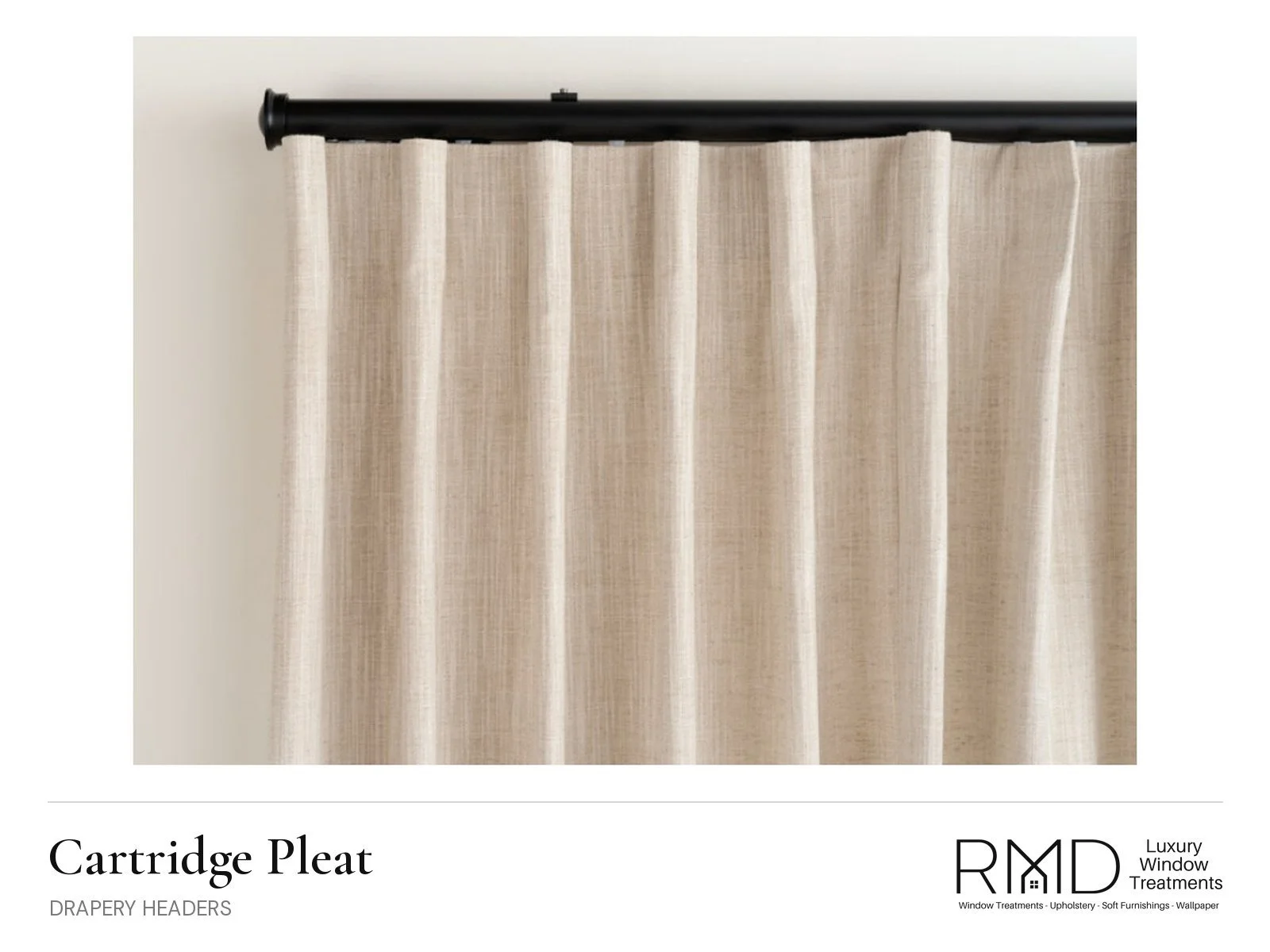
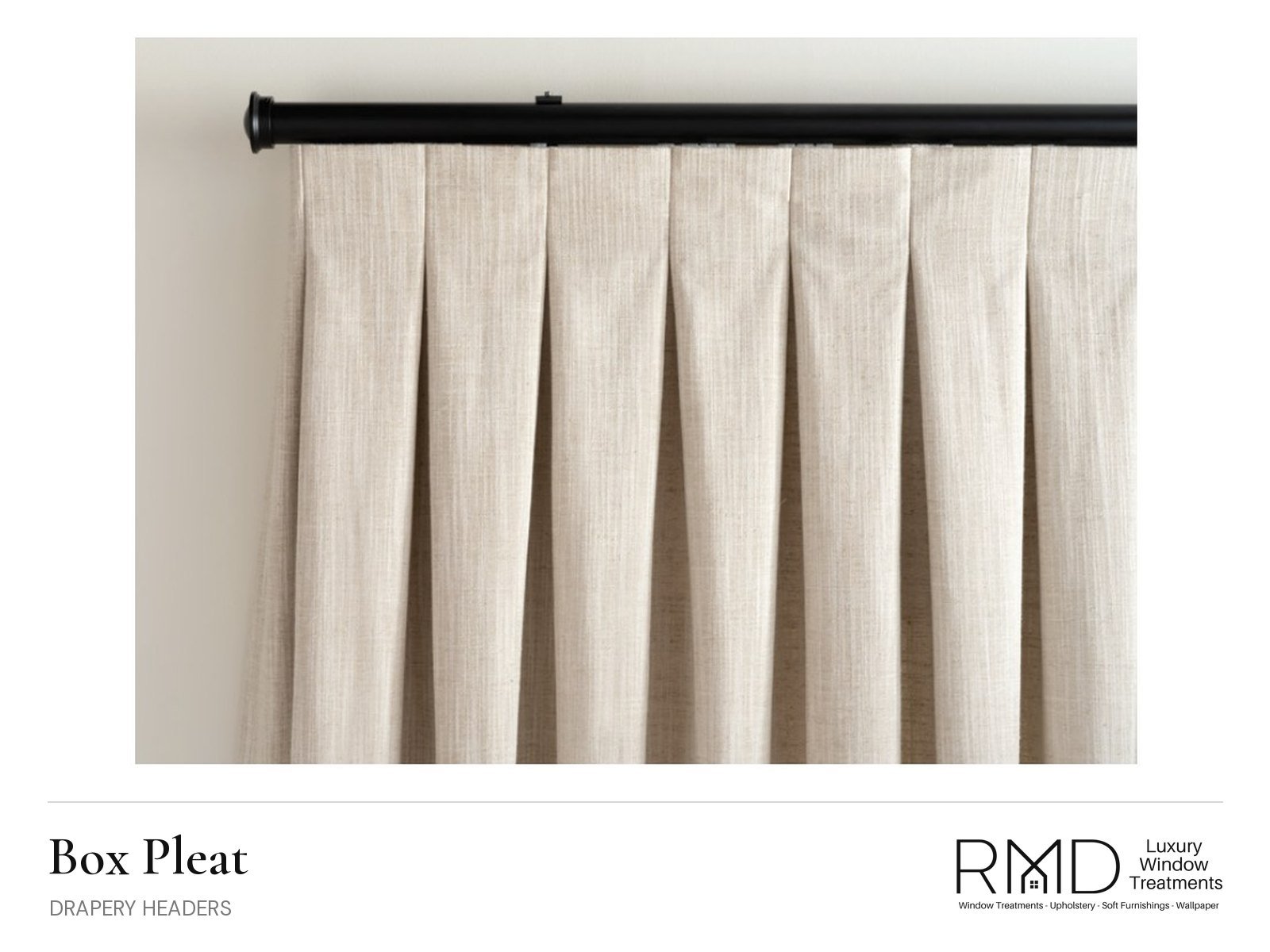
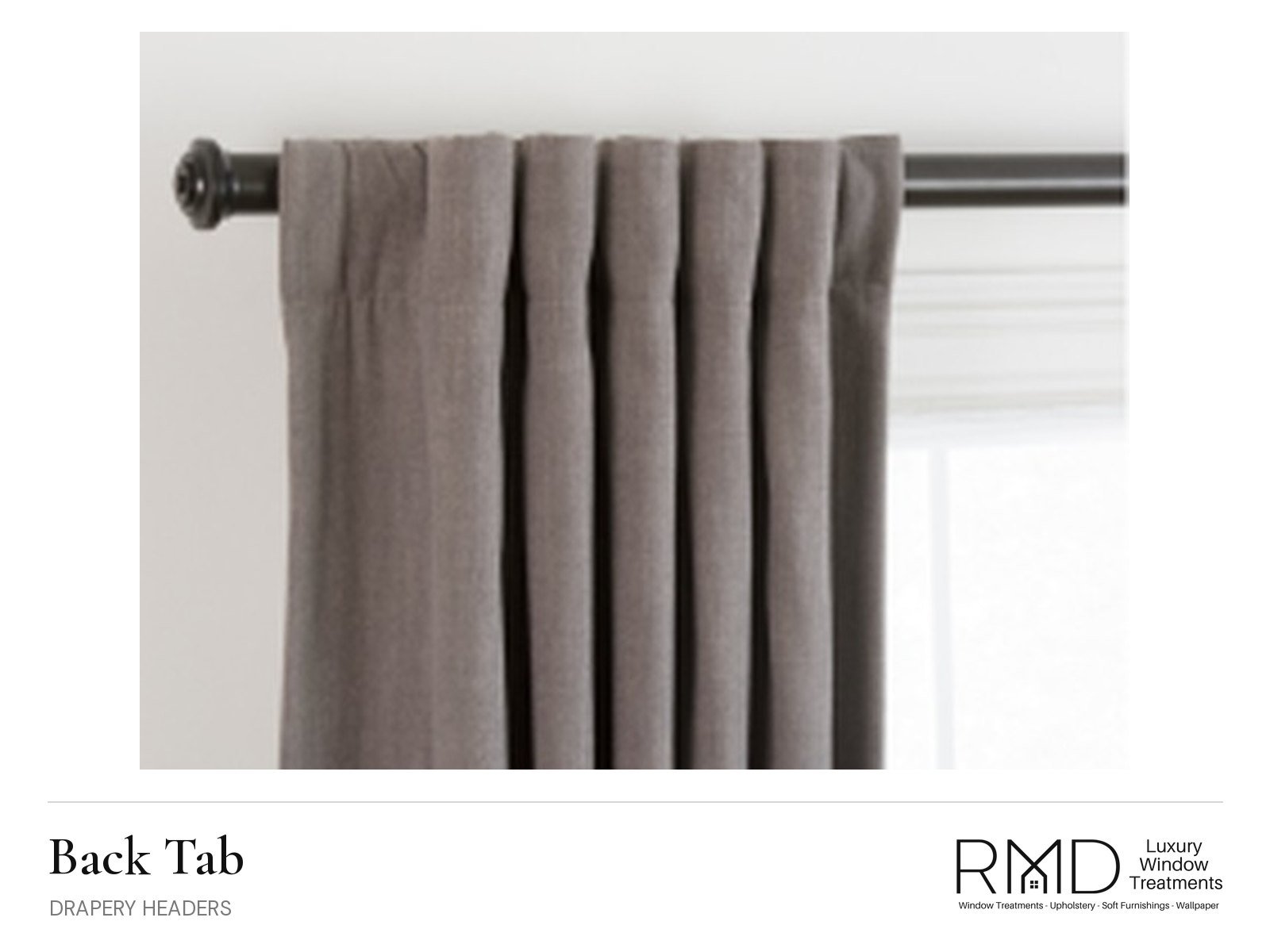
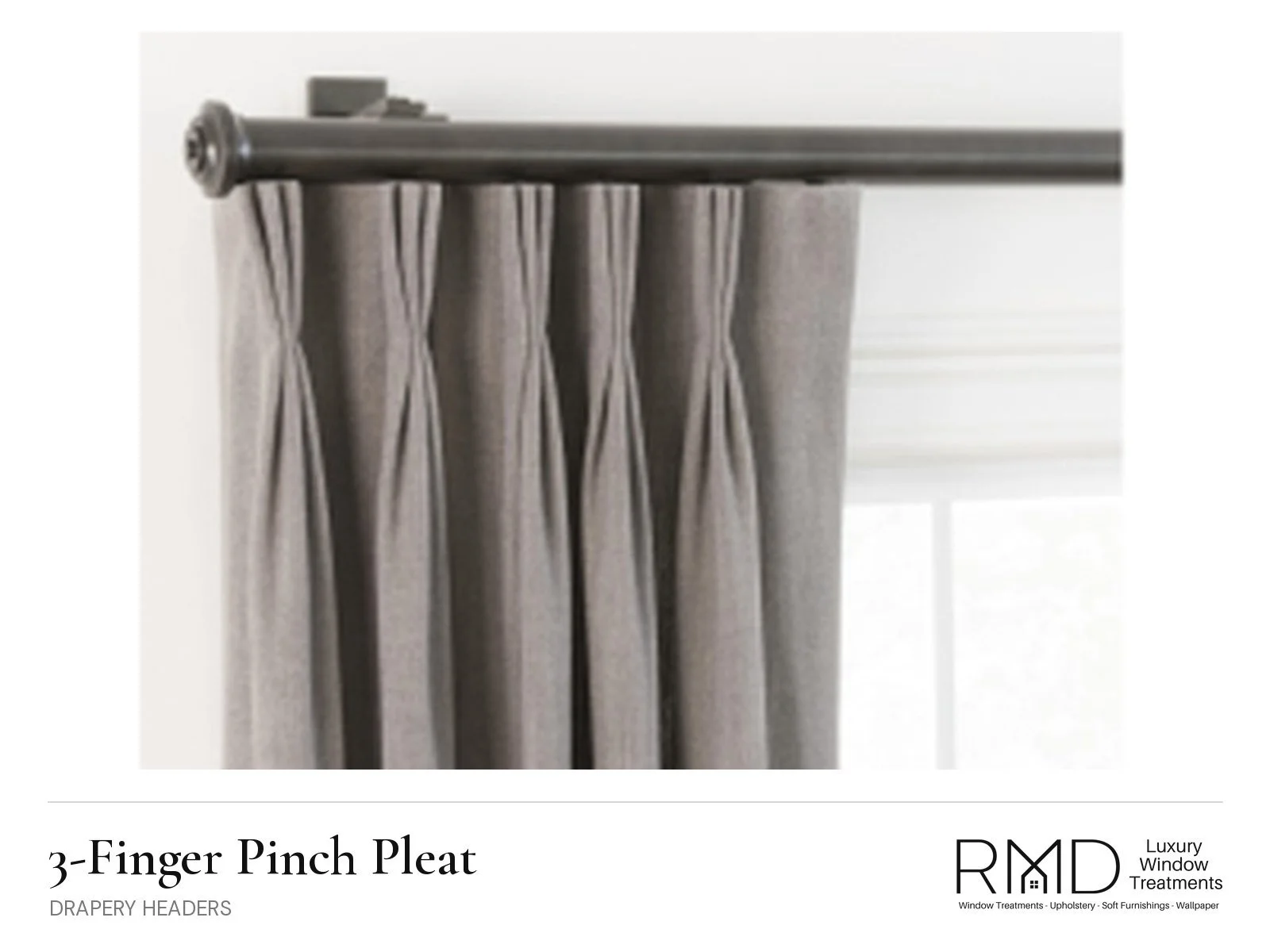
Ripplefold
Ripplefold drapery hangs from carriers that snap onto a track, so the fabric falls in soft, even S-shaped waves from top to bottom. The look is clean, modern and very consistent. We build ripplefold at 60% to 120% fullness: lower fullness gives a flatter, more minimal wave, and higher fullness gives deeper, richer folds.
At the center of a pair, ripplefold can be butting, where the two panels meet edge to edge, or overlap, where one panel crosses in front of the other to close the gap and block more light. Ripplefold glides smoothly and stacks back neatly. That makes it a favorite for wide windows, sliding doors and motorized systems.
Pinch pleat
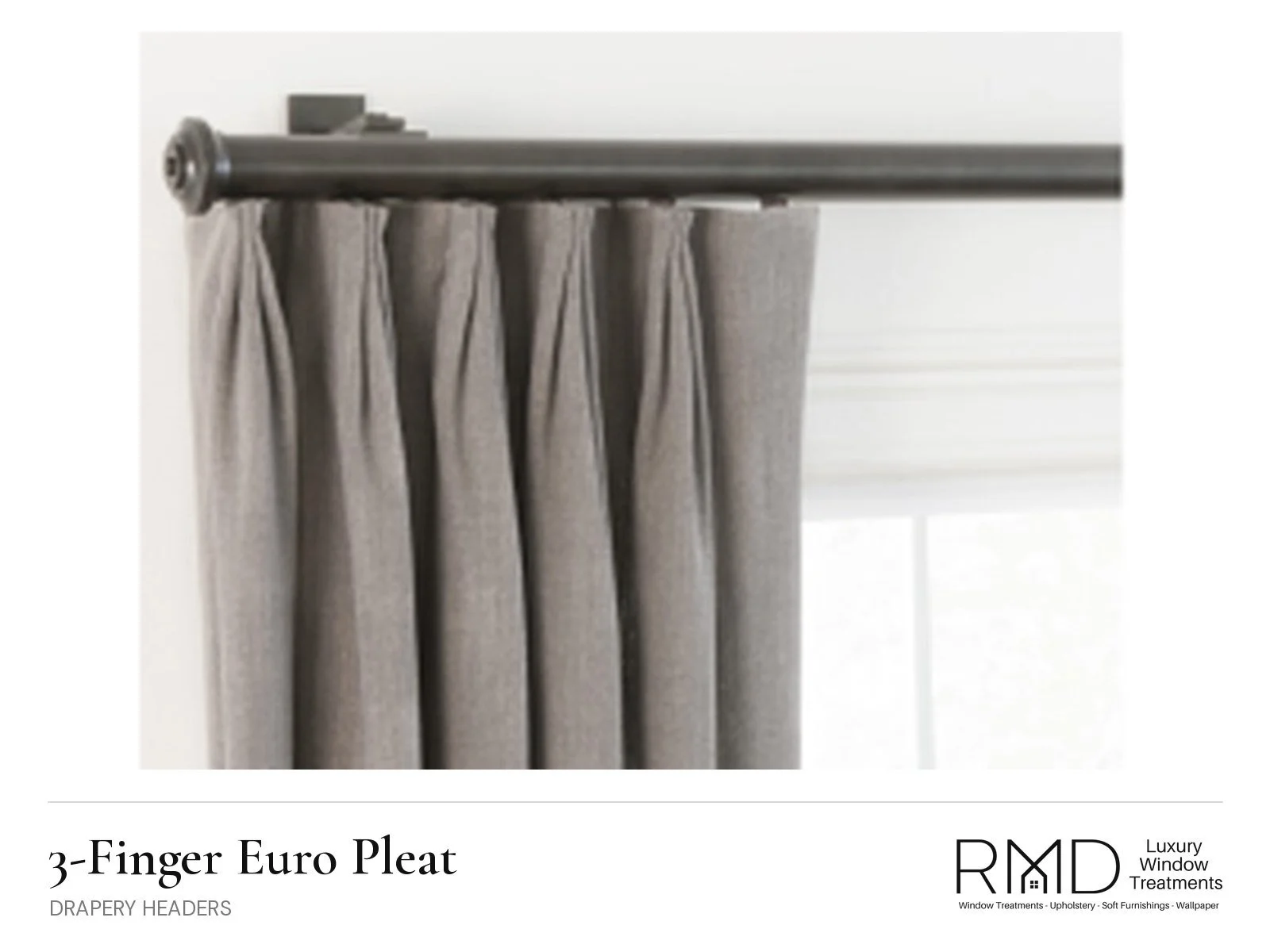
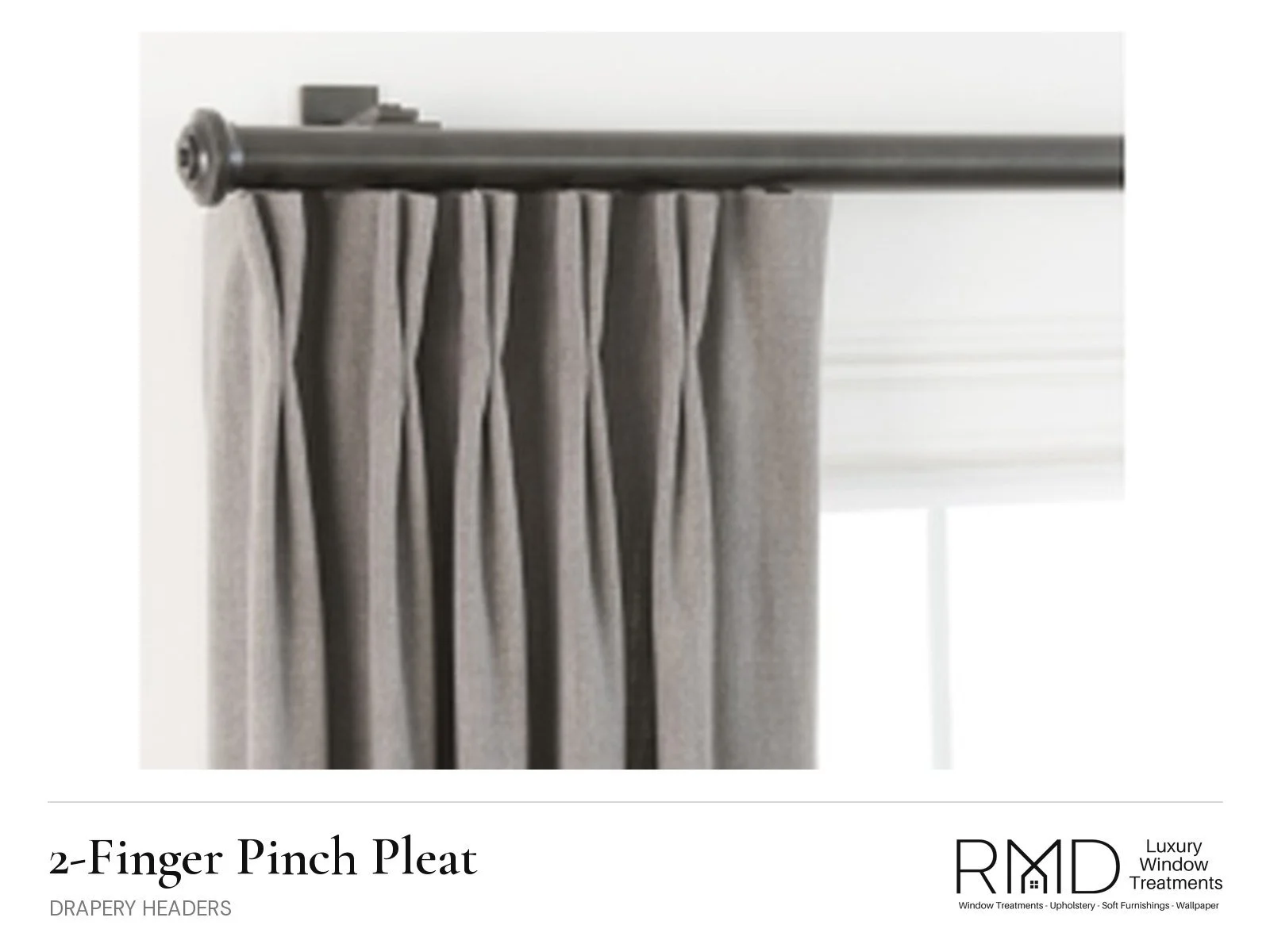
Pinch pleat is the classic tailored drapery. Fabric is gathered into groups of pleats stitched together at the top and spaced evenly across the panel. A 2-finger pinch pleat is crisp and a little more modern. A 3-finger pinch pleat is fuller and more traditional. Pleated drapery is typically built at 2 to 2½ times the width it covers, which gives it structured, upright fullness on a decorative rod with rings or a traverse rod.
Euro pleat
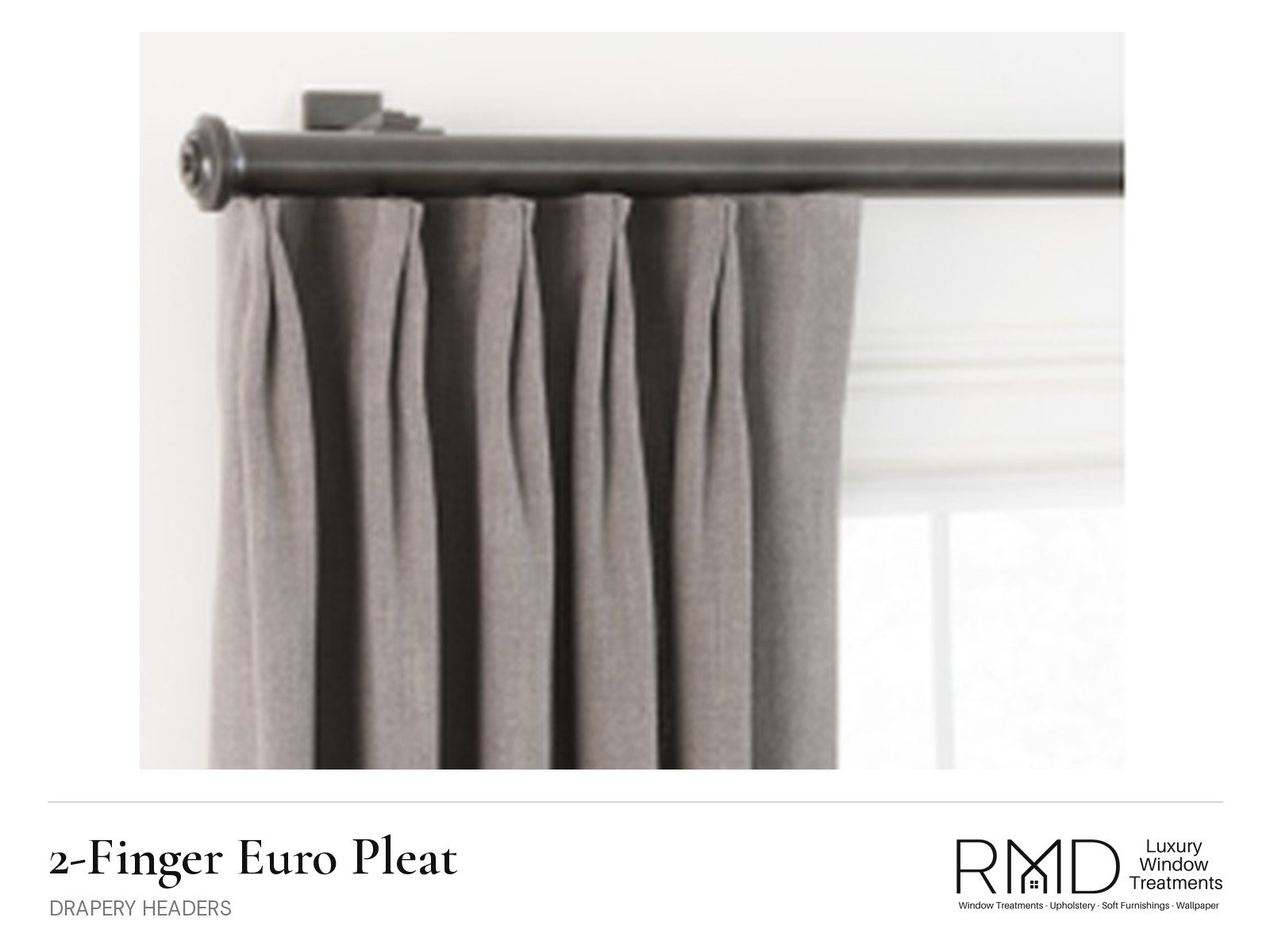
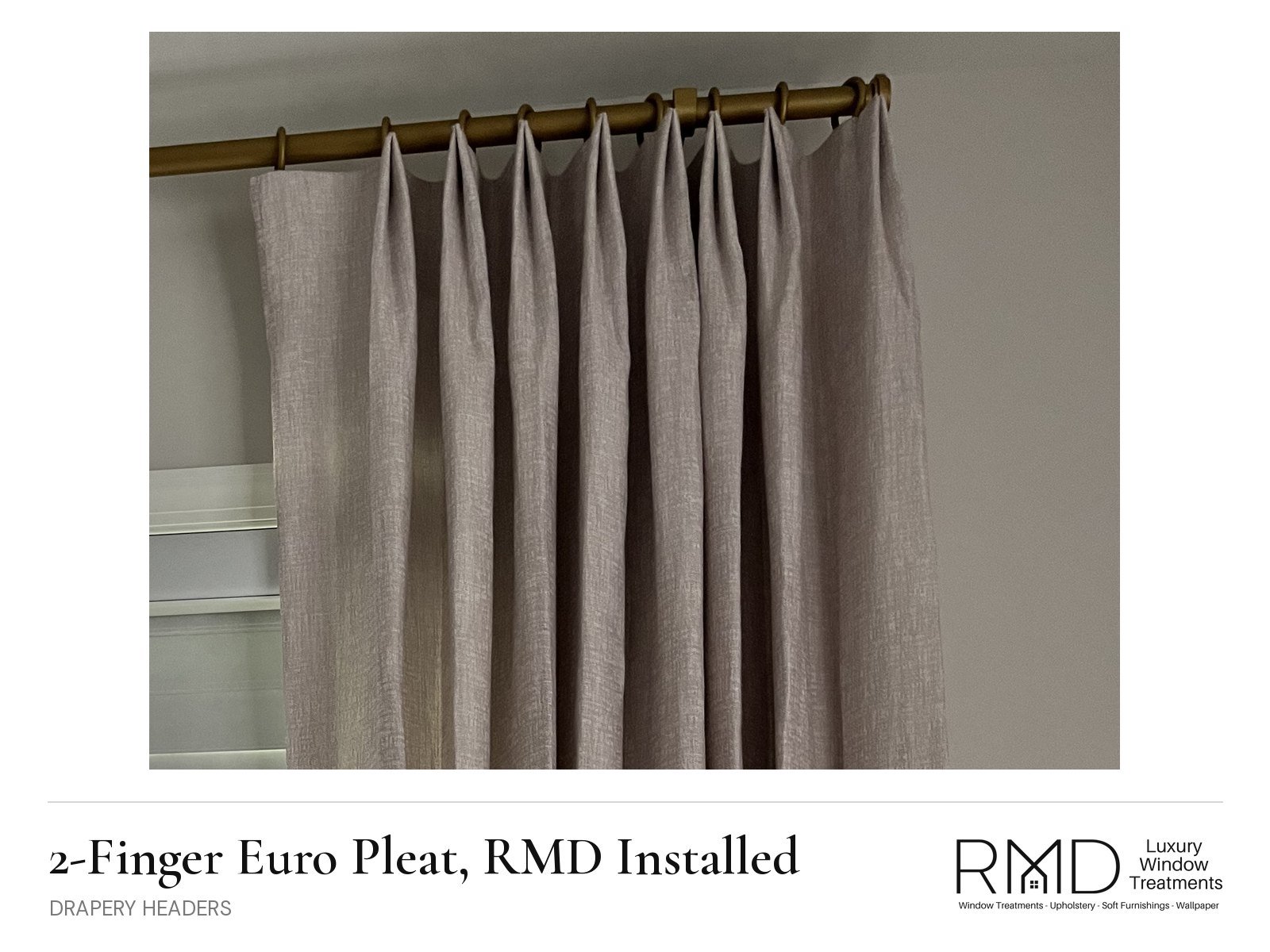
A Euro pleat is tacked at the very top only, so the folds open out freely below. It reads tailored but softer and more contemporary than a pinch pleat, and it comes in 2-finger and 3-finger versions. It's one of our favorite headings for transitional rooms.
Goblet pleat
Goblet pleats are rounded at the top like the bowl of a wine glass and filled to hold their shape. They're formal and dramatic, and they look best on stationary panels in rooms with taller ceilings, such as dining rooms, entries and primary bedrooms.
Box, inverted box and relaxed box pleats
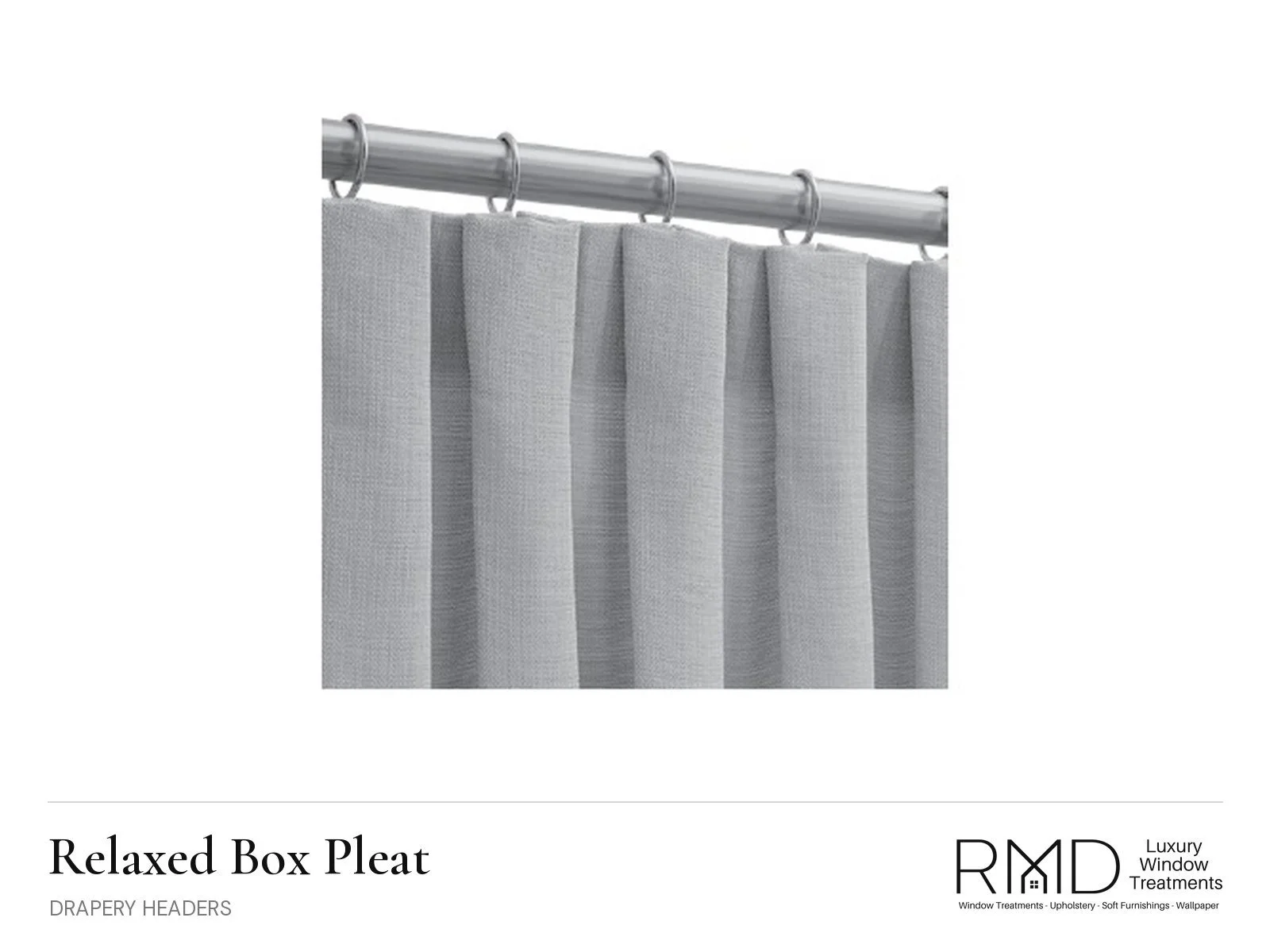
Box pleats fold the fabric into flat, evenly spaced boxes across the top. An inverted box pleat turns those folds to the back for a smooth, tailored face. A relaxed box pleat lets the folds soften below the header. All three suit stationary panels and board-mounted drapery.
Specialty pleats
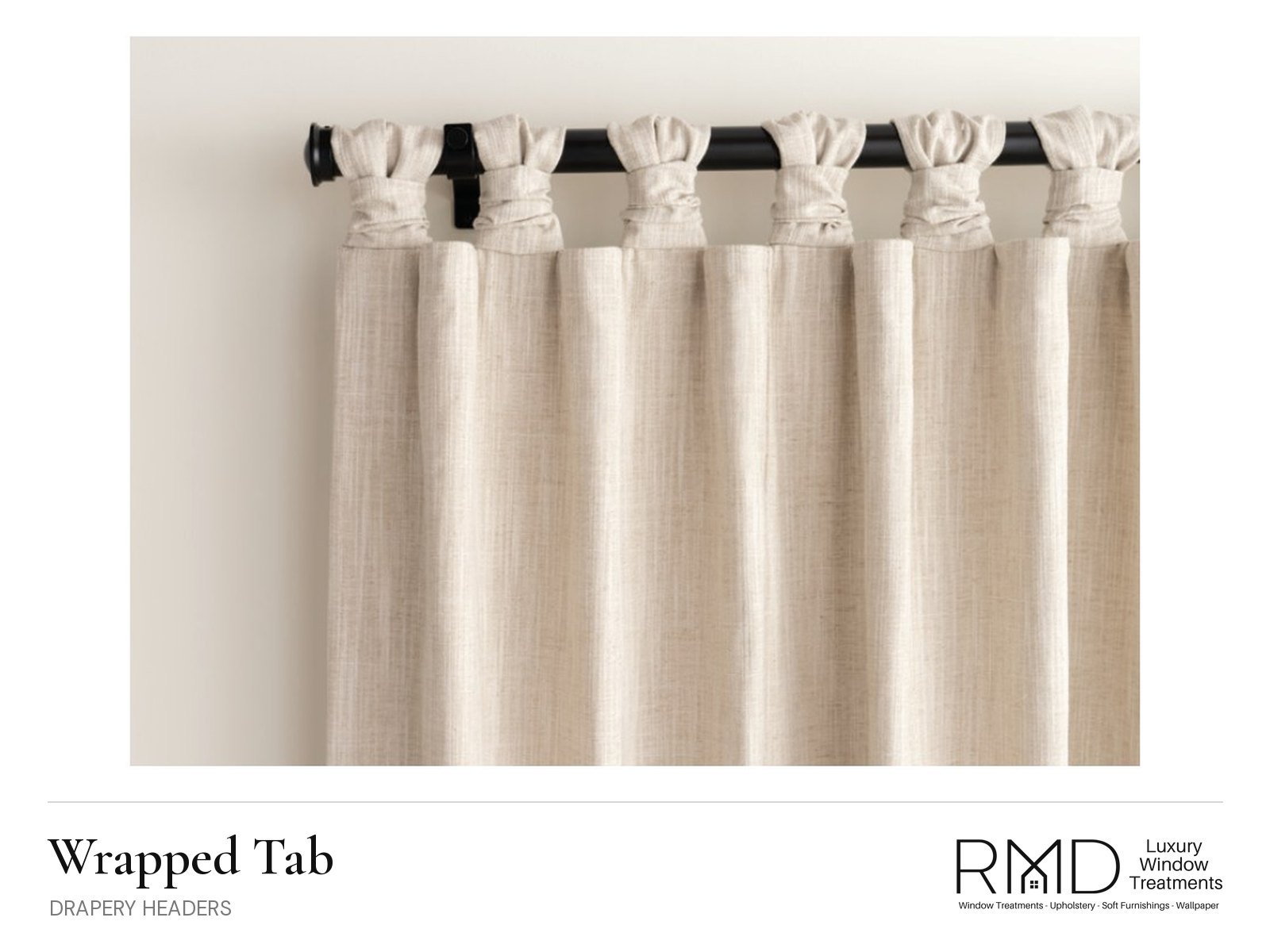
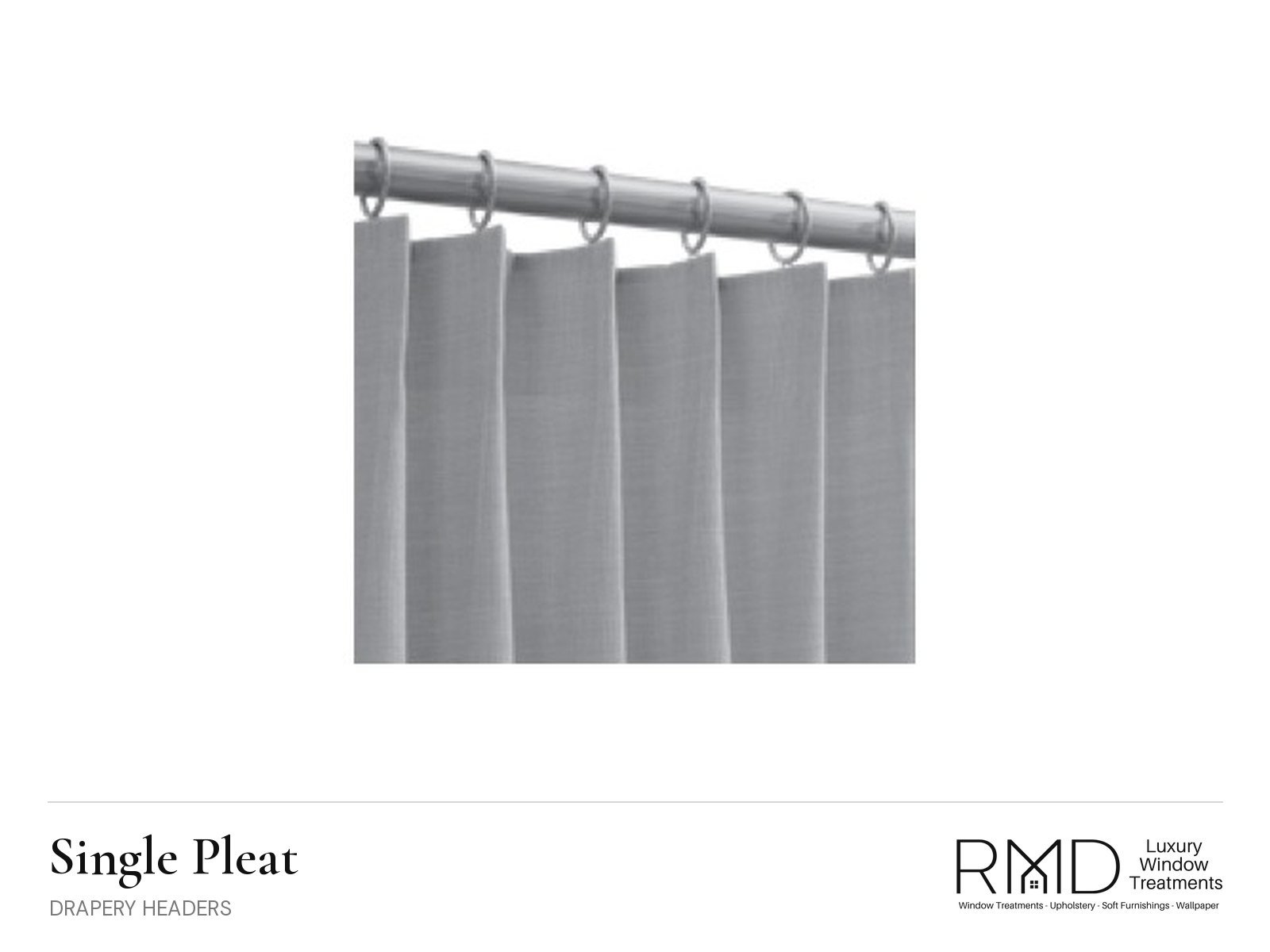
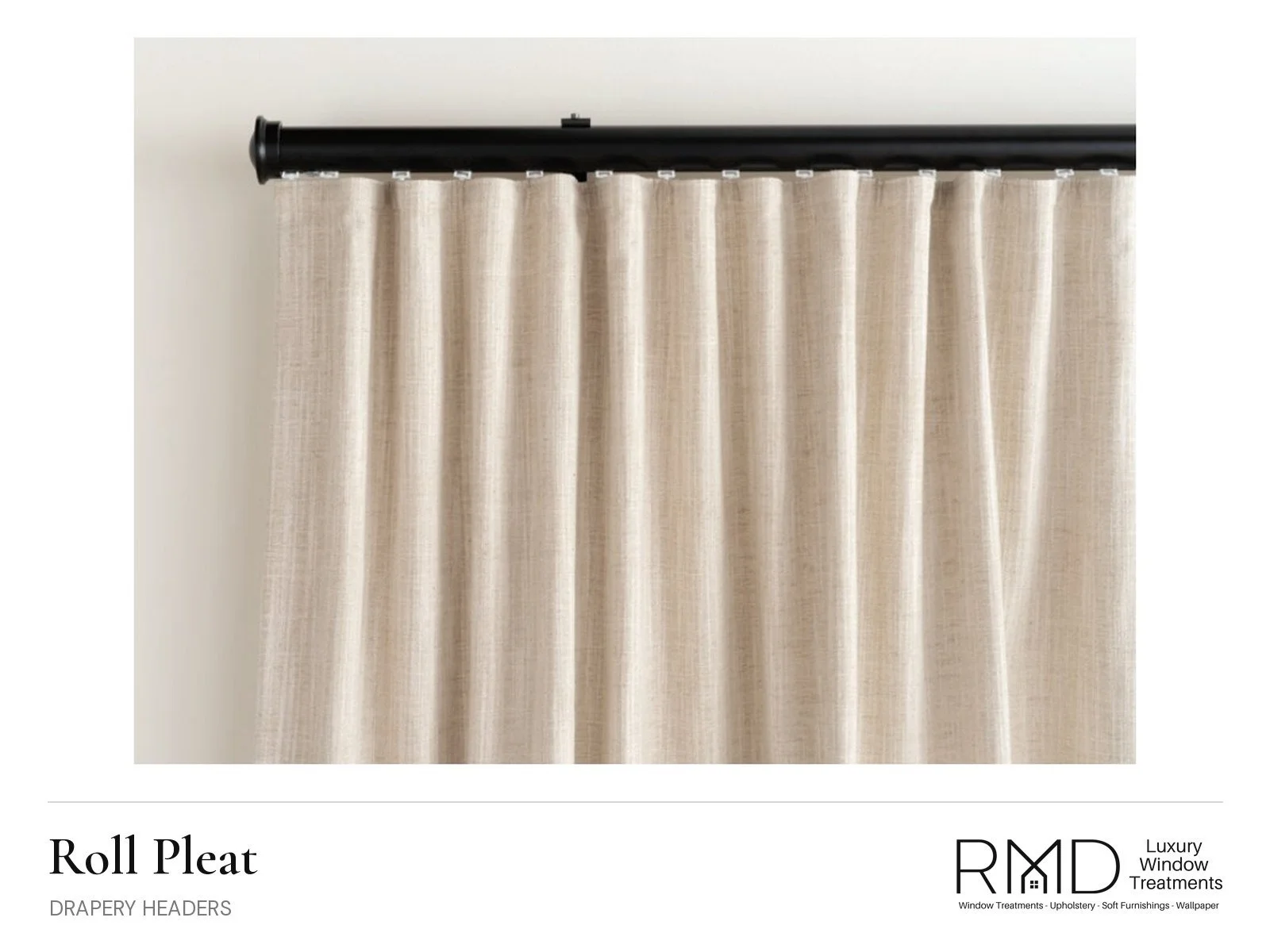
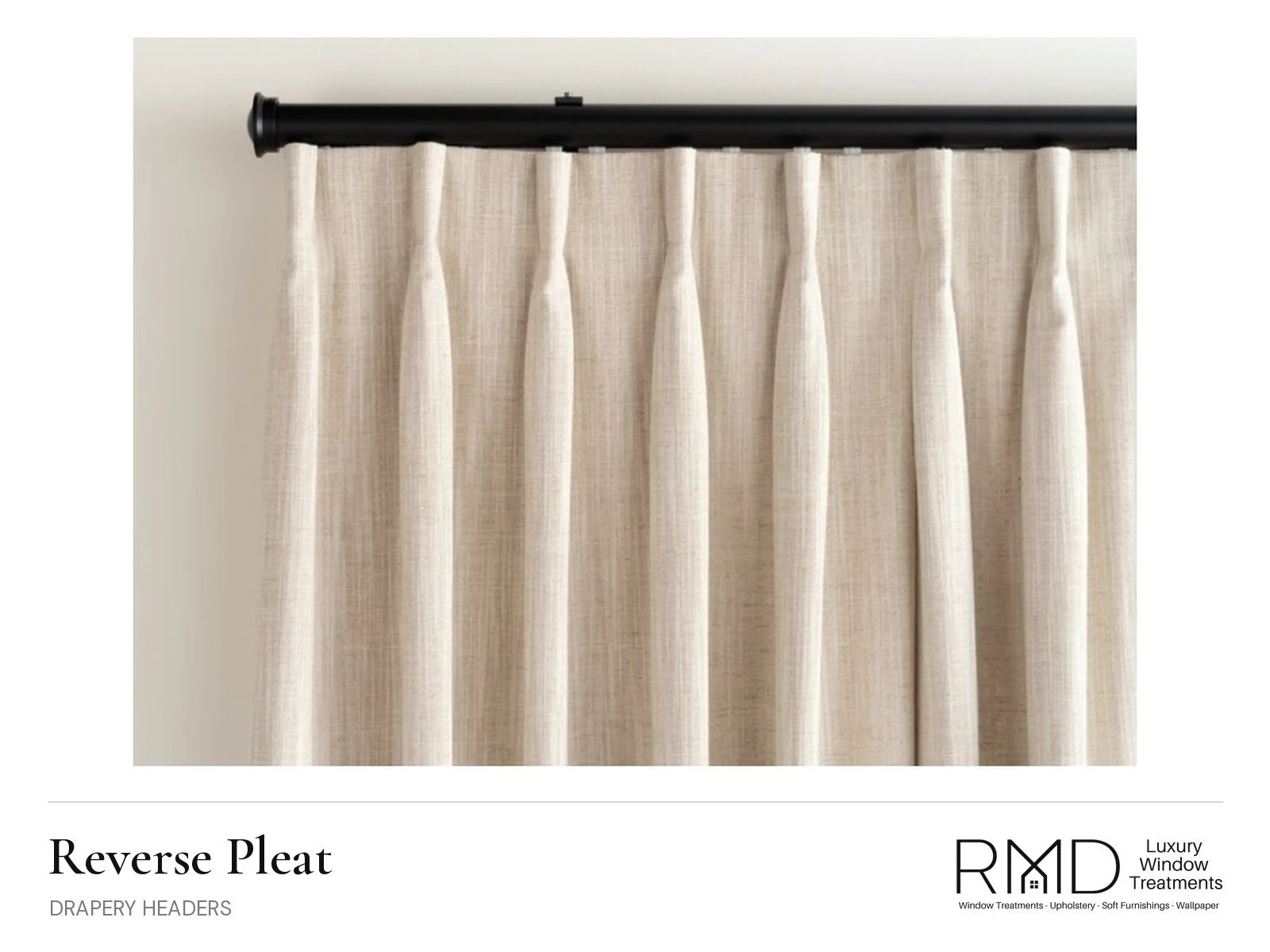
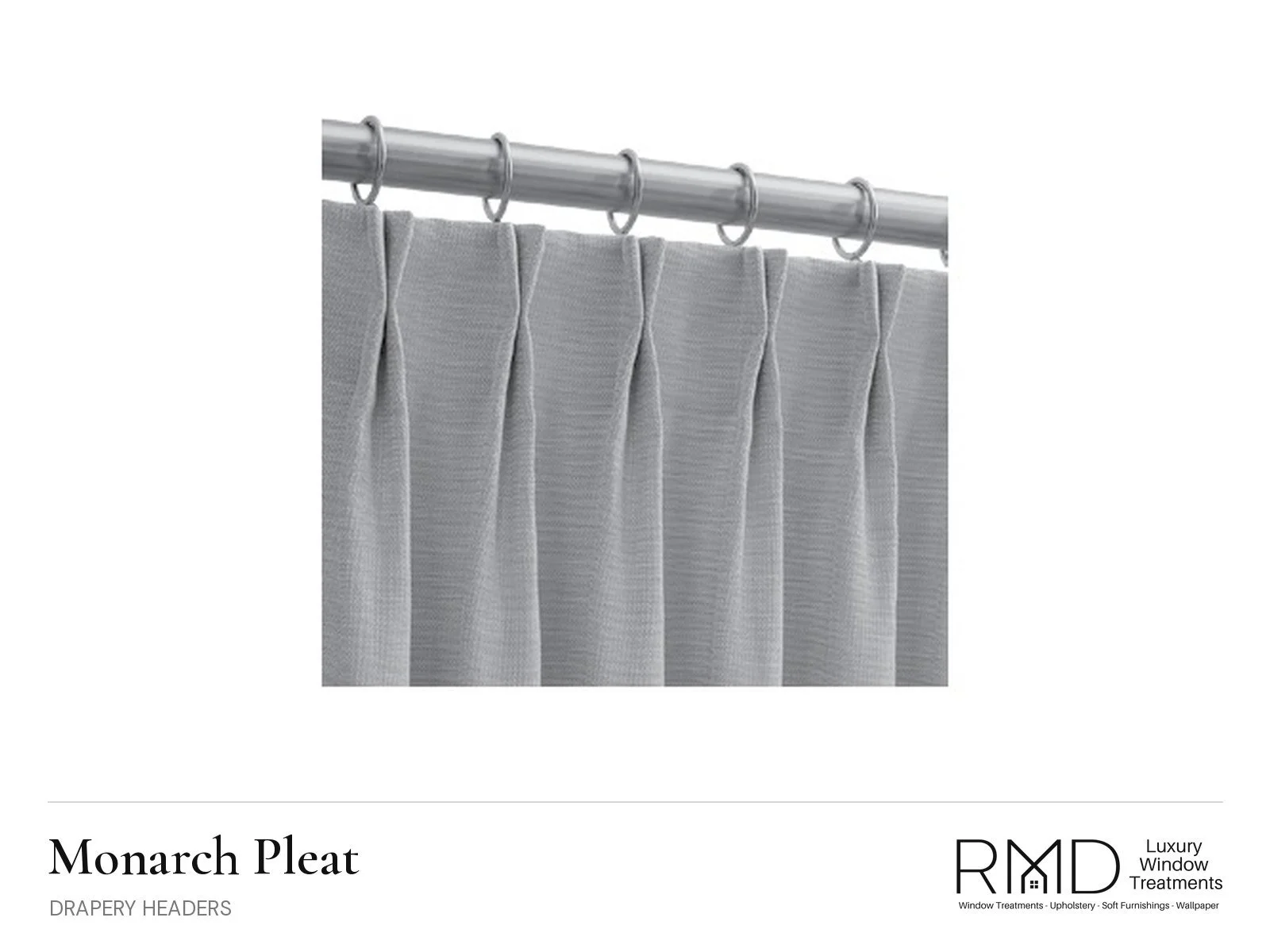
For something distinctive, we also make cartridge pleats (rounded tubes), roll pleats, reverse pleats, monarch pleats and single pleats. Each gives the top of the panel its own rhythm, and we're happy to show samples in person.
Casual headings
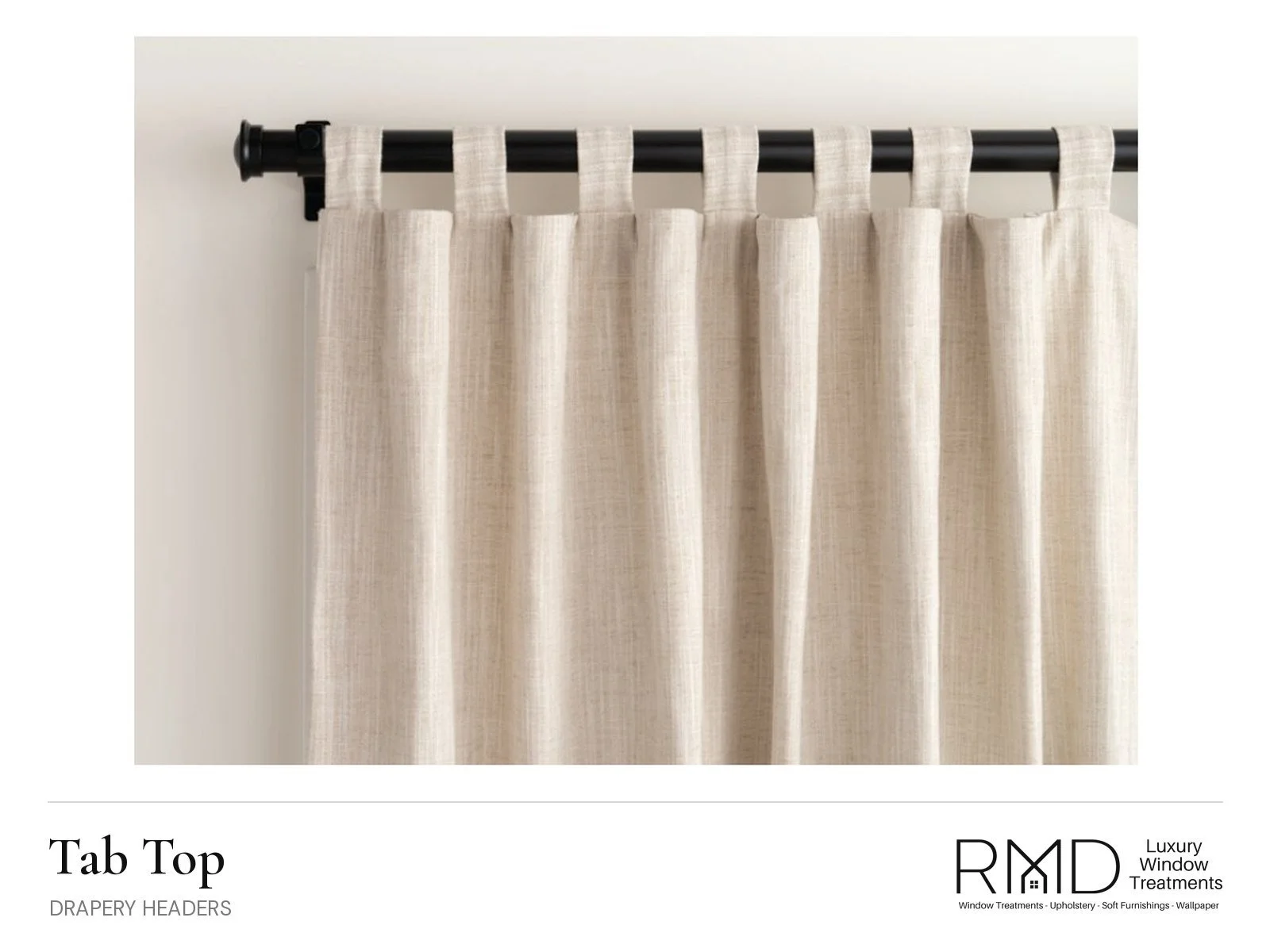
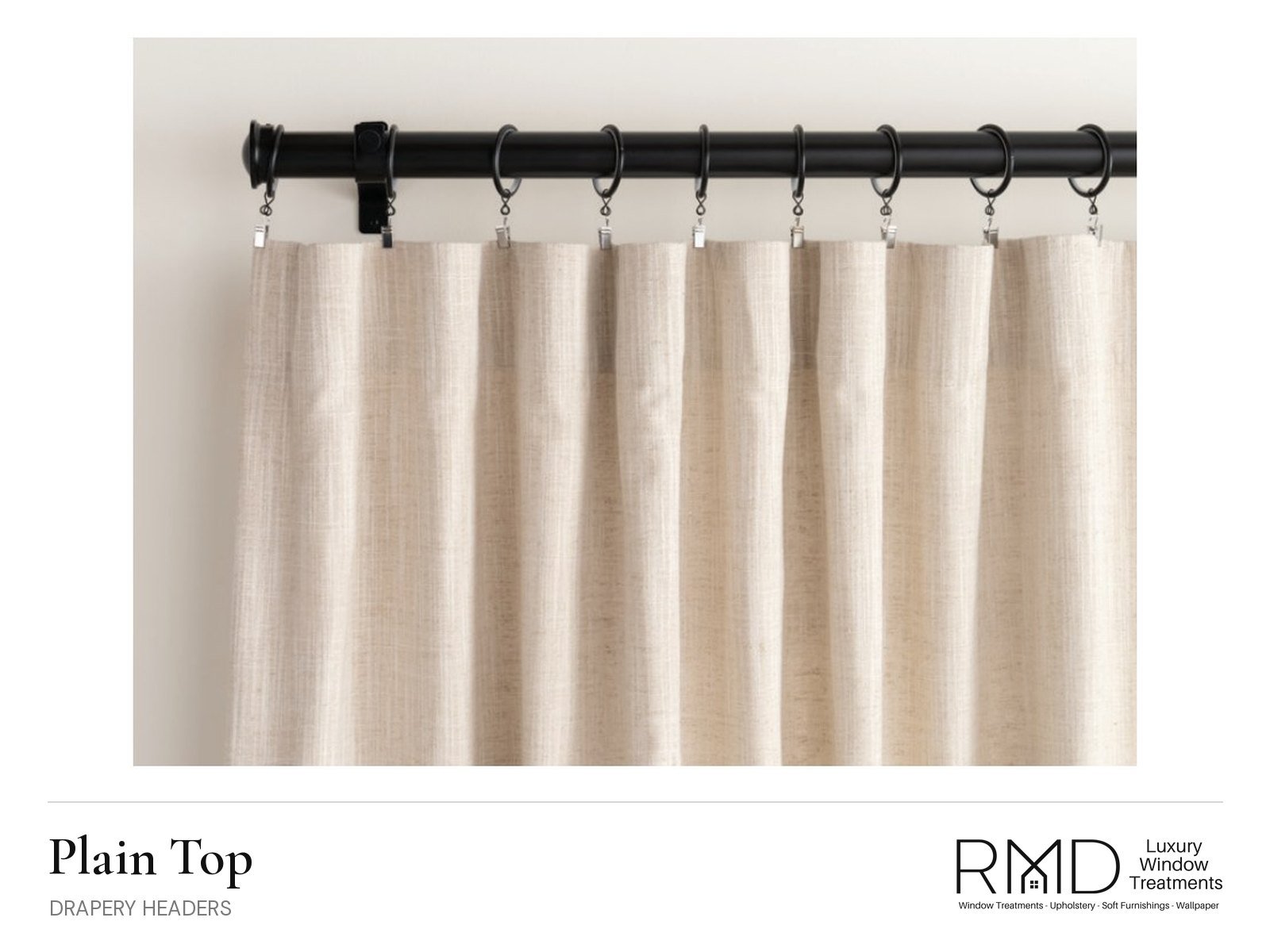
Grommet, tab top, hidden tab, back tab, rod pocket and plain top headings hang directly on a rod for a relaxed look. Grommets come in round, square and diamond shapes and in finishes including black, bronze, golden bronze, brushed nickel, satin brass, vintage gold and aged pewter. These styles work well for family rooms, kids' rooms and stationary side panels.
Five questions to help you choose
How often will you open and close them? For drapery you use every day, especially on wide windows or patio doors, ripplefold on a track or pinch pleat on a traverse rod will glide the most smoothly. For purely decorative side panels, almost any style works.
What's the feel of the room? Clean and modern points to ripplefold or euro pleats. Traditional or formal points to pinch or goblet pleats. Casual and relaxed points to grommet, rod pocket or flat panels.
How tall are the ceilings? Taller windows can carry more structured headings like goblet and pinch pleats. Mounting hardware high and wide makes any window feel bigger, whatever the style.
What hardware do you want to see? Ripplefold usually hangs on a slim track, often ceiling-mounted or tucked into a cornice, so the fabric is the star. Pleated styles pair with decorative rods and rings if you want the hardware to be part of the design.
What fabric are you using? Heavier fabrics and linings hold crisp pleats well. Sheers and lightweight linens look lovely in ripplefold or euro pleats. Bold patterns can look best with flatter, more even folds so the pattern stays readable.
At a glance
Ripplefold (butting or overlap): modern, even waves. Best for wide windows, sliders and motorized drapery. Opens very smoothly.
Pinch pleat (2- or 3-finger): classic and tailored. Best for living and dining rooms. Smooth on a traverse rod or rings.
Euro pleat (2- or 3-finger): tailored but softer. Best for transitional and modern rooms. Smooth on rings.
Goblet pleat: formal and dramatic. Best for tall, stationary panels.
Box, inverted box, relaxed box: flat and tailored. Best for stationary and board-mounted panels.
Grommet: casual, deep folds. Best for family rooms and kids' rooms. Opens easily.
Tab top, rod pocket, plain top: relaxed, cottage feel. Best for stationary side panels.
Finishing details that complete the look
Once you've picked a heading, a few more choices finish the design.
Draw: a split draw opens from the center as a pair, a one-way draw stacks to one side, and stationary panels frame the window without moving.
Length: sill and apron lengths suit shorter windows. Floor length is crisp and easy to live with, a trouser break adds a slight fold at the floor, and a puddle pools fabric for a romantic, formal look.
Lining: standard lining protects fabric and helps it hang well. Blackout lining darkens bedrooms and media rooms, and interlining adds body, insulation and a luxurious drape.
Embellishments: banding, decorative trim, color blocking and tiebacks add a custom touch. Board-mounted drapery hides the hardware for a clean line.
Hardware and motorization: choose from decorative wood and metal rods, finials and rings, or a slim track. Motorized track lets you open and close drapery at the touch of a button.
Every RMD panel is finished with a hand-sewn hem as standard, so the details are as good up close as they are across the room.
Why custom makes the difference
Ready-made panels come in a few fixed widths and lengths, with whatever heading the factory chose. Custom drapery is built for your exact windows. We measure precisely, calculate the right fullness for the style you pick, line and finish each panel, and install the hardware so everything hangs true. That's what gives custom drapery its finished, effortless look.
Not sure which style is right for your space? That's exactly what we're here for. We'll look at your windows, how you live in the room and the fabrics you love, then recommend the heading and hardware that bring it all together.
Make an appointment today. That's the RMD Way.
RMD Turns 14: Thank You to the Homes and People Who Built Us

RMD turns fourteen today. Birthdays invite a look back, and the view is never products or projects first. The view is people: the families who opened their homes to us, the designers who trusted us with their vision, and the craftspeople who have spent their days making each window right.
Where it began
Fourteen years ago, Rebecca Munster decided to start this business. What began as a passion project quickly filled our home with other people’s furniture waiting to be reupholstered. That beginning has grown into trusted partnerships with the area’s best designers and with discerning homeowners across Maryland, Virginia, and Washington DC, and the care Rebecca brought to those first pieces still guides every window we make.
This is simply a thank you.
To our clients
Every home we have worked in began with a conversation in a quiet room with the light coming in. Each family told us how they live, where the morning sun lands, which room they want to feel warm in winter, and which window they never quite knew what to do with. Your trust is the reason we exist, and your referrals to neighbors, friends, and family are the reason we have grown. Our deepest thanks for letting us be part of your homes.
To the designers and builders
Design partners hold us to a high standard, and we are better for it. Your fabric selections, your exact sketches, and your patience as we work through a complicated window have shaped how our workroom and installers operate today. Our thanks for bringing us into your projects and for letting your clients meet the RMD Way.
To our team
The work behind a finished room is quiet and careful. Our account managers measure twice and listen closely. Our workroom artisans cut, sew, and assemble each piece to the exact window. Our installers hang the work with care, clean up after themselves, and walk each family through their new treatments. Fourteen years of good rooms are fourteen years of your effort. Our thanks to each of you.
What fourteen years have taught us
Craft still matters. A lining set correctly, a pleat spaced evenly, and a shade that lifts straight are details most people never notice, and that is the point. A finished window should feel effortless to live with.
Listening comes before measuring. The right treatment depends on how a family uses the room, so every project starts with questions, not a catalog.
Local roots matter. We work across Maryland, Virginia, and Washington DC, and we know the homes here, from historic rowhouses to new construction with walls of glass.
Looking ahead
The next chapter looks a lot like the last one: careful work, honest advice, and a team that treats every home as if it were our own. This holiday season, our gratitude reaches every window we have dressed and every family we have met along the way.
Every client, partner, and friend who has been part of our story has our thanks. New neighbors are always welcome, and our team would love to hear about your home. Schedule a visit at www.rmdlux.com/appointment.
That’s the RMD Way.
How to Prepare Your Windows for Holiday Hosting
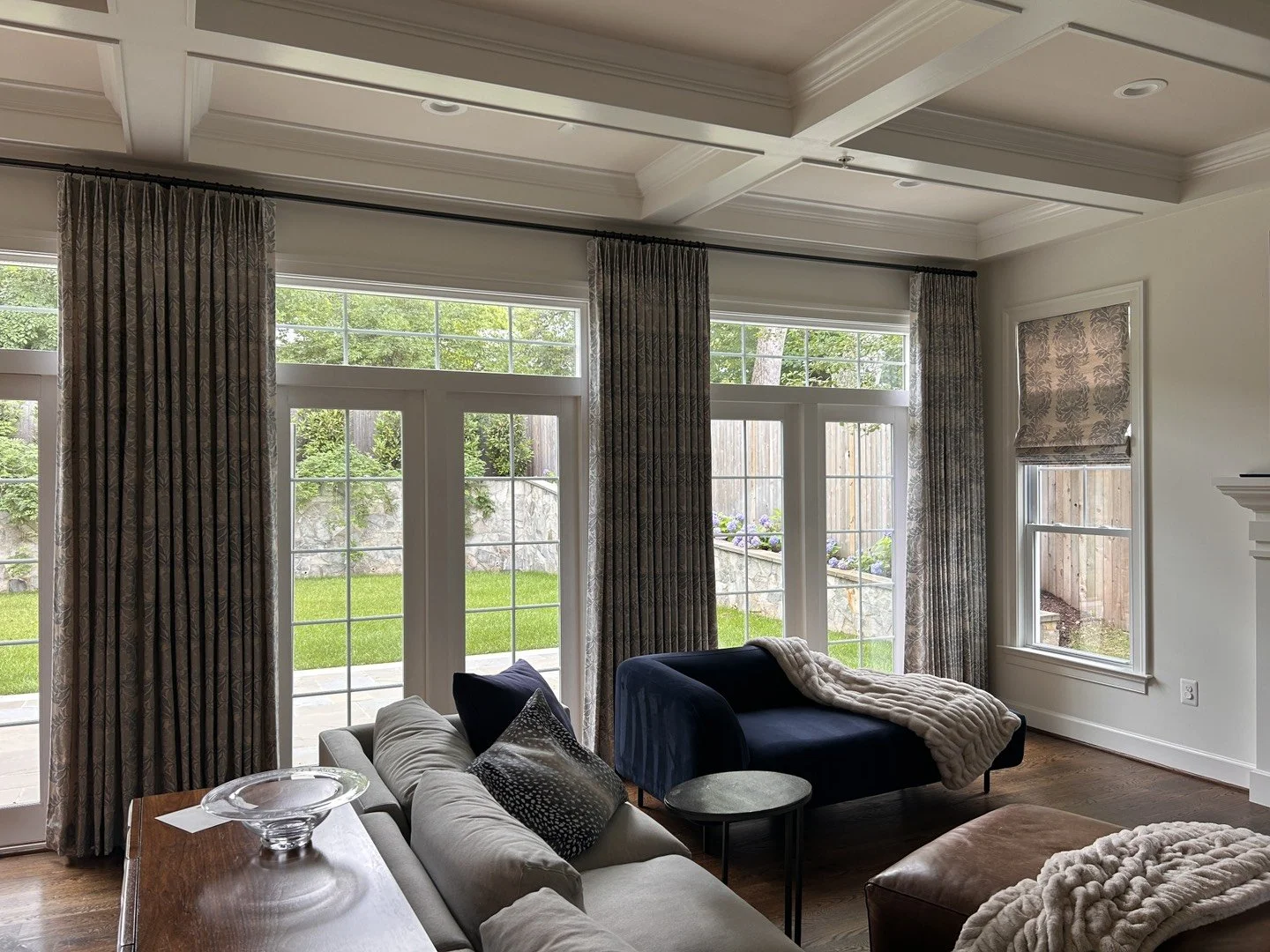
Every host knows the table, the menu, and the guest list. Fewer think about the windows until the sun sets and a bright room turns into a dark mirror, with guests visible from the street and the cold glass felt from the nearest chair.
Windows shape how a gathering feels. Fabric softens the sound of a crowded room, filters low autumn light, and gives the evening a finished look. Treatments chosen with the season in mind let the host stay at the table instead of walking the house closing blinds.
Privacy as the light fades
Dusk now arrives before dinner. A room lit by lamps and candles looks warm from inside and exposed from outside. Lined drapery or lowered shades give the space its own walls, so guests relax and the room reads as a single glowing interior.
Warmth against the cold glass
Large windows lose heat quickly on a December night. Soft, cellular shades trap a layer of air at the glass and make seats near the window as comfortable as any other. Lined and interlined drapery adds a second layer and a fuller, more tailored fall of fabric.
One touch for the whole house
A motorized system lets a host set an entertaining scene in advance. Shades lower at dusk, the formal rooms close for privacy, and the kitchen windows stay open to the garden. Our team programs each scene with the family during installation, so the controls match the way the household entertains.
Choosing fabric for the room
Natural woven woods bring texture and warmth to dining rooms and living rooms, and they photograph beautifully in candlelight. Soft shades suit family rooms and bedrooms where insulation and a quiet line matter most. Drapery adds drama and sound control to rooms that carry the party. Our designers weigh light, privacy, insulation, and style for each window before anything is ordered.
Where craft meets planning
Every treatment begins in our workroom, where skilled artisans measure, cut, and assemble each piece to the exact window. Our installers then hang the work, set the motors, and walk the homeowner through the controls. Custom work is made to order, so an early conversation gives our team room to do the work with care.
For a limited time, Hunter Douglas is offering PowerView Automation at no added charge on select Provenance Woven Wood and Aria Soft Blinds. Our team can explain which windows in your home qualify and how the offer applies to your project.
To see how your windows could set the stage for the season, schedule a visit with our team at www.rmdlux.com/appointment.
That's the RMD Way.
How Color, Fabric, and Window Treatments Create a Welcoming Space
A person walking into a therapy office is often carrying something heavy. Before a single word is spoken, the room has already begun to speak. The light, the color, and the way the windows are dressed all tell a new client whether this is a place to relax or a place to stay guarded.
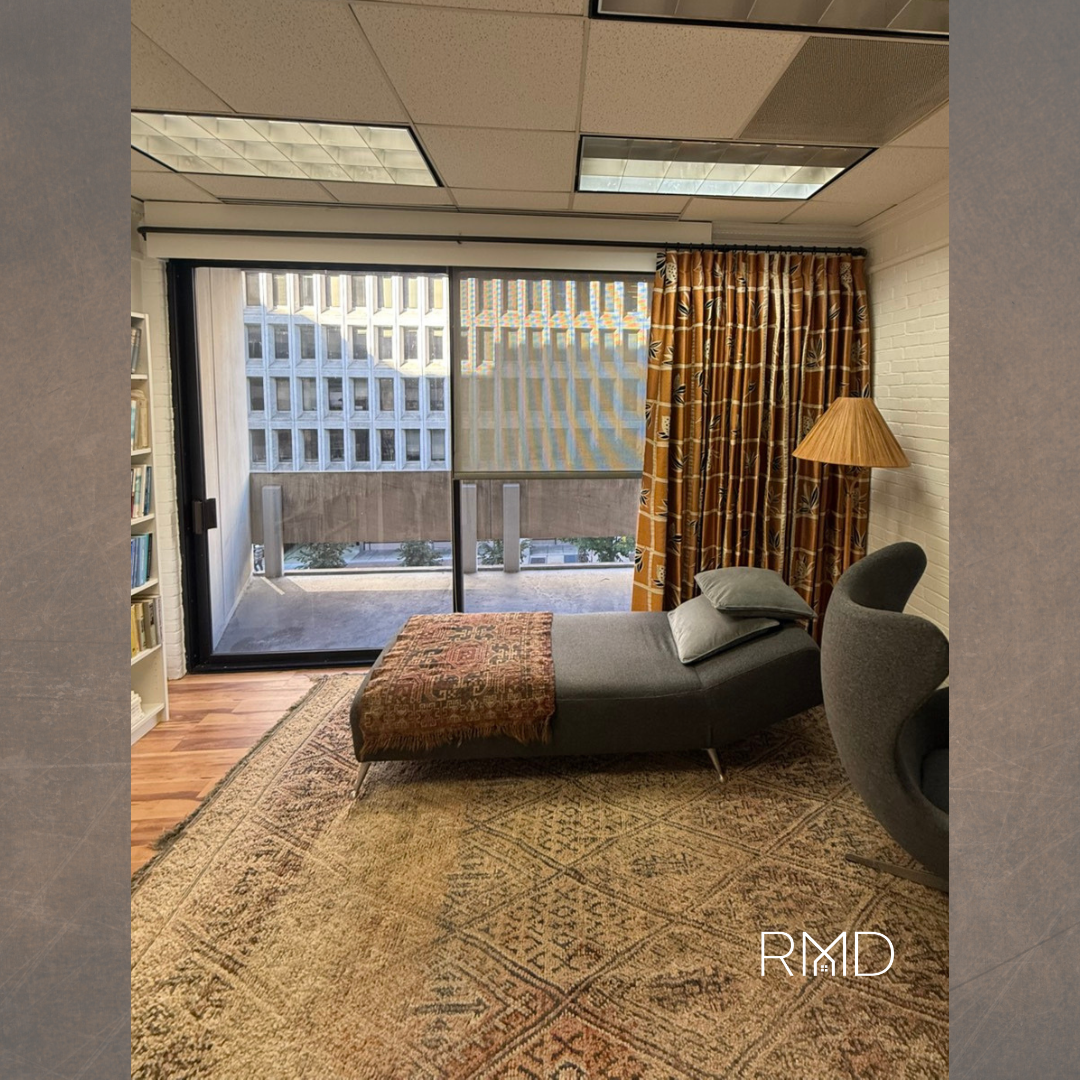
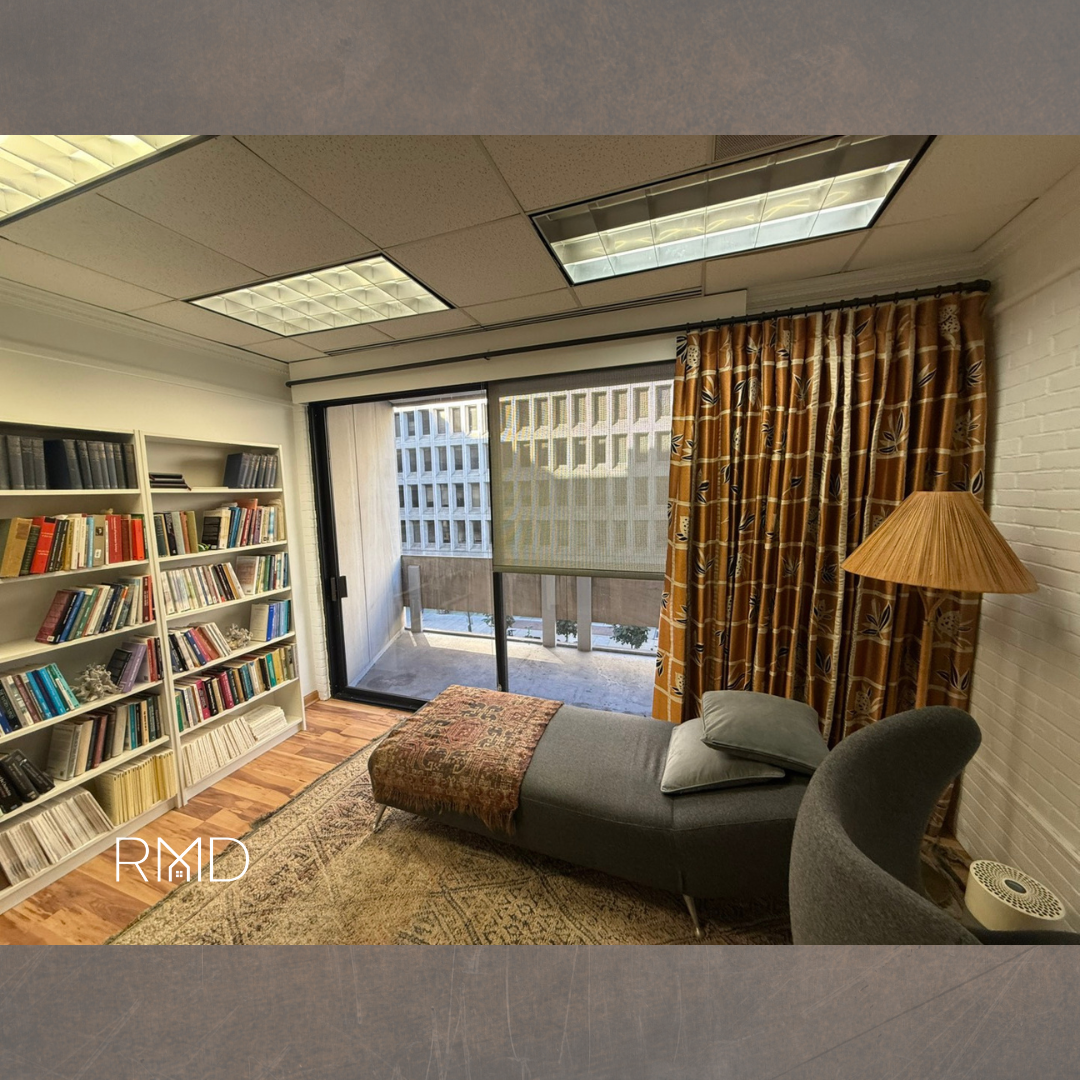
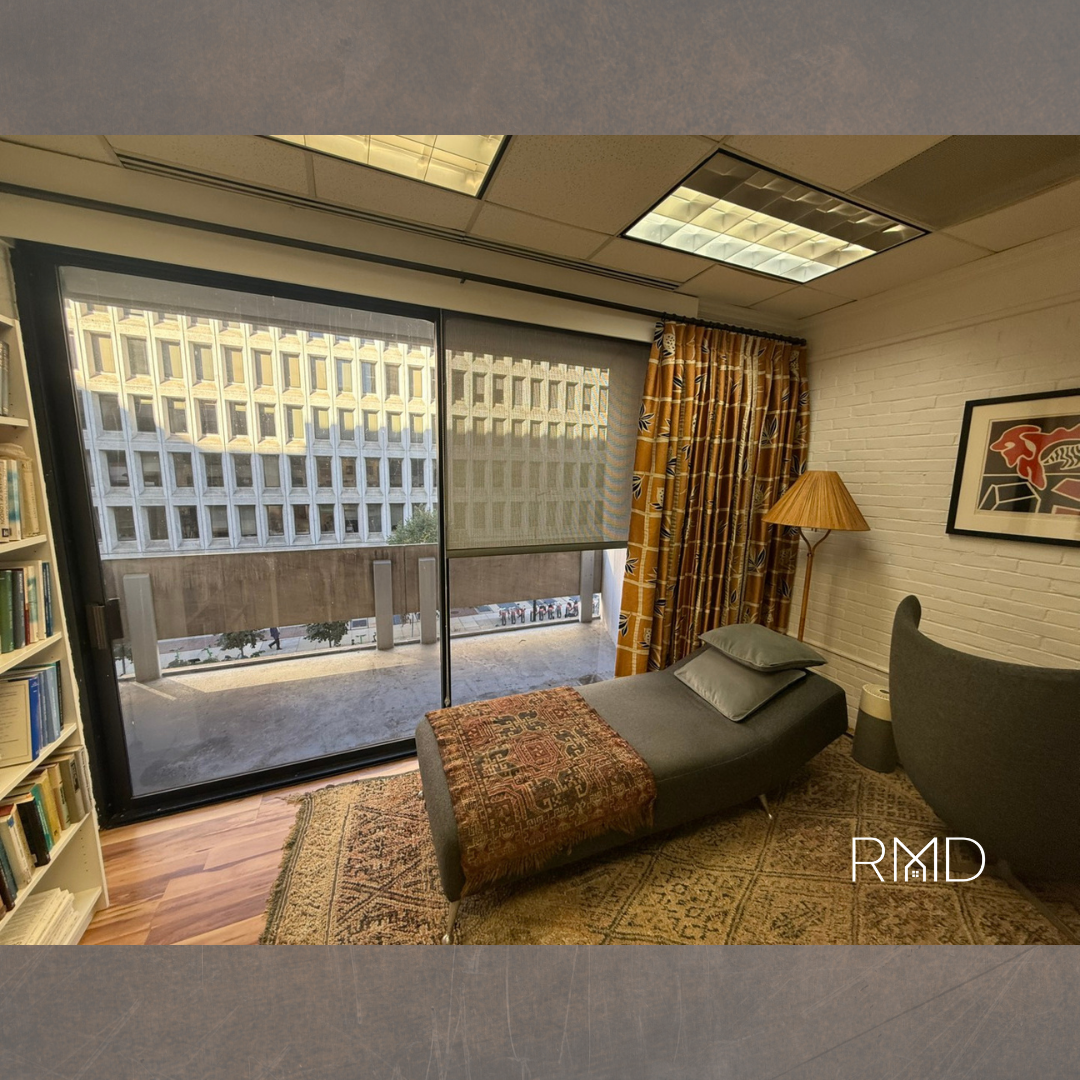
Our team recently created custom drapery for a therapy office, and the result shows how much a single window treatment can do. With careful choices in color, fabric, and fullness, the window now feels warm, open, and calm.
Begin with the light
Natural light is the most generous element in any office, and also the hardest to manage. A bare window lets in glare, heat, and the feeling of being seen from outside. A therapy space needs the opposite. Clients should feel private and unhurried, with daylight softening the room rather than interrupting it.
Drapery solves this gracefully. Drawn fully, it gives a session complete privacy. Drawn partly, it tempers the glare while keeping the room connected to the day. The window becomes a feature of the space instead of a source of distraction, and the practice can adjust the room for a bright morning client or a quiet late afternoon appointment.
Choose color that settles the room
Color sets the emotional tone of a window before any other detail. Cool, stark colors can feel clinical. Rich, warm tones feel inviting. In this office, we chose an amber fabric with a leaf pattern and a soft grid, hung from a dark rod. The color reads as warm and golden in daylight, and it gives the window a feeling of welcome without raising the energy of the room.
The pattern matters as well. A soft, natural motif adds interest without demanding attention, and a gentle grid gives the fabric a calm, orderly rhythm. Bold color works best when it is chosen with intention, and one confident fabric at the window can warm an entire room.
Let fabric do the quiet work
Fabric changes how a room sounds and feels. Full drapery softens echo, which supports privacy and the sense that a conversation will stay within the room. The weight and fullness of the fabric give the window a finished, tailored look that bare glass cannot provide, and the movement of the folds adds softness to a hard edged opening.
Lining is one more choice worth considering. A lined panel hangs with more body, blocks more light, and adds to the feeling of calm. Our designers recommend a fabric and a lining based on the light the room receives and the level of privacy the practice needs.
Plan the window early
Window treatments are often chosen last, after the paint and the furniture. In a space where mood matters this much, they work best when they are planned early. Our designers look at the direction of the light, the size and type of the opening, the privacy a practice needs, and the colors already in the room. We then recommend a fabric, a hardware style, and a mounting that suit the way the room is used.
A few questions help us begin. How much privacy do your clients expect? Which hours does the room receive strong sun? Would a quiet motorized system make adjustments easier between sessions? Should the window feel like a focal point, or recede into the background?
Where craft meets planning
Every treatment begins in our workroom, where skilled artisans measure, cut, and assemble each piece to the exact window. Our installers then hang the work and walk the client through the controls. Every selection is put in writing for approval before anything is released to production, so the final result matches the plan.
If you are shaping a therapy office, a wellness practice, or any room where people need to feel at ease, our team would be glad to talk it through. Schedule a visit with our design team at www.rmdlux.com/appointment.
That's the RMD Way.
Free Motorization on Select Window Treatments Ends December 31
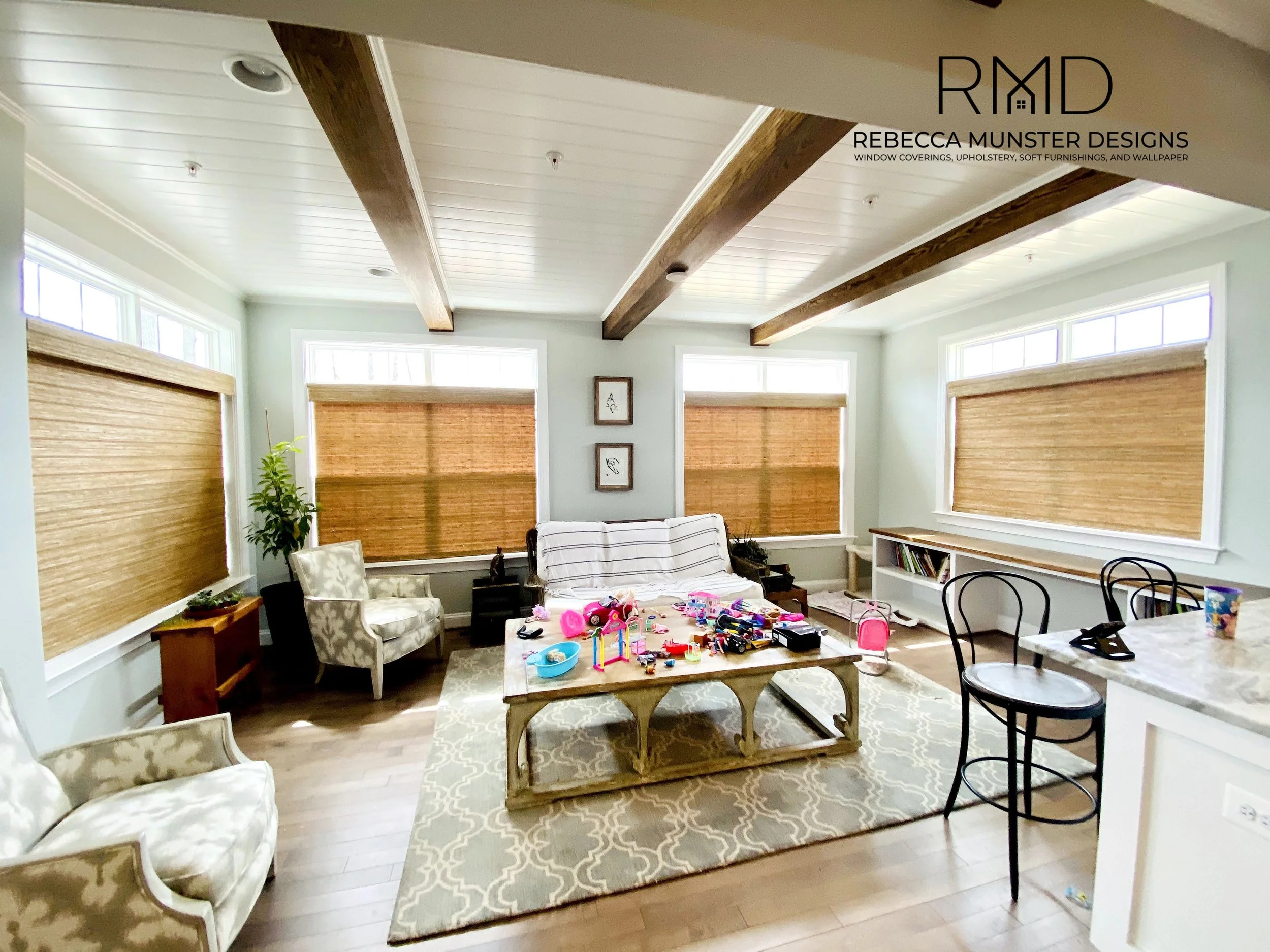
Every year, a homeowner reaches the first week of December with a list of windows that have waited since summer. The living room glare, the bedroom that wakes at dawn, and the dining room that feels exposed at dusk all seem easier to leave for January. Custom window treatments reward the household that decides while there is still room to do the work well.
This December carries an added reason. Hunter Douglas is offering PowerView Automation at no added charge on select Provenance Woven Wood and Aria Soft Blinds, and the offer ends on December 31, 2026. Our team can explain which windows in your home qualify and how the offer applies to your project.
Custom work is made to order
A custom shade is never taken from a shelf. Each one is measured to the window, ordered in the chosen fabric, and then cut, assembled, and checked by artisans in our workroom. Our installers then set the motors and program the controls with the family. Each step asks for care, and a decision made early in the month gives our team room to take that care.
What the offer includes
PowerView Automation lets a shade rise and lower on a schedule, by remote, or from a phone, so the household never has to cross the room. The offer applies to select Provenance Woven Wood and Aria Soft Blinds. Our designers confirm eligibility window by window, so a homeowner knows exactly which treatments qualify before anything is ordered.
Where woven wood belongs
Natural woven woods bring texture and warmth to living rooms, dining rooms, and studies. They filter strong light into a soft glow and pair beautifully with lined drapery at the sides. Motorization makes the largest windows easy to manage, since a single touch moves a heavy shade smoothly.
Where soft shades belong
Aria soft shades bring insulation and a calm, clean line to bedrooms, nurseries, and family rooms. They trap a layer of air at the glass, which matters as winter settles in. A scheduled shade that closes at dusk and opens at a gentle hour gives a bedroom a quiet rhythm.
How a decision is made
A visit with our design team begins with the windows themselves. Our designers weigh light, privacy, insulation, and style for each opening, show the fabrics in the room, and put every selection in writing for the client to approve before anything is released to production. A homeowner who arrives with a list of rooms and a sense of how the household lives leaves with a clear plan.
Where craft meets planning
Every treatment begins in our workroom, where skilled artisans measure, cut, and assemble each piece to the exact window. Our installers hang the work, set the motors, and walk the homeowner through the controls. Early decisions give that process the room it deserves.
To decide with confidence while the offer is open, schedule a visit with our team at www.rmdlux.com/appointment.
That's the RMD Way.
Define Done: Clarity for Your Window Treatment Vision
A vision begins as a feeling, and a feeling is not yet a window. The journey from one to the other runs through questions, and the quality of the finished room depends on how many of them get asked and answered along the way.
Think About the Questions the Barista Asks You When You're Getting Your Coffee
Hot or cold, oat milk or none, a splash or more, sweetener or no, small or large, whose name goes on the cup, for here or to go, and whether the order is paid: the barista asks each one before a single drink is made. The questions are not an interruption. The questions are how a drink becomes the right drink. A barista who skips them has made a guess, and a guess rarely matches the picture in the customer's mind.
A window treatment follows the same path with far more questions, and each one brings the finished room into sharper focus.
First Questions: The Feeling
The journey opens with the room itself. What should the space feel like, calm, bright, private, dramatic, or warm? Where does the light come from, and what should it do when it arrives? A homeowner rarely begins with fabric or hardware. A homeowner begins with a feeling, and the first questions give that feeling a name the artisans can build toward.
Next Questions: The Daily Life
Daily habits shape the design as much as taste does. Morning routines, evening privacy, a sleeping child, a home office with afternoon glare, a pet that loves the window seat: each detail answers a question about how the treatment must perform. Light filtering or blackout, a gentle lift or a motorized touch, a light fabric or a weighty drape all follow from these answers.
Detail Questions: The Product
The conversation then moves to the pieces themselves. Roman shade or drapery, fabric and finish, lining, header style, hardware, and the quantity for each room all take shape here. Every choice narrows the gap between the idea and the object, and every unanswered choice leaves room for a surprise nobody wanted.
Site Questions: The Window Itself
Windows are rarely as square as they look. Inside or outside mount, depth, obstructions, and measurements confirmed on site give the artisans the facts the vision depends on. A treatment can only look intentional when it fits the opening it was made for.
Final Questions: The Experience
Done includes the experience around the window as well. How will the installation day unfold? What will the client know at each step? What does a finished site look like when the installers leave? A treatment that looks beautiful but arrived through a confusing process is not fully done.
How to Know Enough Questions Were Asked
The journey ends when the client can describe the finished window and the artisans describe the same one. Morning light glowing through linen without glare, evening privacy that arrives with one touch, a hem that falls exactly where the eye expects it, a shade that lifts smoothly every day: when both sides see the same picture, the done state is clear.
Clarity protects the vision. Designers keep the look they promised, homeowners meet no surprises, and the artisans build with confidence because the answers exist before the first cut. A detailed definition of done is not paperwork. It is the path a feeling takes to become fabric, hardware, and light in a room.
A vision worth building deserves a picture of finished that everyone involved can see. A consultation begins at www.rmdlux.com/appointment
That's the RMD Way.
The Thread: How RMD Protects Your Vision From First Sketch to Final Install

A designer's reputation hangs on the last ten percent of a project. The palette is approved, the fabric is chosen, the client is excited, and then the work leaves the designer's hands and enters a chain of vendors, fabricators, and installers. Somewhere along that chain, intent can quietly thin out. A pattern match drifts. A return depth changes. A detail discussed on a call never reaches the person holding the shears.
RMD Lux was built around preventing that. The principle is called the Thread, and it is the reason designers who work with RMD stop chasing their own projects.
The Thread Is Your Vision, Carried Intact
Every RMD project begins with the designer's vision, not with a product. That vision is the thread, and it moves through five stages without ever resetting.
The account manager listens to the designer and the client, then translates what was said into intent. The reason behind each choice is recorded alongside the choice itself. Operations turns that intent into clear specifications. Artisans in the RMD workroom craft each piece with skill and precision, working from the specification and the reason behind it. Installers bring the finished work into the home, clean and exact.
The work changes at each stage and the owner changes with it. The vision does not.
What This Means for the Designer
Fewer repeated explanations. A designer who has shared a vision once should never have to restate it to a second or third person. The account manager holds the why, so the designer is not forced to act as project manager for the workroom.
Questions asked early. Every person at RMD uses a simple test before moving forward: if the work continues and something is wrong, how hard will it be to fix later? A choice that is easy to adjust keeps moving. A choice that is hard, expensive, or emotional to undo stops for a conversation. Designers hear about a question while it is still a question, never as a surprise at the install.
Clarity in writing and in conversation. The RMD team confirms what is said in writing and what is written out loud. The designer is never left to reconcile a phone call against an email.
Layering, not overwriting. Each artisan adds expertise, precision, and protection to the designer's concept. No one at RMD substitutes a new idea for the one the client approved.
Ownership at every handoff. The person holding the thread is accountable for it while it is in their hands, and accountable for passing it forward with the context the next person needs.
The Workroom Advantage
Many window treatment vendors outsource fabrication, which places a handoff between the designer's request and the hands doing the work. RMD keeps the workroom in house. The people who sew, structure, and finish each treatment sit close to the people who consulted with the designer, so questions travel directly instead of through a chain of phone calls. Partnerships with leading manufacturers such as Hunter Douglas extend the range of what a designer can specify without adding another handoff.
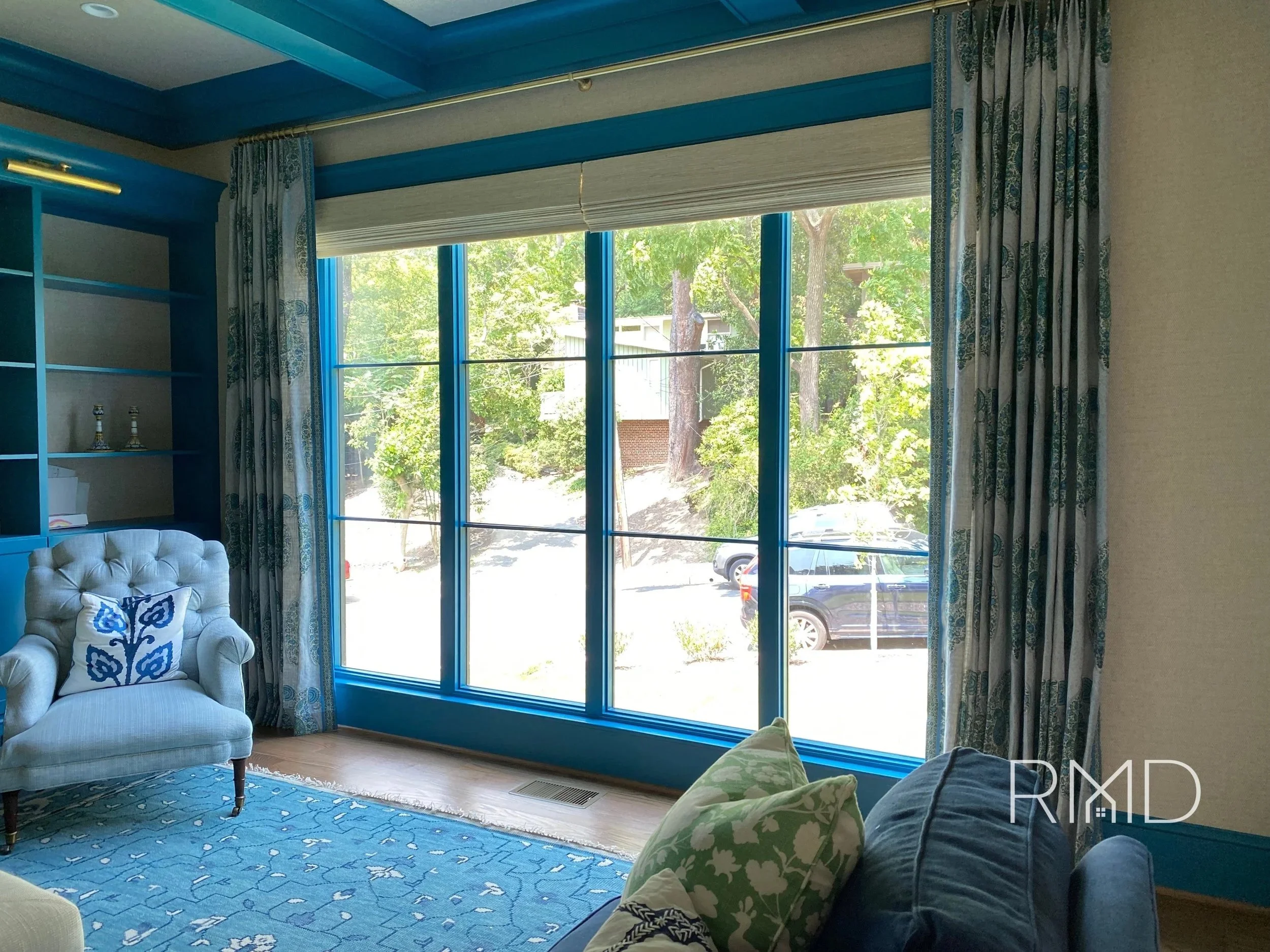
A Partner Who Elevates the Designer
RMD's Trusted Partnerships program was designed for interior designers, builders, and trade professionals who want a window treatment partner that protects the client relationship as carefully as they do. The program rests on four commitments: a flawless client experience, the custom workroom advantage, VIP partner access, and collaboration that elevates the designer.
The client rarely learns why the room feels so right. The designer knows. The drapery falls the way the concept imagined, the shade sits true in its frame, and the installation day passes without a single call for reassurance. That is a thread protected from start to finish.
Ready to see how RMD can carry your next vision? Schedule a conversation with the team at www.rmdlux.com/appointment.
That's the RMD Way.

Trusted Partnerships: How RMD Takes the Window Treatment Solution Off the Designer's Plate
A designer's reputation is built room by room, and the window treatments are often the final layer that decides whether a room feels complete. Yet few parts of a project demand as many moving pieces. Measurements, selections, approvals, fabrication, delivery, and installation each carry their own risks, and each one reflects on the designer whose name is on the project.
RMD built its Trusted Partnerships program around a simple idea. The designer should be free to design, and the RMD team should carry everything that follows.
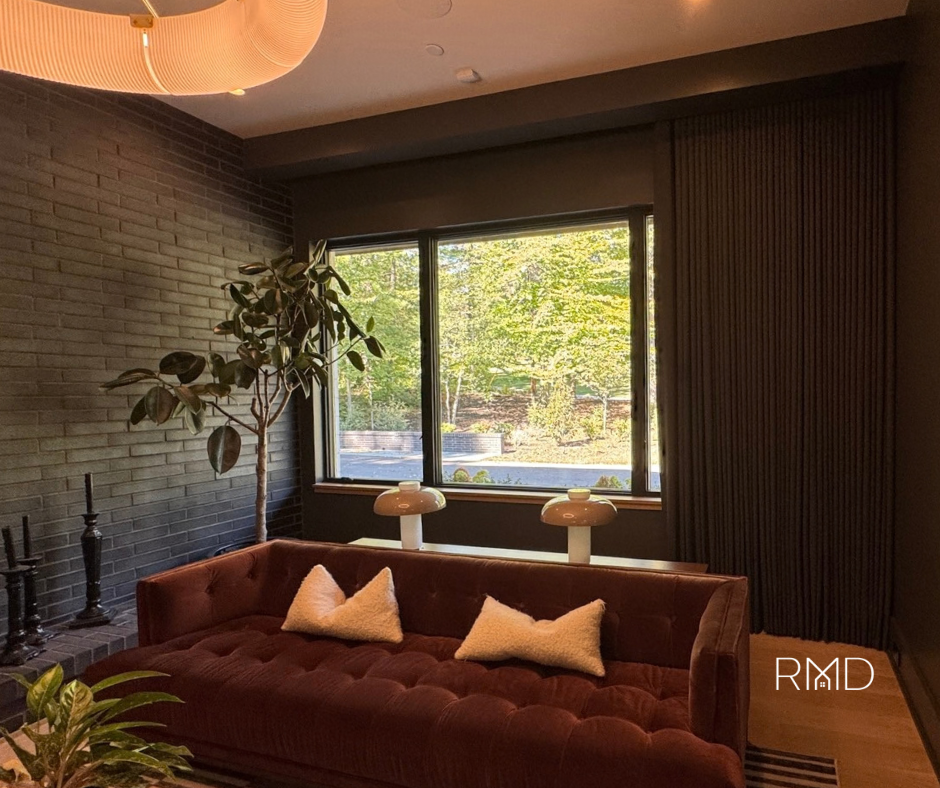
A Flawless Client Experience
White glove care defines the RMD approach, from the first design consult through installation. Every detail has an owner on the RMD team, and communication stays clear and consistent along the way. Clients feel looked after, and that feeling returns to the designer as trust. A smooth window treatment experience protects the reputation that took years to build.
The Custom Workroom Advantage
Craftsmanship happens in house at RMD. Skilled artisans in the RMD workroom handcraft draperies, shades, and soft furnishings to couture standards, with close oversight that outsourced production rarely allows. Direct access to the people who make the work means questions are answered quickly, details are verified, and quality is protected from the first cut of fabric to the final pressing. Designers gain a production partner who understands that a surprise at the end of a project is a failure at the beginning of one.
RMD also draws on long standing relationships with premier manufacturers such as Hunter Douglas and respected fabric houses, so designers can specify with confidence across both custom workroom products and hard treatments.
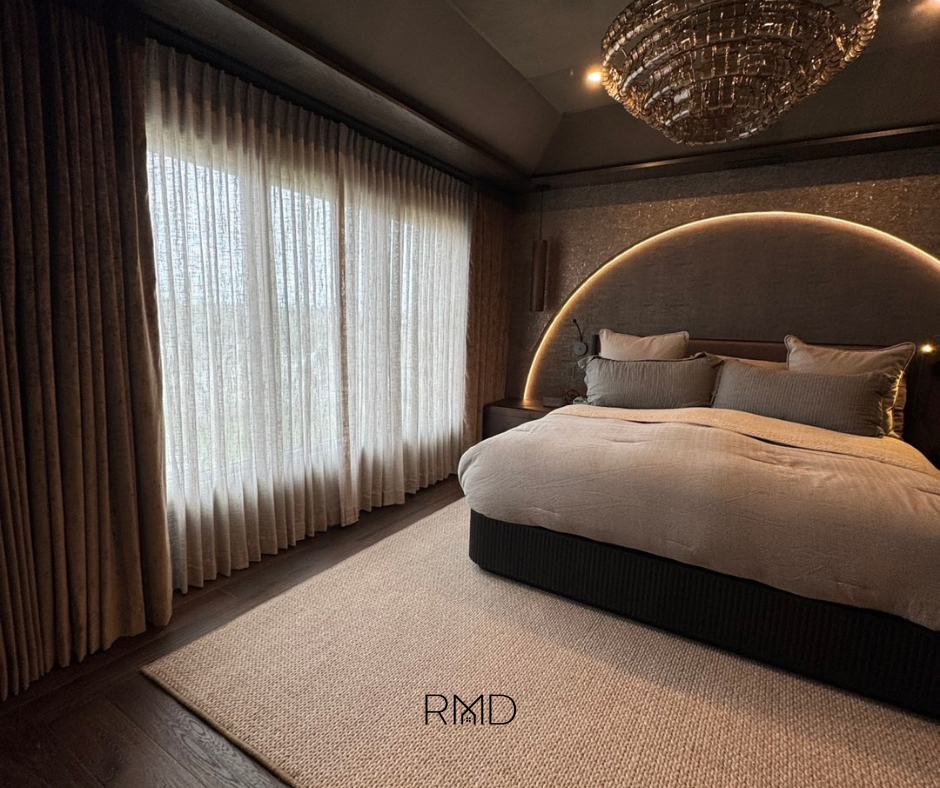
VIP Partner Access
Partnership brings access. Designer partners receive exclusive invitations to the RMD showroom, first looks at designer collections, and curated items from RMD's VIP partners. These benefits give designers fresh options to bring to clients and an early view of what is coming next.
Collaboration That Elevates the Designer
RMD represents the designer's brand with professionalism, communication, and pride. The team understands that every measurement taken, every sample presented, and every installation completed speaks on behalf of the designer. Clients feel cared for from the first measure to the final reveal, and the designer receives the credit for a project that ran beautifully.
What Moves Off the Designer's Plate
Precise measuring, selection guidance, written approval of design choices before production, workroom fabrication, coordinated delivery, and careful installation all sit with the RMD team. The designer keeps the vision and the client relationship. RMD manages everything required to bring that vision to life.
Begin a Partnership
Interior designers who want a dependable window treatment partner are invited to meet the RMD team and see the workroom difference firsthand. A conversation is the first step toward fewer vendors to manage, fewer details to chase, and more time for the work designers love.
That's the RMD Way.
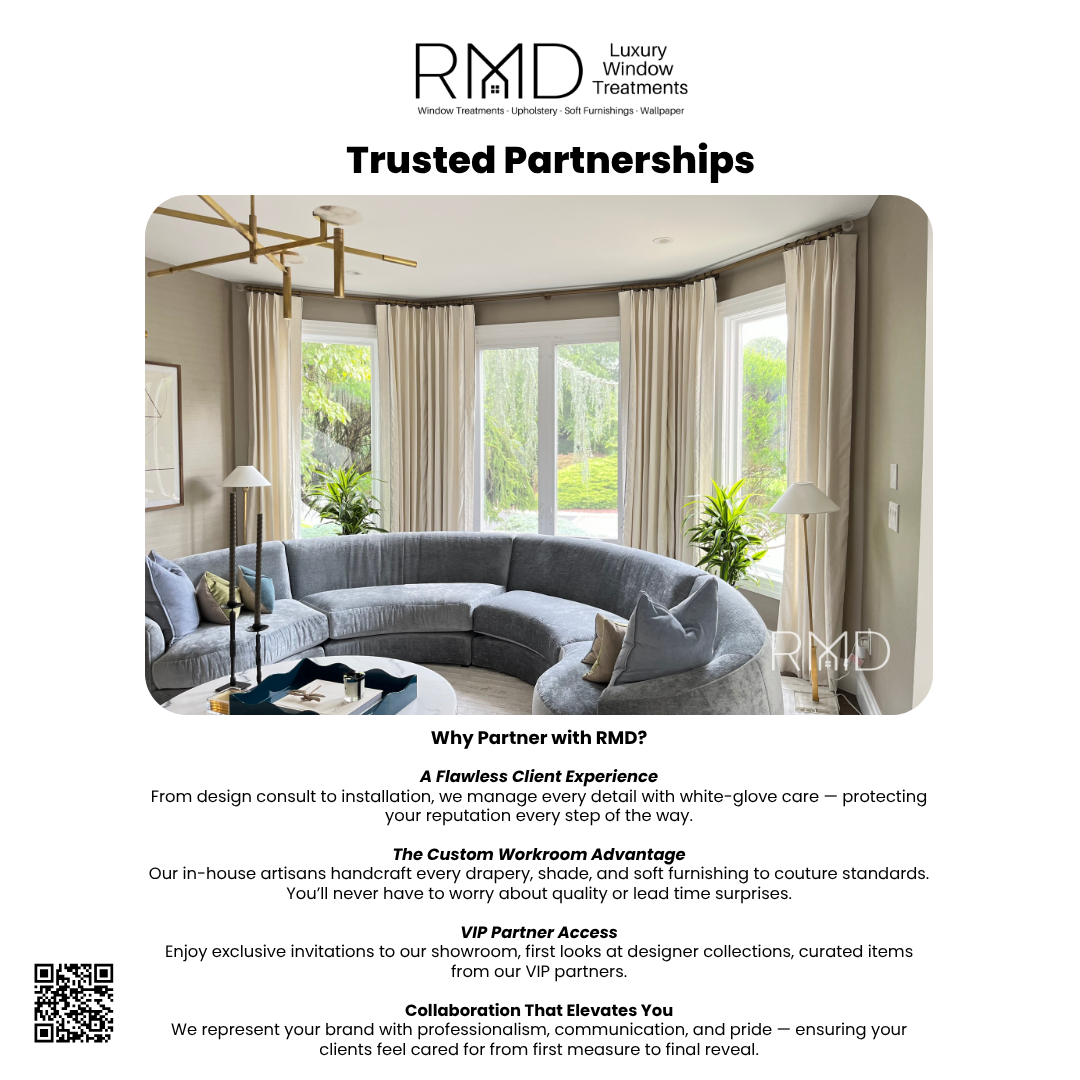
Custom Drapery as the Finishing Touch: How Window Treatments Transform a Room
The Finishing Touch: How Custom Drapery Transforms Your Room
A room can be almost finished. The sofa is there. The colors are chosen. The lighting is right. Everything is in place except one element that makes all the difference: the window treatments.
This is when most people make a mistake. They treat drapery as an afterthought. Something to cover the window. Something to order quickly because the room is already done. But that's when drapery becomes the missed opportunity that sits in front of you every single day.
Custom drapery isn't a finishing touch because it comes last. It's a finishing touch because it finishes what everything else started.
The Room Before the Drapery
Imagine a living room that's been designed carefully. The furniture is placed. The colors work. The lighting is intentional. But the windows are still bare. The room feels incomplete. It's missing the frame that says the design is done. It's missing the element that ties the whole space together.
Then drapery is hung. Fabric chosen to complement, not compete. Proportions that match the window exactly. Pleats pressed by hand. Seams reinforced with precision. The room shifts. Suddenly it feels complete. Intentional. Like someone cared about every single element, including the one that frames the view.
What Changes When Drapery Arrives
Control. The room goes from exposed to intentional. Light is managed. Privacy is no longer a question. The view is framed instead of just visible. The entire mood of the space changes.
Cohesion. Every other element in the room started making sense the moment the drapery was hung. The sofa now has a backdrop that speaks the same language. The fireplace has a frame that matters. The lighting works with the fabric instead of against it.
Luxury. There's no shortcut to the feeling that comes from custom drapery built to your exact specifications. Floor to ceiling. Fabric chosen for weight and drape. Hardware that disappears. Installation that's precise. This is the difference between a room that's furnished and a room that's designed.
The Rooms People Forget About
People often overlook media rooms. Living rooms where the view matters less than the function. Bedrooms where light control is everything. Dining rooms where the drapery frames the table. These are exactly the spaces where custom drapery becomes the element that transforms everything.
A media room with floor-to-ceiling draperies in textured fabric. The room becomes a cocoon. Sound is absorbed. Distraction is eliminated. Function and luxury meet in one place.
A living room where drapery anchors the color palette. The sofa finds its context. The fireplace has its backdrop. The room stops being a collection of furniture and becomes a cohesive space.
A bedroom where drapery controls the light and the mood. Close them and rest. Open them and connection to the outside world. Everything shifts with the fabric.
Why This Matters
You've invested time and money and intention into your space. You've chosen colors. You've placed furniture. You've thought about lighting. And then you ask a window treatment question like an afterthought, like it doesn't matter as much as everything else.
It does. It might matter more.
Custom drapery isn't a detail. It's the element that says you care about the whole room. That you understand proportion and weight and how fabric moves in light. That you're willing to build something specifically for your space instead of accepting what comes off the shelf.
This is why finishing touches matter. They're not small. They're the difference between a room that's good and a room that's yours.
Schedule a consultation with RMD. Let's talk about the drapery that will complete your space.
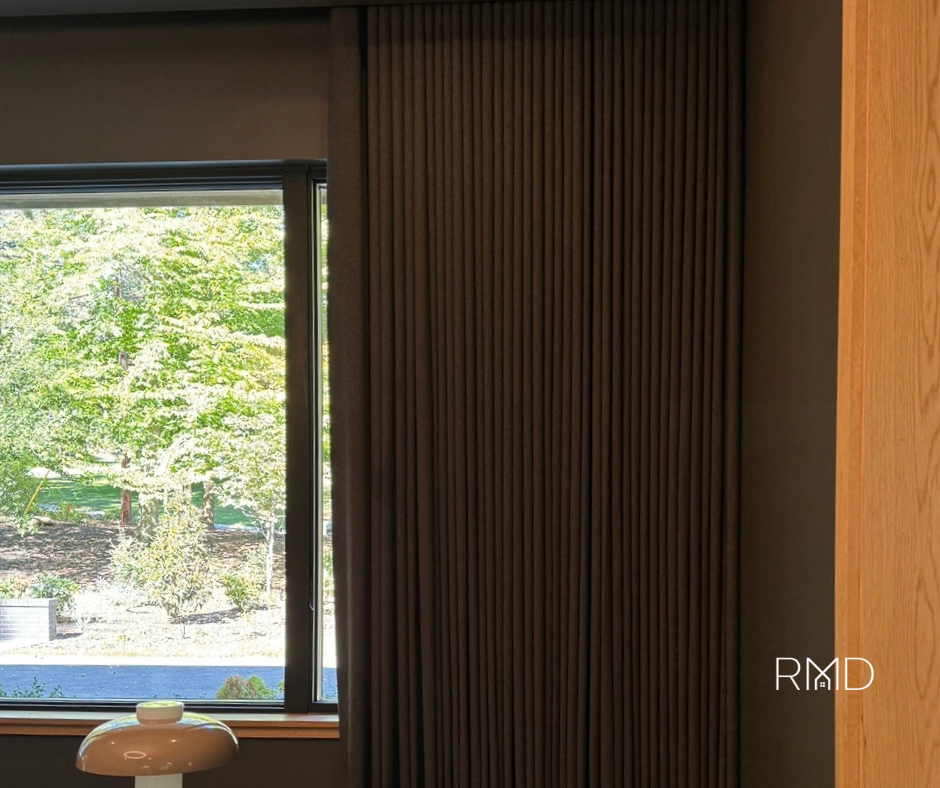
Motorized Woven Wood Shades: Natural Texture, Effortless Control
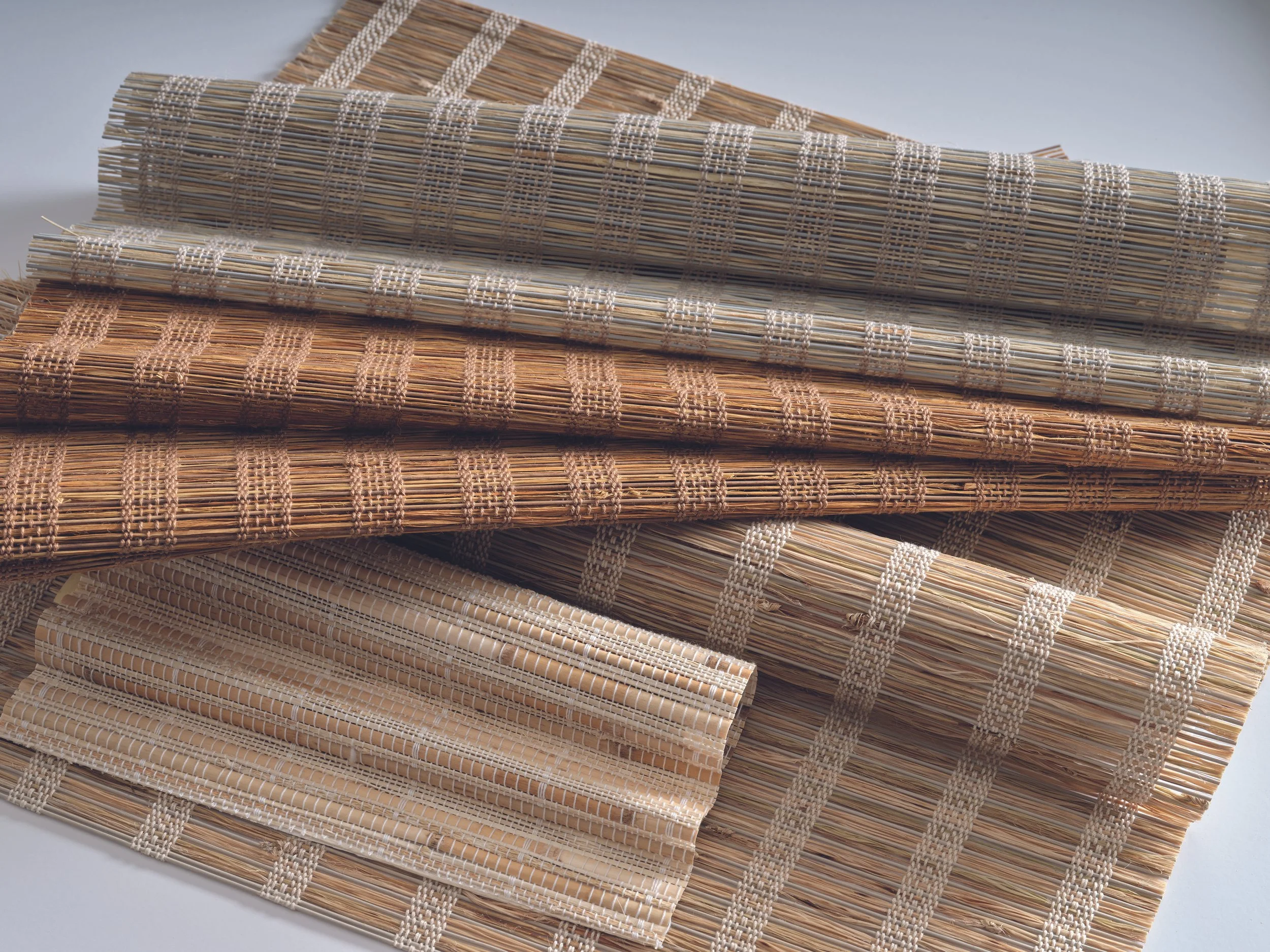
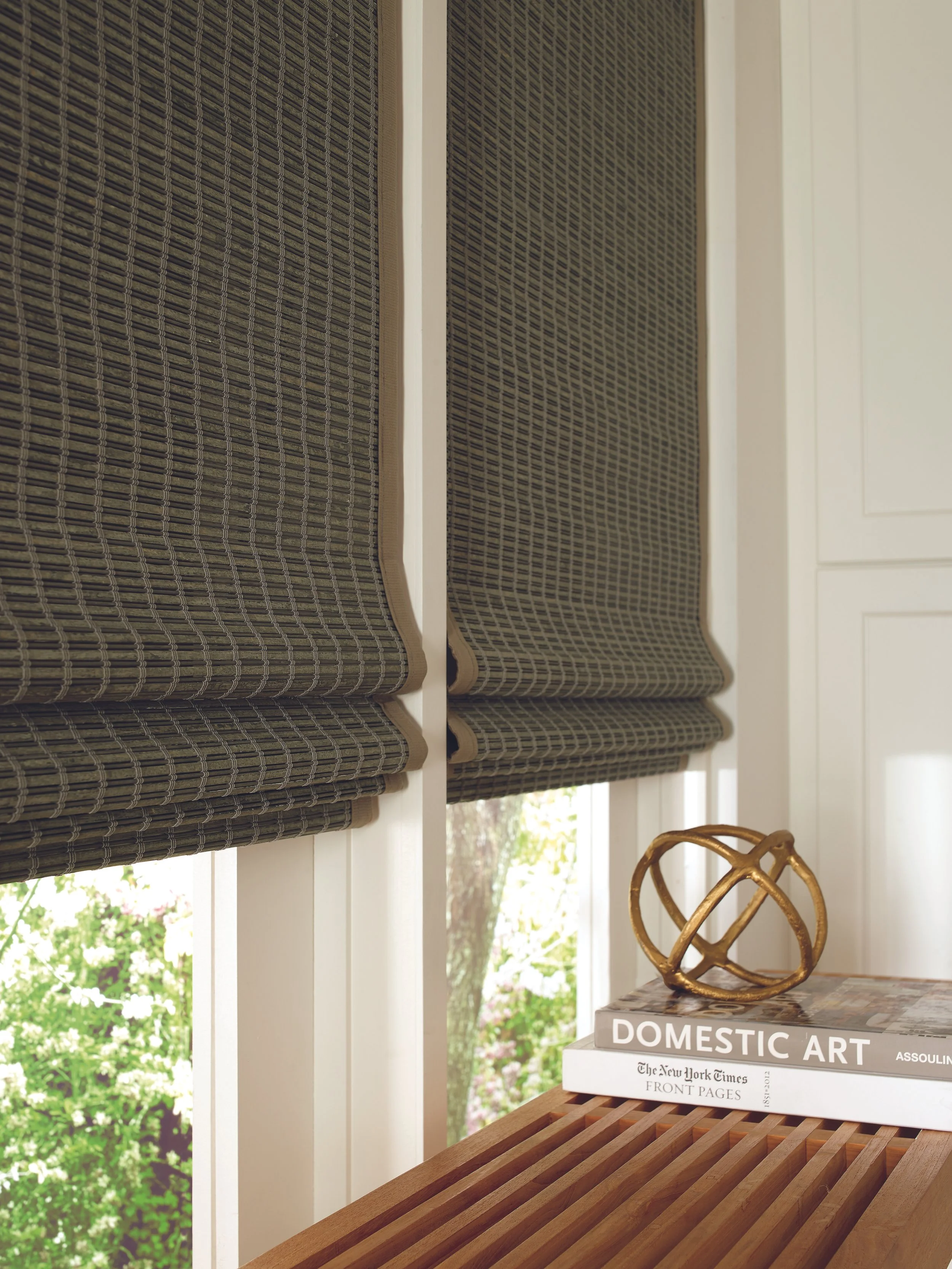
Woven wood is a material of the hand. Reeds, grasses, and bamboo, woven into shades with natural variation in every fiber, bring warmth that a room feels before anyone names it. Motorization adds a second quality that homeowners come to value just as much, which is ease. Provenance Woven Wood Shades from Hunter Douglas, paired with PowerView Automation, deliver both.
WHAT MOTORIZATION CHANGES
A traditional shade asks something of the person using it. Windows must be reached, cords must be handled, and a room with six windows means six trips. Motorized woven woods remove the effort. A smartphone, a tablet, or a remote moves the shade to the chosen position, and the natural look of the weave stays exactly as intended, with no exposed pull cords to interrupt it.
LIGHT THAT FOLLOWS THE DAY
Scheduling is where PowerView Automation earns its place. Shades can be set to reach preferred positions at chosen times, so a family room can open to the morning, soften at midday, and lower as the afternoon glare arrives, all without anyone touching a control. Natural fibers filter light into a warm, golden glow, and a schedule keeps that glow consistent from one day to the next.
Several shades can also move together. A room with a bank of windows opens or closes in one motion, which gives the space a composed, deliberate look in every position.
WHERE MOTORIZATION MATTERS MOST
Tall windows above stairways, wide glass doors, and windows behind furniture or over a tub benefit first, since these are the openings people avoid operating by hand. Primary bedrooms gain a quiet morning wake up. Dining rooms and family rooms gain a way to change the mood of the room as an evening begins. Homes with young children or pets also benefit from the absence of exposed cords.
PowerView is compatible with smart home systems, so the shades can sit alongside lighting and other controls the household already uses.
A THOUGHT ABOUT FIT AND FINISH
Motorization performs best when the shade is measured and installed with precision. Alignment across a row of windows, the way a woven shade stacks, and the finish of the headrail all shape the final result. The RMD team treats each of these details as part of the craft, and our artisans guide the selection of material, liner, and operating system for every room.
From October 6 through December 31, Hunter Douglas includes PowerView Automation at no charge on Provenance Woven Wood Shades, which makes this a natural season to choose texture and effortless control together.
Appointments are open at www.rmdlux.com/appointment.
That's the RMD Way.
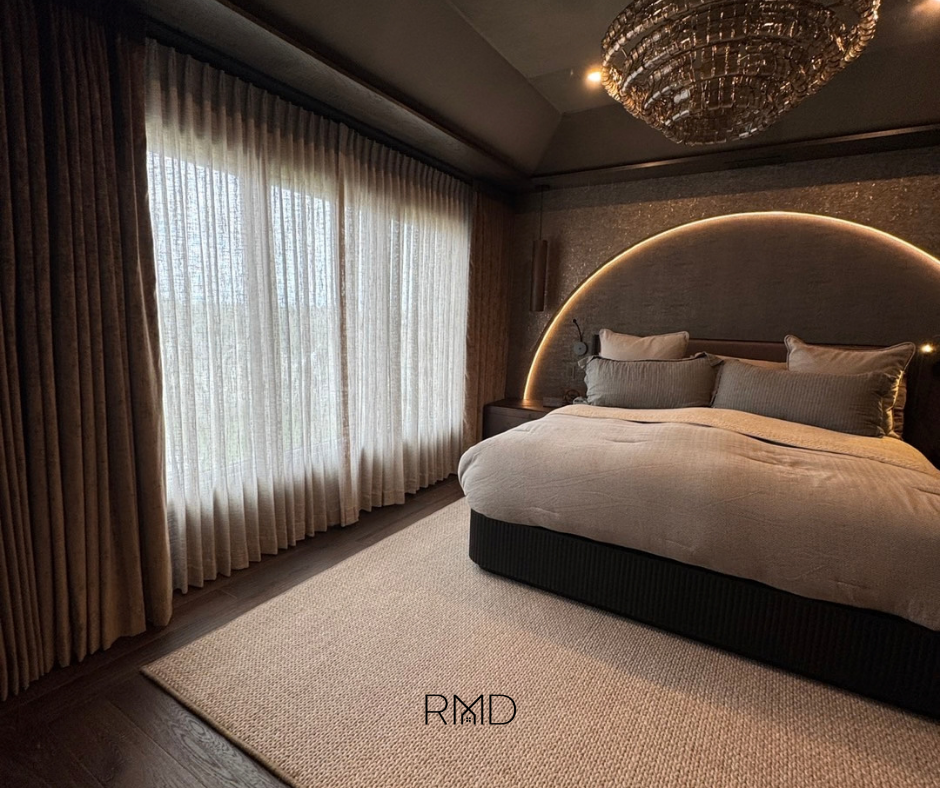
Why Your Primary Bedroom Deserves Custom Draperies That Actually Work With Your Room
Your bedroom isn't your office. It's not a showroom. It's the room where you stop working and start resting. And that changes everything about how you should think about window treatments.
A standard set of store-bought curtains might technically cover the window. But they don't control light the way you need it to. They don't hang with the proportion that makes the room feel intentional. They don't say that someone measured, thought, and built something specifically for this space.
Custom draperies for a primary bedroom solve problems that generic treatments can't touch.
Control Without Compromise
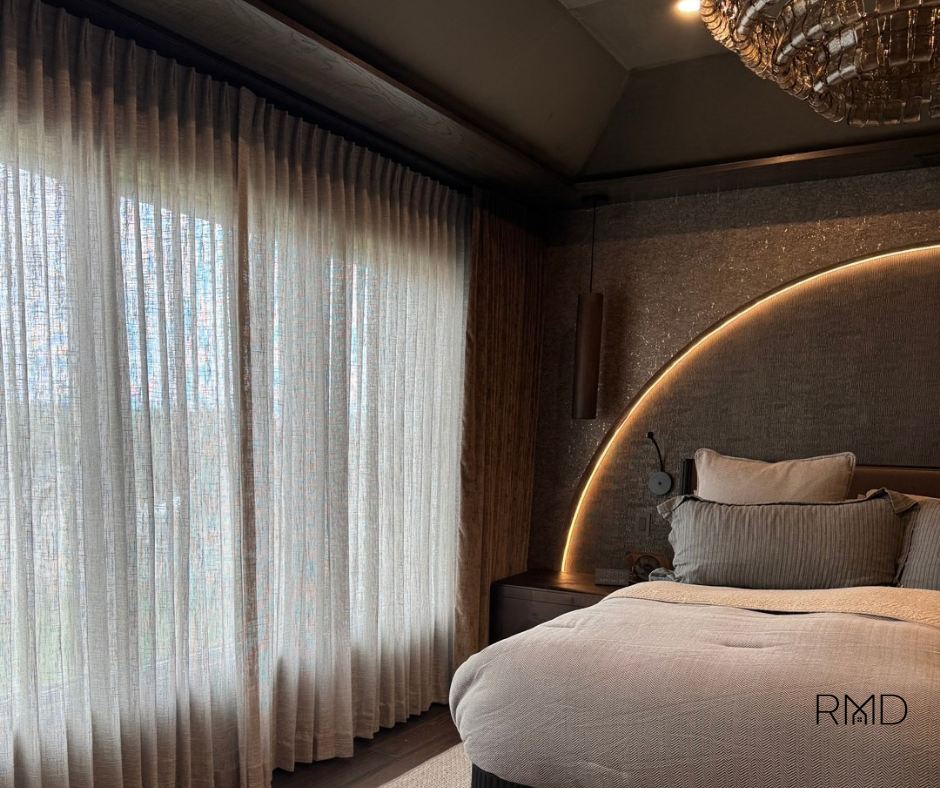
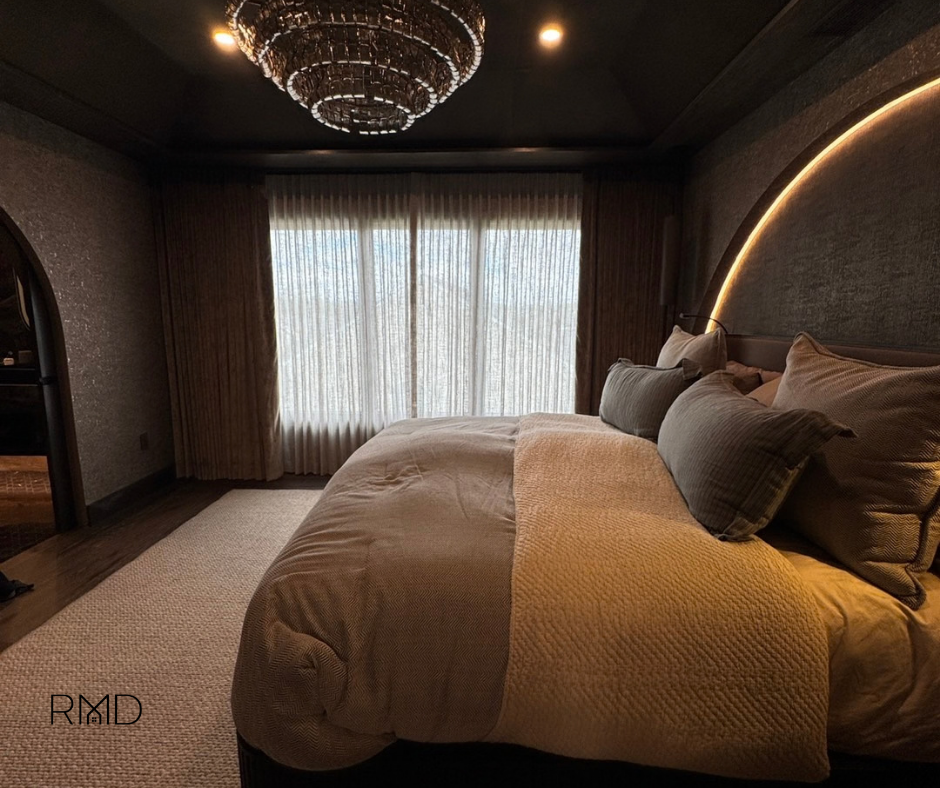
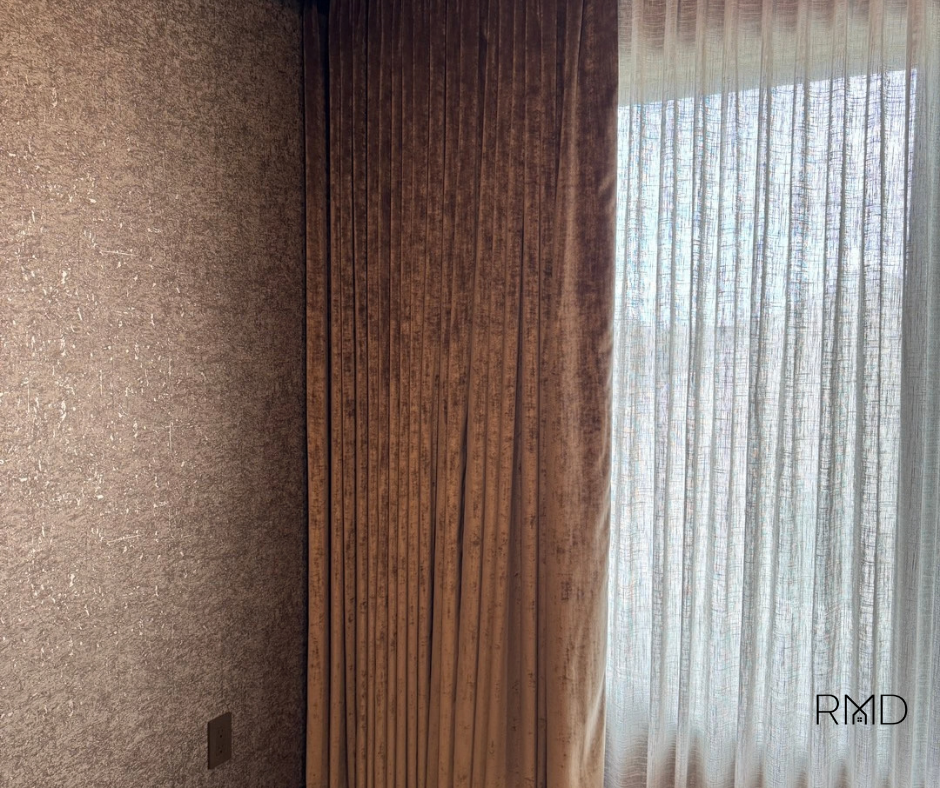
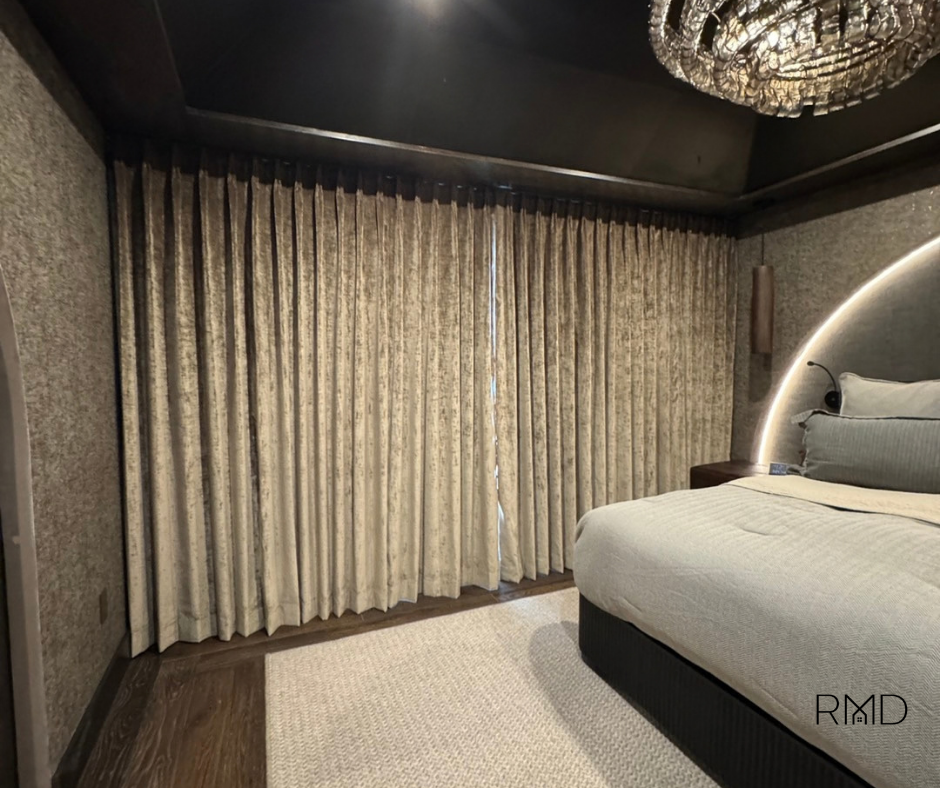
Light matters at night. So does privacy. A standard rod with lightweight panels doesn't give you either reliably. Custom draperies are built to your exact window dimensions, with fabric weight chosen for what you actually need. Sheer panels that filter morning light without exposing the room. Blackout layers that close completely when sleep matters more than the view. Layering isn't decoration. It's function built into fabric.
Precision That Changes Everything
A drapery panel that's hemmed correctly hangs differently than one that isn't. Pleats that are pressed and set by hand fall in rhythm instead of sagging. Seams that are reinforced stay strong through years of opening and closing. The weight of the fabric, the way it moves, the exact length to the floor, these aren't minor details. They're the difference between a room that feels intentional and one that feels like you compromised.
The Backdrop to Rest
Your bedroom is where the day stops. Where you close the door and the world outside becomes less important than the quiet inside. The window treatments frame that transition. They control how much light enters. They muffle outside sound. They become the visual anchor of the room.
When draperies are built with precision and hung with care, they don't announce themselves. They just work. Silently. Exactly as intended. That's when the bedroom becomes what it's supposed to be. A sanctuary that belongs to you.
Most people settle for what fits the budget and came in the right color. But there's a difference between covering a window and framing a bedroom that actually supports the way you live. Custom draperies built to your space, your light, your proportions, and your needs aren't a luxury upgrade. They're the foundation of a room that works.
Schedule a consultation with RMD and let's build primary bedroom draperies that actually matter.
(240) 489-1001
That's the RMD Way.
Fall Cleaning your Window Treatments: An Investment you should consider
You’re starting to switch to pumpkin spice lattes, you've packed away the beach towels, and maybe even cleaned out a closet or two. But before you start patting yourself on the back for adulting so hard, there’s one thing you’ve probably forgotten: your window treatments.
Yes, those gorgeous draperies and shades that make your home look like it belongs in a magazine? They’ve been quietly collecting dust, pollen, and pet fur like overachievers.
Why Clean Now?
Fall is the perfect season to give your window treatments some love. With holiday gatherings right around the corner, they deserve to look as fresh as your newly fluffed throw pillows. Plus, cleaner fabrics mean better air quality — a win for your lungs and your design cred.
The Gentle Touch
First rule: step away from the vacuum attachment of doom. Most drapery fabrics prefer a softer approach. A light dusting with a microfiber cloth or a once-over with the upholstery brush. For Roman shades or rollers, a damp cloth and mild detergent work wonders. Treat them like silk scarves, not gym towels.
The Deep Clean
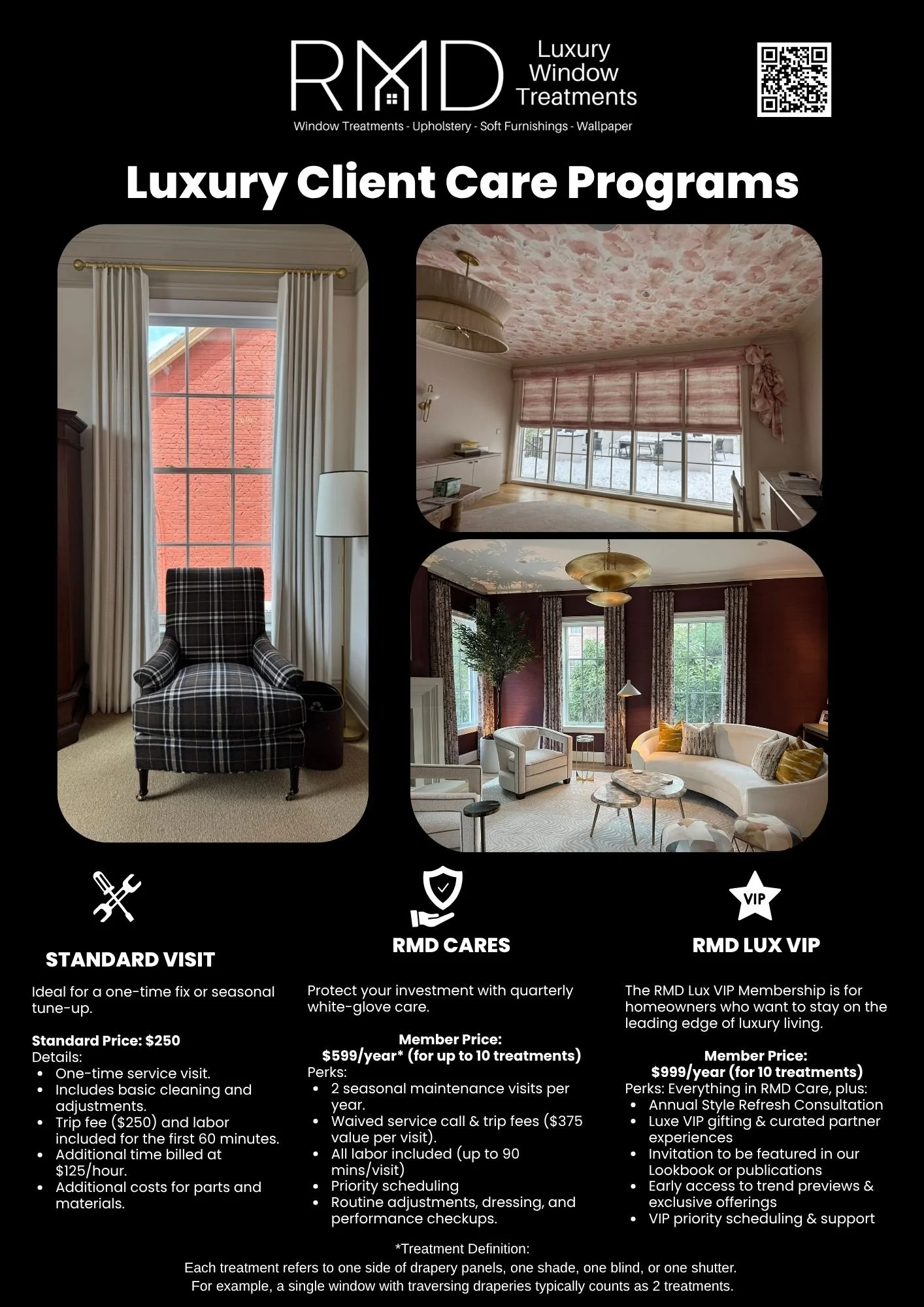
If your treatments haven’t seen daylight without a layer of dust since 2020, it might be time for a professional refresh.
At RMD, we offer cleaning as part of our RMD Cares Membership. Meaning your drapes get the 5-star spa treatment they deserve, and you don’t have to lift a finger.
Bonus Points: Maintenance Mode
While you’re at it, check your hardware, cords, and motorized systems. Nothing ruins a cozy night faster than a drape that refuses to close. A quick once-over ensures everything runs smoother than your favorite latte foam.
The Takeaway
Your draperies and shades work hard year-round: insulating, filtering light, and setting the mood. They deserve a little gratitude cleaning before the guests arrive. Because when Aunt Linda comments on how spotless your home looks, you’ll know it’s not just the floors — it’s those freshly revived, fabulous windows stealing the spotlight.
This Season, Create the Backdrop to Your Life.

The best rooms aren't decorated. They're lived in.
Fall is the season when people finally stop and notice the spaces around them. The light changes. The pace slows. Suddenly you're home more often, paying attention to how a room feels, how it works, whether it reflects who you actually are.
That's when window treatments matter most.
A beautifully hung drapery panel doesn't just frame a view. It sets the tone for the entire room. It says you noticed. You measured. You chose fabric that moves the way you wanted it to move and hangs with the weight you intended. Custom motorized shades don't just block light. They give you control over the space without fussing with strings or chains or manual adjustments.
These details are the backdrop to everything that happens next. Morning coffee with someone you love. An afternoon of focused work. Evening light that makes the room glow exactly right. The moments that become memories happen in front of those windows.
Most people settle for what comes off the shelf. They accept standard solutions because customization seems complicated or expensive or unnecessary. But there's a difference between a window treatment and one that's truly yours.
RMD's design team and custom workroom create that difference. We listen to how you live. We understand proportion and pattern. We finish every detail the way it matters. Whether you're designing for your family's home or creating spaces for your clients, we build treatments that work as intentionally as you live.
This season, make time for the projects that matter. The ones that transform how you feel in a room. The ones that become the backdrop to your life.
Let's create something worth living with.
Schedule a consultation with RMD.
(240) 489-1001
That's the RMD Way.
Fresh Fall Ideas: From Primary Bedrooms to Living Rooms
Rooms shift when the season changes. Afternoon light angles differently. Temperature swings demand heavier fabrics and layered textiles. The energy of spaces transforms from summer brightness to autumn warmth. A refresh that starts with the window and extends through soft goods—new drapery, updated shades, coordinated textiles—transforms rooms without a full renovation.
Fall is when this work happens best. Clients are ready to invest. Designers are booking projects. Fabric deliveries move faster than summer. Projects that get designed now can be complete by October, ready for the shift in season and the holidays that follow.
What's Shifting This Season
Primary bedrooms demand richness. Summer's lightweight linens and sheer layers stop working when mornings turn cool. West-facing windows that blaze with afternoon sun in July become a design problem in October when you want warmth and light control. Heavy linen, wool blends, or structured fabrics that drape elegantly pair with motorized Roman shades underneath for privacy and light control. Layered bedding—coordinated pillows, a heavier duvet, quality sheets—creates the tactile comfort fall demands.
Living rooms need anchor treatments that respond to the changing light. Traversing drapery in rich colors and substantial fabrics becomes a design element, not just functional. Paired with cellular or roller shades, it creates layering that controls light and temperature without sacrificing the room's openness. Throw pillows and coordinated upholstery bring texture and warmth to seating.
Dining rooms and formal spaces benefit from new wallpaper or fresh wall color paired with updated window treatments. A coordinated approach—drapery, shades, and soft goods that echo the palette—creates intentional rooms ready for entertaining.
Guest rooms and sitting areas respond to the same approach: window treatments first, then soft goods that extend the design through the rest of the space. A guest room with coordinated drapery, fresh bedding, and layered pillows signals care and intention before guests ever arrive.
What We're Seeing This Fall
Primary bedrooms with coordinated drapery and motorized Roman shades. Living rooms with traversing drapery paired with cellular shades and coordinated upholstery. Dining rooms with wallpaper and matching window treatments. Guest rooms ready for holiday visitors with fresh bedding and updated shades. Sitting rooms and reading nooks where layered soft goods create intention and warmth.
Getting Started
Rooms that need a fall refresh should get on the schedule this week. A consultation with RMD clarifies the design direction and the approach. From there, the work moves quickly.
Through September 30, motorized shades come with free PowerView Automation when paired with Silhouette or Pirouette shadings. That detail matters if your bedroom design includes motorization—it's worth timing the project to capture the offer.
Schedule at rmdlux.com/appointment or call (240) 489-1001.

Cordless and Motorized Window Treatments: A Safety Upgrade Worth Making
Why Traditional Cords Carry Risk
Cord safety is one of the most searched, and most overlooked, concerns among homeowners shopping for window treatments. Standard corded blinds and shades rely on a pull cord or wand that hangs within reach of small hands and curious pets. Even with tie down devices and cord stops in place, the risk is never fully eliminated as long as a cord exists in the room.
Cordless and Motorized Alternatives
Cordless shades remove the cord entirely, operated instead by a spring lift or a simple push and pull motion at the bottom rail. Motorized shades go a step further, using an app or remote to raise, lower, or schedule shades without any cord or wand in the room at all.
PowerView Automation adds a scheduling layer on top of motorization. Shades can open at a set morning time, close during peak afternoon sun, and lower again for evening privacy, all without a single manual adjustment. Homes with young children benefit twice over: a cord free environment plus a home that manages its own light and privacy throughout the day.
A Safety Upgrade That Also Improves Daily Life
Removing cords is a safety decision, but the daily convenience of motorized, scheduled shades tends to be what homeowners notice most after installation. Rooms adjust themselves, guest rooms stay presentable without anyone remembering to close a shade, and homes with multiple stories or hard to reach windows gain access that manual operation never allowed.
A Note on This Summer's Silhouette and Pirouette Offer
Families weighing a cordless or motorized upgrade this season have an added incentive right now. PowerView Automation comes free with the purchase of Silhouette or Pirouette Window Shadings, through September 30, pairing the safety benefit of a cord free room with scheduled, app controlled operation at no extra cost.
A detailed estimate can walk through cordless and motorized options room by room for any home. Appointments can be booked directly at rmdlux.com/appointment, or by calling (240) 489-1001.
Real Wood, Faux Wood, or Woven Wood: What Actually Holds Up in DMV Humidity
Humidity is the quiet threat to window treatments in this region. Summers regularly reach the 90s with the kind of moisture that makes the air feel ten degrees hotter, and that same moisture works its way into materials that were never built for it. Choosing the right shutters or shades for a DMV home starts with understanding how each material responds to that environment.
Real Wood
Real wood shutters and blinds bring warmth and a classic look that many homeowners want, but solid wood is also the material most affected by humidity swings. Swelling, warping, and slats that no longer close evenly are common complaints in homes without consistent climate control, particularly in kitchens, bathrooms, and sunrooms where moisture levels run higher.
Faux Wood
Faux wood shutters and blinds solve the humidity problem directly. Composite and polysatin vinyl materials resist moisture and UV exposure without fading, warping, or cracking, which makes them a dependable choice for high humidity rooms and south facing windows that take on direct summer sun.
Woven Woods
Woven Wood Shades occupy a different category entirely. Hunter Douglas Woven Woods are handcrafted from natural woods, reeds, grasses, and bamboo, woven with polyester yarn for added strength, giving a genuine natural texture that faux materials cannot fully replicate. These shades hold their shape well even in high humidity spaces like kitchens and primary bathrooms, offering a middle path between the authenticity of real wood and the climate stability the region demands. Light filtering is softer than a solid material by nature, so an independent liner is worth adding in bedrooms or any room where full privacy matters.
Making the Right Call for Your Home
Room by room decisions matter more than a single household wide choice. A detailed estimate walks through each room's specific conditions and matches the material accordingly.
Appointments can be booked directly at rmdlux.com/appointment, or by calling (240) 489-1001.

Solar Heat Rejection: The Window Treatment Upgrade That Fights Back Against DMV Summers
Direct sunlight through a south or west facing window does more than create glare. A large share of the sunlight hitting a standard double pane window converts directly into indoor heat, driving up cooling costs and forcing air conditioning systems to work harder through the hottest months of the year. Solar heat rejection is the term for window treatments built specifically to fight that effect.
How Solar Heat Rejection Works
Solar shades use specialized high performance fabrics that reflect infrared radiation rather than absorbing it, cutting down the heat that makes it into a room while often preserving the outside view. Cellular shades take a different approach, trapping pockets of air in a honeycomb structure that acts as insulation against heat transfer in summer and heat loss in winter. Both approaches can meaningfully reduce cooling costs during peak season, with some estimates putting the reduction as high as 25 percent.
Automation Adds a Second Layer of Protection
A solar shade only rejects heat while it is closed, which means a shade left open during peak afternoon sun provides no benefit at all. PowerView Automation solves that gap by closing shades automatically before the hottest part of the day arrives, then reopening them once direct sun has passed, all on a set schedule that requires no one to be home or paying attention.
This season, PowerView Automation comes free with the purchase of Silhouette or Pirouette Window Shadings, through September 30. Both collections filter harsh light while reducing heat gain, and pairing either one with free automation turns a passive upgrade into an active, scheduled defense against summer heat.
Getting Started
An estimate is the fastest way to see which rooms would benefit most from solar heat rejection and where automation makes the biggest difference.
Appointments can be booked directly at rmdlux.com/appointment, or by calling (240) 489-1001.
Motorized Shades, Smarter Rooms: How Automation Solves the Summer Heat Problem

Hunter Douglas is offering free automation on Silhouette and Pirouette purchases now through September 30
Windows are the weakest link in summer comfort. Direct sun through unshaded glass drives cooling costs up and makes rooms harder to live in, especially west and south facing spaces where afternoon heat peaks between 2pm and 6 PM.
A simple upgrade this season can fix the problem and pay for itself through energy savings.
Through September 30, Hunter Douglas is offering free PowerView Automation with any Silhouette or Pirouette Window Shadings purchase. Motorized shades scheduled to close during peak heat hours can reduce afternoon temperature swings and lower the thermostat load without sacrificing the view or the aesthetics of the room.
The Real Problem With Manual Shades
Homeowners buy shades for privacy and light control, but then forget to use them consistently. A living room stays bright all afternoon because nobody closed the shades. A bedroom gets too hot at 4 PM because the west window was left open to the sun. Bedside tables pile up with remote controls for fans, lights, and air units, but the shades still require a manual cord or wand.
Automation removes the inconsistency. Shades can open on a timer at sunrise, close automatically during peak afternoon heat, and return to an open position by early evening. A single app controls all motorized shades in the home from anywhere, whether the homeowner is upstairs or away for the day.
Why Silhouette and Pirouette
Silhouette Shadings use a sheer vane that softens harsh daylight while keeping the view intact. Glare drops, UV exposure to furniture and flooring drops, and the room stays connected to the outside even as direct sun is filtered out. They fit any room in the home and work especially well in living rooms and kitchen areas where the view matters.
Pirouette Shadings offer a more tailored look with a fabric forward aesthetic. The vane design is similar, but the overall appearance reads as more formal and residential, suited to primary bedrooms and dining rooms where window treatment becomes part of the room's design story.
Both collections reduce solar heat gain during the warmest hours and pair seamlessly with automation. A homeowner no longer has to remember to close the shades as the sun moves; the schedule does it.
The free automation offer ends September 30. An initial appointment to confirm your needs takes about 15 minutes over the phone.
Contact RMD to schedule a time: rmdlux.com/appointment or (240) 489-1001.
Summer Sun, Smarter Shades: Free PowerView Automation This Season

FREE PowerView® Automation with the purchase of Silhouette® or Pirouette® Window Shadings
JULY 8 - SEPT. 30
DMV summers bring long days of direct sun through south and west facing windows, and homeowners across the region feel it in rising cooling costs and faded furniture. A seasonal offer from Hunter Douglas gives RMD clients a way to solve both problems at once.
From July 8 through September 30, PowerView Automation comes free with the purchase of Silhouette or Pirouette Window Shadings. Any home upgrading to one of these two collections this summer gets motorization built in at no additional cost.
What Silhouette and Pirouette Bring to a Room
Silhouette Shadings soften harsh daylight while keeping views intact, using a sheer fabric vane that filters glare without blocking the outside world. Pirouette Shadings offer a similar effect with a more tailored, fabric forward look suited to formal living spaces and primary bedrooms. Both collections reduce UV exposure that fades rugs, art, and upholstery over time.
Why Automation Changes the Experience
PowerView Automation turns shades into a scheduled, app controlled system rather than a manual chore. Mornings can open with natural light on a set schedule, afternoons can filter direct sun automatically, and evenings can close for privacy without a hand ever touching a wand or cord. Families with young children or pets also gain a cordless, automated option that removes loose cords from the room entirely.
Timing and Next Steps
Ninety days is the window for this offer, and installation schedules fill quickly once a project is confirmed. Homes considering a living room, primary bedroom, or sunroom upgrade this summer are well positioned to take advantage of the full offer before it ends September 30.
A detailed estimate is the fastest way to see exact costs for a specific space. Appointments can be booked directly at rmdlux.com/appointment, or by calling (240) 489-1001.
THREE THINGS DESIGNERS SHOULD LOCK IN THIS SUMMER
Summer design work doesn't slow down, but it does shift. Three seasonal realities deserve attention now, before clients are caught off guard and lead times evaporate.
HEAT MANAGEMENT AND AC EFFICIENCY START WITH SHADE

Custom drapery controls the heat and light
Clients notice AC running all day long and assume they need a new unit. Often they need better shade strategy first. West and south facing windows are the culprits. Drapery can drop interior temperature noticeably, shrink cooling load, and delay the day a replacement system becomes necessary.
The conversation should happen now, not in August when the heat is peak and clients are desperate. Motorization adds automation value too: programs that close shades during peak sun hours, open at dusk, and adjust seasonally. This is a consultative sale that starts with measurement and energy analysis, not window shopping.
OUTDOOR PROJECTS DON'T WAIT
Outdoor fabric and shade structures have longer lead times than clients expect. Custom pergola shades, motorized outdoor roller shades, and upholstered outdoor furnishings all take 8 to 12 weeks from order to delivery. Summer entertaining season arrives in August and September. Project planning needs to happen in June and July, not when Labor Day is two weeks away.
Scope these conversations while clients still have flexibility. By late July, many fabricators are booked solid.

Outdoor shade by Sunsetter (image courtesy of Sunsetter)
FALL PROJECTS NEED EARLY PIPELINE ATTENTION
Custom drapery, upholstered headboards, slipcovers, and soft goods fabrication take time. Projects clients want installed in October and November need to be quoted and ordered by August. This isn't a supply chain constraint. This is a reality of quality custom work: measuring, design collaboration, fabric approval, cutting, sewing, and installation all have real duration.
Designers who build project pipelines in the summer avoid the November panic of compressed timelines and impossible deadlines. Early conversations also give fabricators breathing room to maintain quality and install windows that don't get squeezed into weather windows.
Plan backward from the client's desired completion date. Build the timeline. Start the conversation now.
Summer is the season to think ahead. Heat management, outdoor timelines, and fall fabrication lead times all benefit from early decisions.
Design work that feels urgent in September was easy to manage in June.
Book an appointment today:
www.rmdlux.com/appointment