A person walking into a therapy office is often carrying something heavy. Before a single word is spoken, the room has already begun to speak. The light, the color, and the way the windows are dressed all tell a new client whether this is a place to relax or a place to stay guarded.
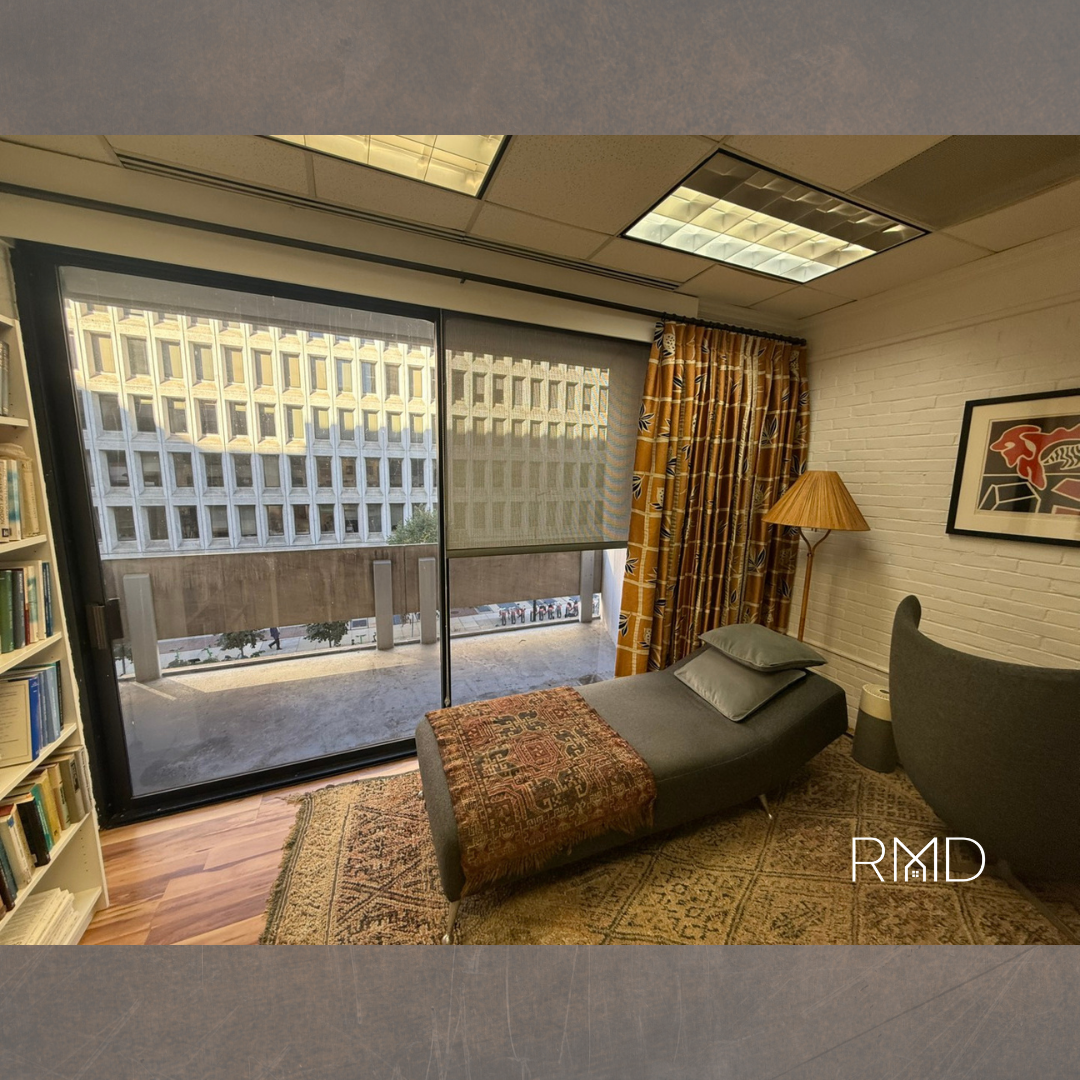
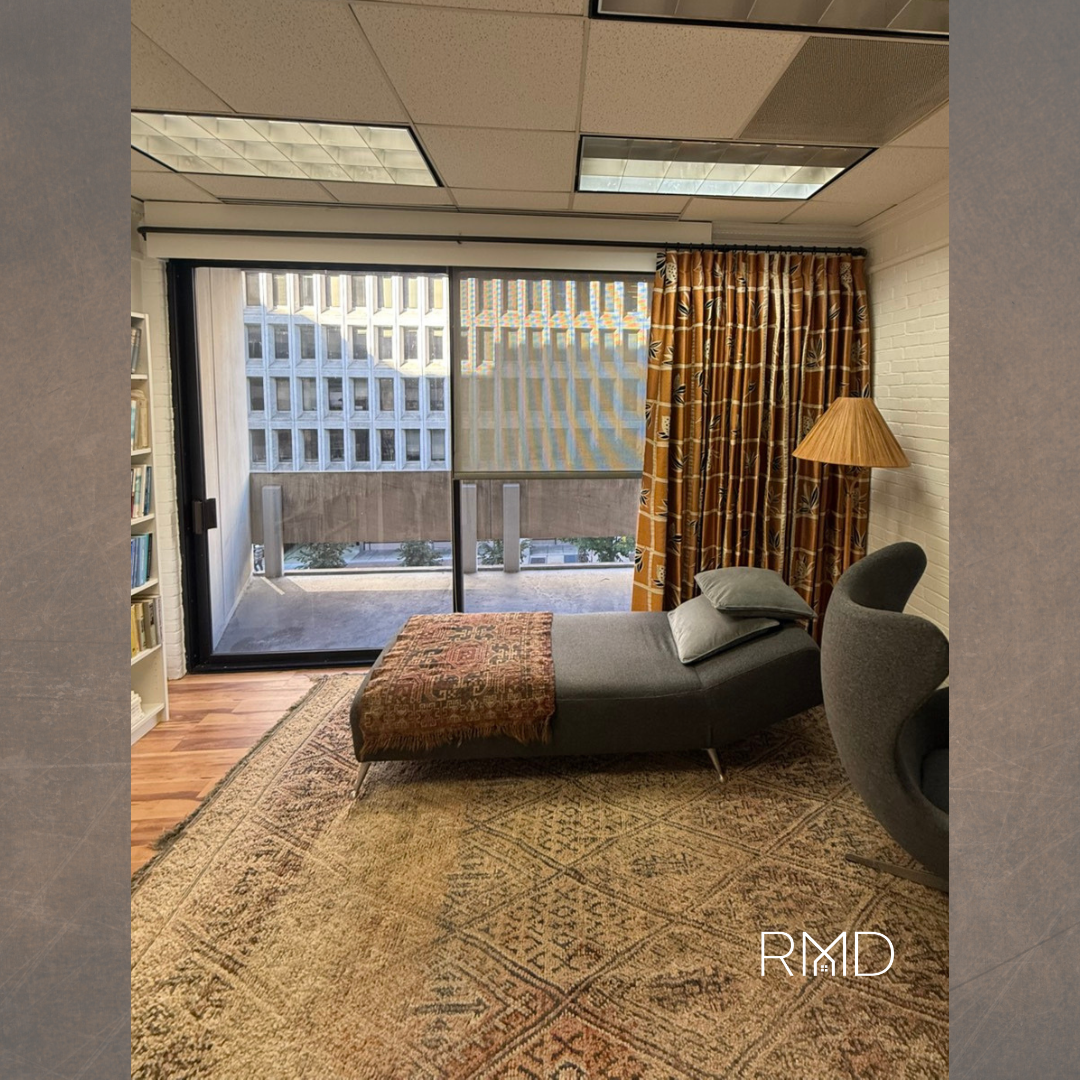
Our team recently created custom drapery for a therapy office, and the result shows how much a single window treatment can do. With careful choices in color, fabric, and fullness, the window now feels warm, open, and calm.
Begin with the light
Natural light is the most generous element in any office, and also the hardest to manage. A bare window lets in glare, heat, and the feeling of being seen from outside. A therapy space needs the opposite. Clients should feel private and unhurried, with daylight softening the room rather than interrupting it.
Drapery solves this gracefully. Drawn fully, it gives a session complete privacy. Drawn partly, it tempers the glare while keeping the room connected to the day. The window becomes a feature of the space instead of a source of distraction, and the practice can adjust the room for a bright morning client or a quiet late afternoon appointment.
Choose color that settles the room
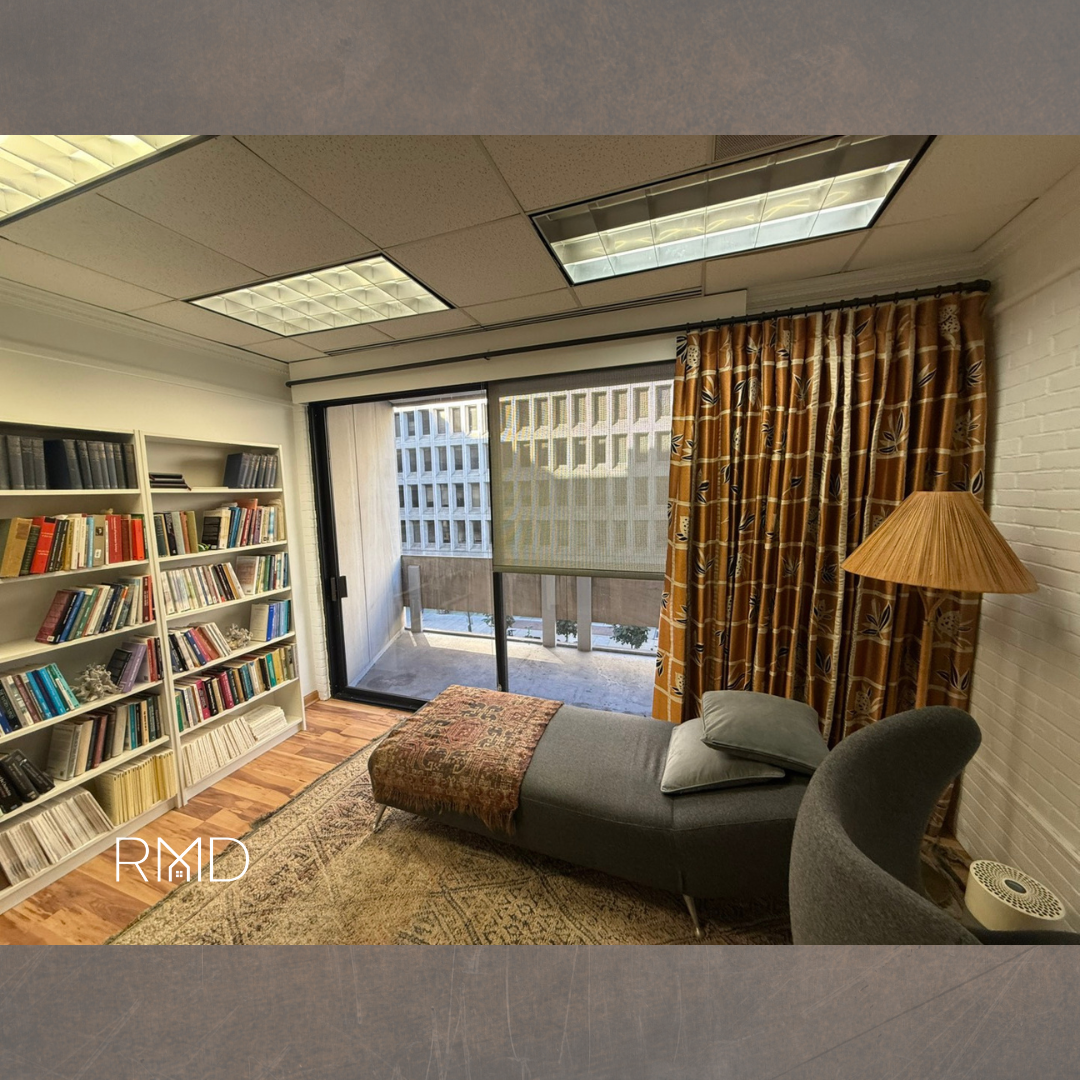
Color sets the emotional tone of a window before any other detail. Cool, stark colors can feel clinical. Rich, warm tones feel inviting. In this office, we chose an amber fabric with a leaf pattern and a soft grid, hung from a dark rod. The color reads as warm and golden in daylight, and it gives the window a feeling of welcome without raising the energy of the room.
The pattern matters as well. A soft, natural motif adds interest without demanding attention, and a gentle grid gives the fabric a calm, orderly rhythm. Bold color works best when it is chosen with intention, and one confident fabric at the window can warm an entire room.
Let fabric do the quiet work
Fabric changes how a room sounds and feels. Full drapery softens echo, which supports privacy and the sense that a conversation will stay within the room. The weight and fullness of the fabric give the window a finished, tailored look that bare glass cannot provide, and the movement of the folds adds softness to a hard edged opening.
Lining is one more choice worth considering. A lined panel hangs with more body, blocks more light, and adds to the feeling of calm. Our designers recommend a fabric and a lining based on the light the room receives and the level of privacy the practice needs.
Plan the window early
Window treatments are often chosen last, after the paint and the furniture. In a space where mood matters this much, they work best when they are planned early. Our designers look at the direction of the light, the size and type of the opening, the privacy a practice needs, and the colors already in the room. We then recommend a fabric, a hardware style, and a mounting that suit the way the room is used.
A few questions help us begin. How much privacy do your clients expect? Which hours does the room receive strong sun? Would a quiet motorized system make adjustments easier between sessions? Should the window feel like a focal point, or recede into the background?
Where craft meets planning
Every treatment begins in our workroom, where skilled artisans measure, cut, and assemble each piece to the exact window. Our installers then hang the work and walk the client through the controls. Every selection is put in writing for approval before anything is released to production, so the final result matches the plan.
If you are shaping a therapy office, a wellness practice, or any room where people need to feel at ease, our team would be glad to talk it through. Schedule a visit with our design team at www.rmdlux.com/appointment.
That's the RMD Way.