
When the Space Isn’t Straight: Designing Window Treatments for Architecturally Challenging Rooms
Not every space benefits from added visual weight. In some rooms, refinement comes from restraint.
This primary bedroom presented two architectural conditions that required a highly considered approach
A soffit terminating one end of the wall
An angled return on the opposite side
Early in the design process, we determined that introducing full drapery at the soffit wall would create unnecessary visual density and pull attention to an architectural condition that did not warrant emphasis.
Rather than amplifying the constraint, we chose to quiet it.
Designing With Intentional Restraint
The objective was not to mask the architecture, but to allow it to recede so the room could read as composed and calm.
This informed several key decisions
Limiting fabric where the ceiling condition already introduced complexity
Preserving a clean and uninterrupted ceiling line
Allowing the drapery to frame the space without becoming the focal point
Restraint, when applied deliberately, often results in the most elevated outcome.
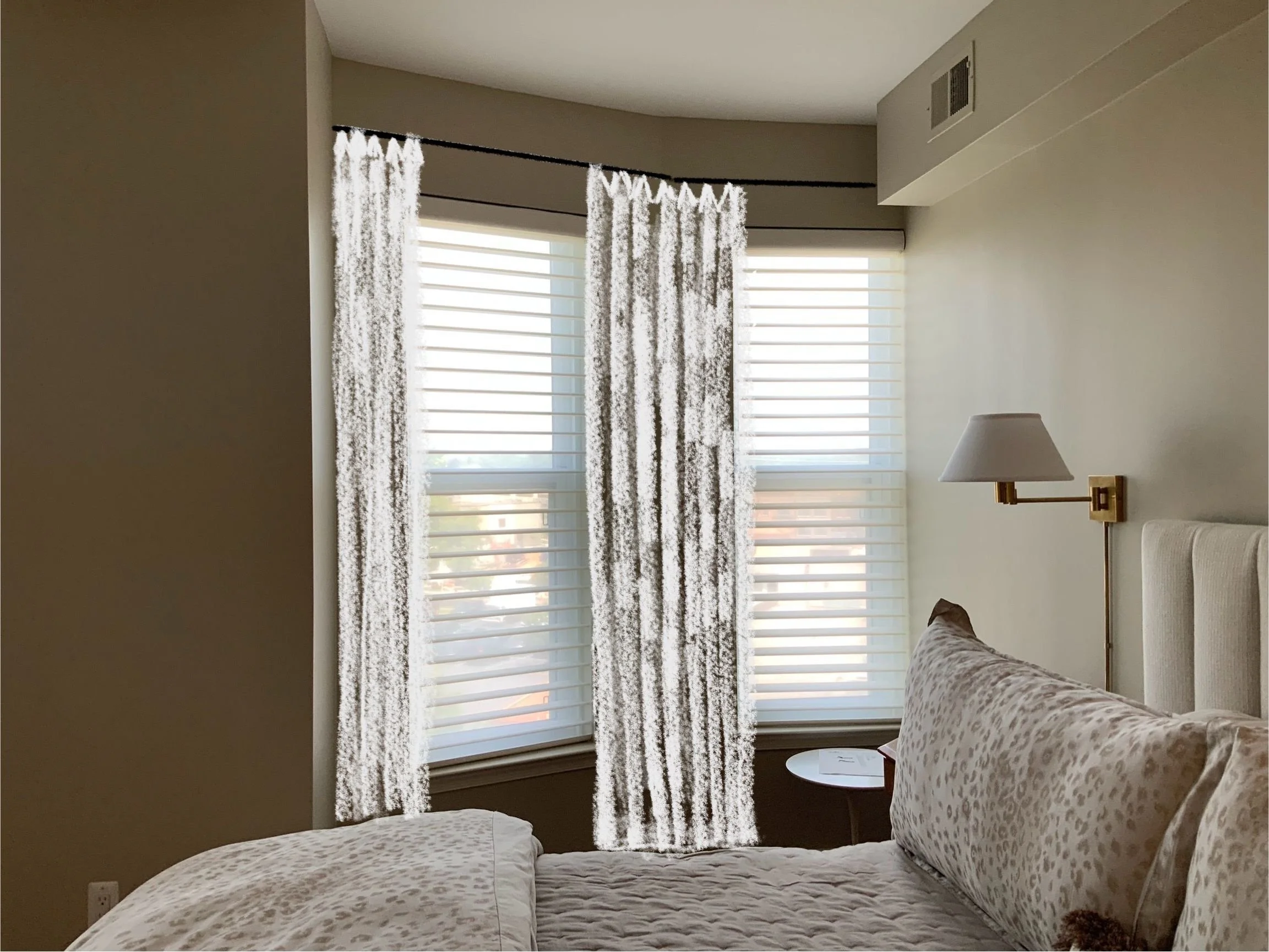
Visualizing the Strategy
Because the geometry of the room was unconventional, we developed a preliminary sketch to illustrate the proposed solution. This allowed the client to understand
How reducing visual activity at the soffit would create balance
How the angled wall could feel resolved without forcing symmetry
How the installation would read as intentional rather than reactive
This step ensured clarity and alignment prior to fabrication.
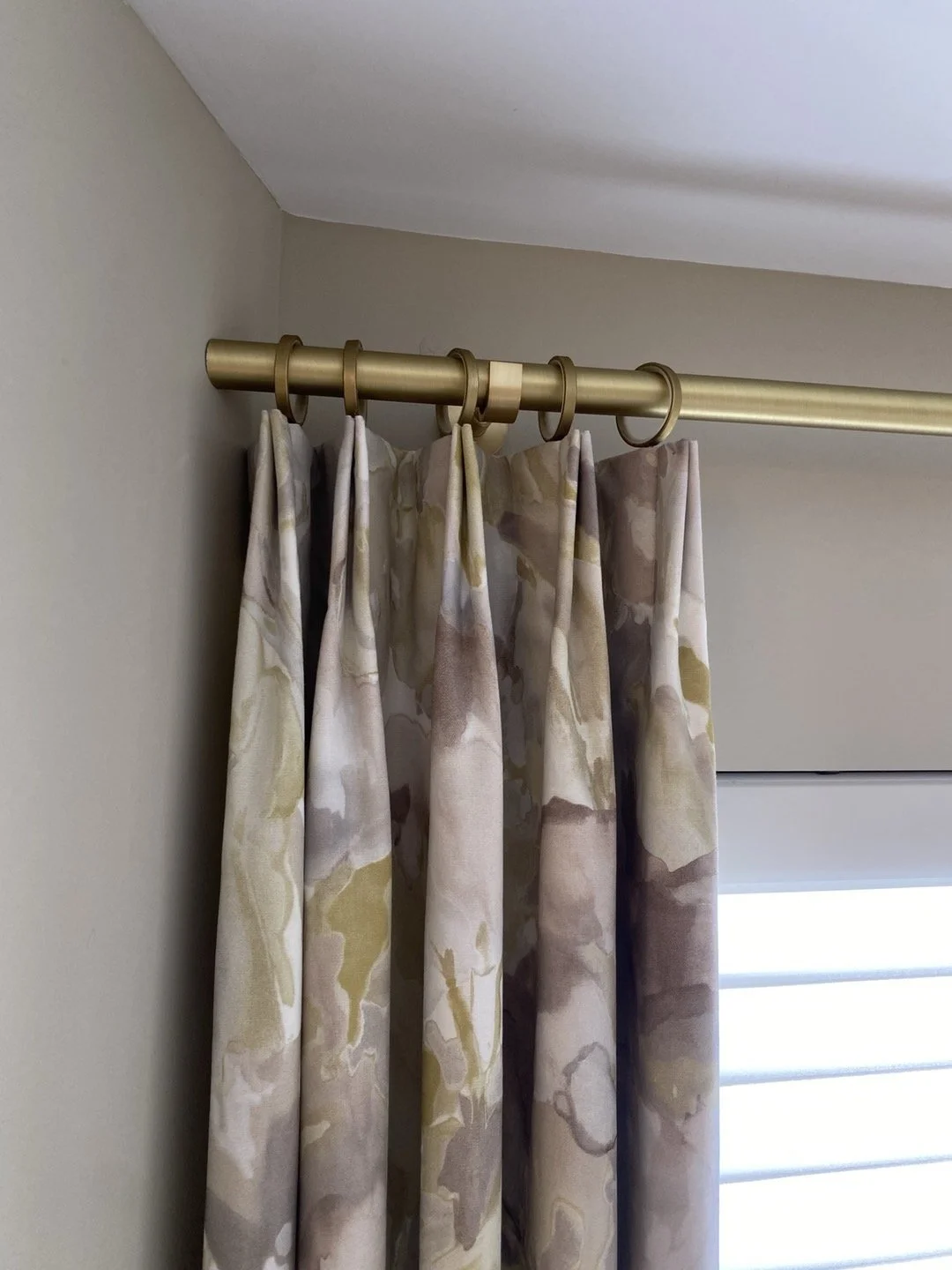
Precision Over Ornamentation
Every element of the installation was calibrated to support the architecture
Hardware placement was refined and purposeful
Drapery placement was selective and contextual
Transitions were designed to feel continuous rather than decorative
The goal was not to decorate the condition, but to design through it.
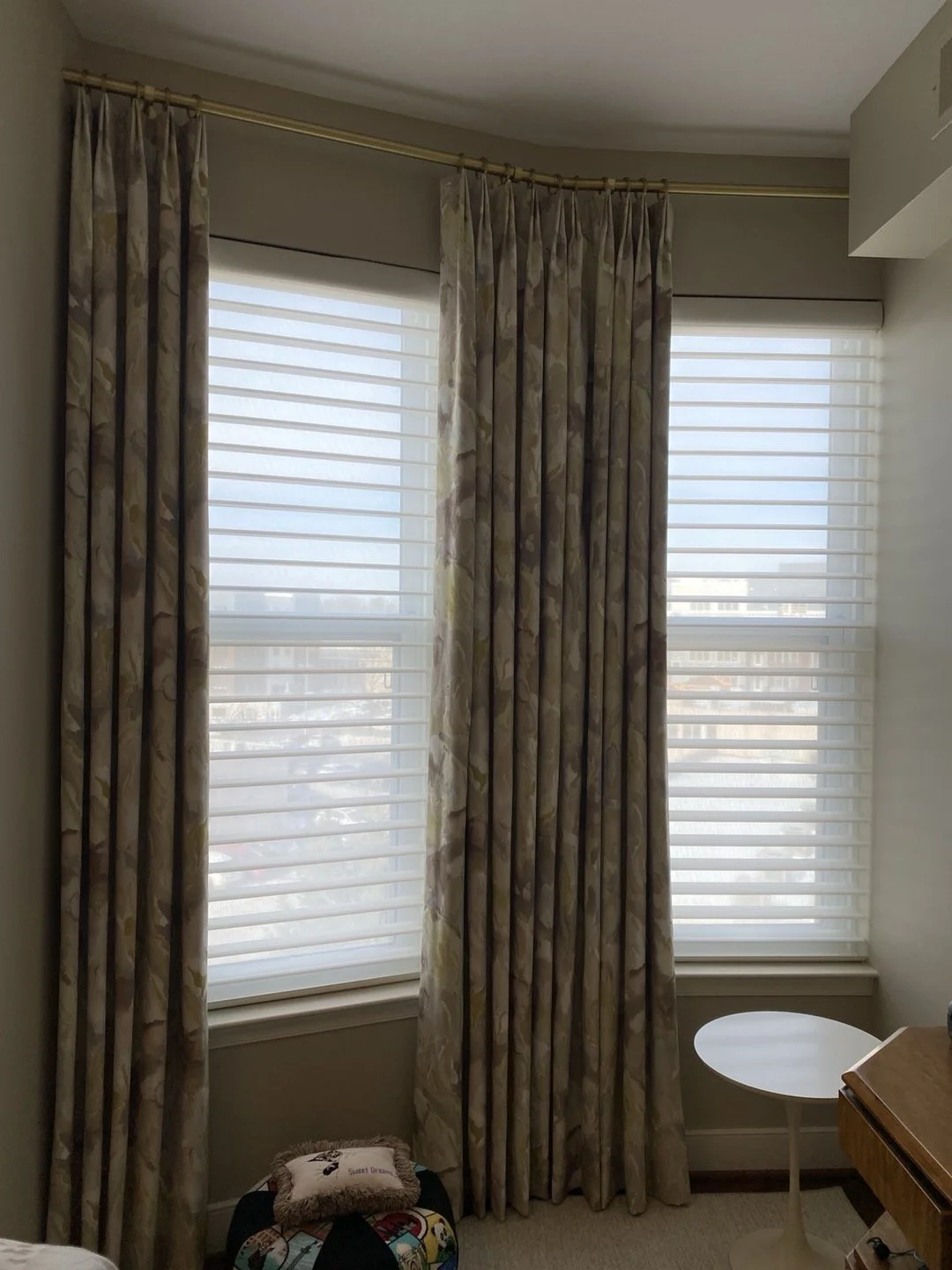
The Result Quiet Balanced and Considered
The soffit no longer reads as a focal point
The angle feels resolved rather than awkward
The room presents as cohesive and intentional
This is the difference between adding softness and adding noise.
When architectural constraints are present, the most successful solution is often not more fabric, more detail, or more movement. It is a clear point of view executed with restraint.
