
Layered Drapery Explained: Lining, Interlining & Blackout Options for Luxury Homes
When you see a beautifully finished drapery panel, what you’re noticing is not just the fabric.
You’re noticing structure.
You’re noticing engineering.
You’re noticing layers.
At RMD Luxury Window Treatments, layered drapery is not an upgrade. It is the standard. The difference between ready-made panels and true custom window treatments is what’s happening inside the construction.
If you’ve ever wondered why some draperies hang with weight and elegance while others feel thin or wrinkled, the answer is layering.
What Is Layered Drapery?
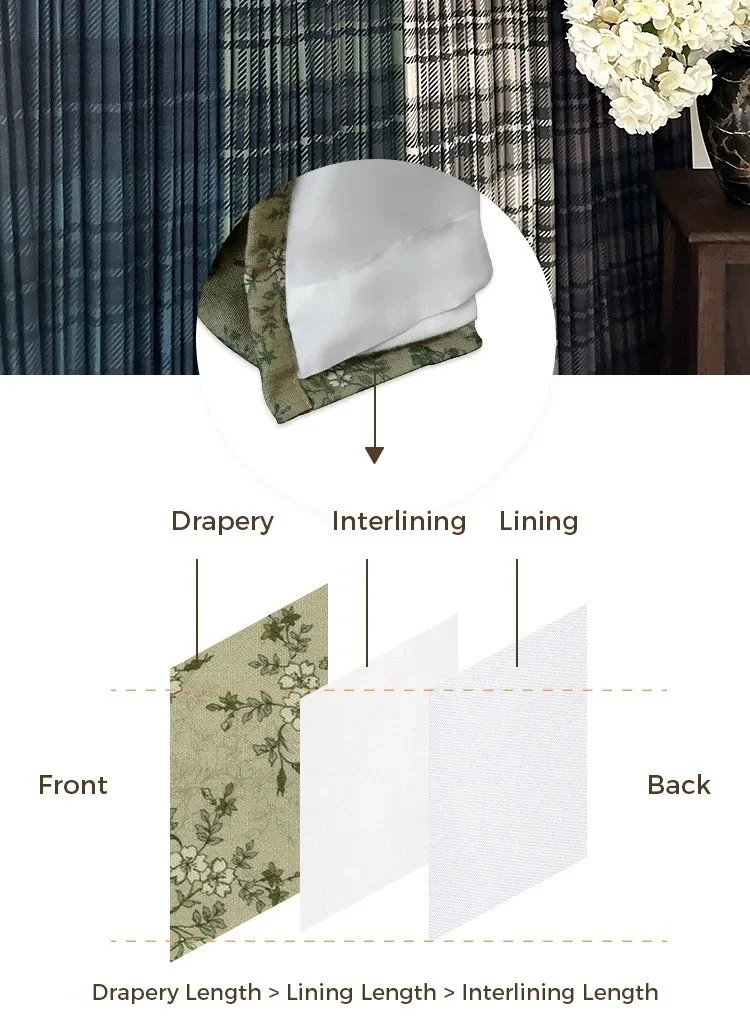
Layered drapery refers to the internal construction of a custom curtain panel. A professionally fabricated panel typically includes:
• Decorative face fabric
• Lining
• Optional interlining
• Structured header with buckram
• Weighted hems
• Hand-finished details
These layers determine how the drapery performs and how long it lasts.
Layering affects:
• Light control
• Insulation
• Sound absorption
• Fabric longevity
• Fullness and drape quality
• Overall luxury appearance
The Purpose of Drapery Lining
Lining is the functional backing attached to the back of the face fabric. In luxury custom drapery, lining is essential.
Why Lining Matters
Lining protects the face fabric from sun damage, reduces fading, and helps the panel hold its shape. It also improves privacy and gives the panel a fuller appearance.
Without lining, even high-end fabrics can deteriorate quickly in sun exposure.
Types of Drapery Lining
Standard Privacy Lining
Filters light while protecting the fabric. Ideal for living spaces.
Dim-Out Lining
Reduces light significantly but does not create full darkness.
Blackout Lining
Designed for maximum light control. Ideal for bedrooms, nurseries, and media rooms.
In bedrooms where light control is critical, blackout layering becomes a performance decision, not just a design choice. For example, in our Vincent Primary Bedroom project, light control was a key client goal Project Details Document.
What Is Interlining in Drapery?
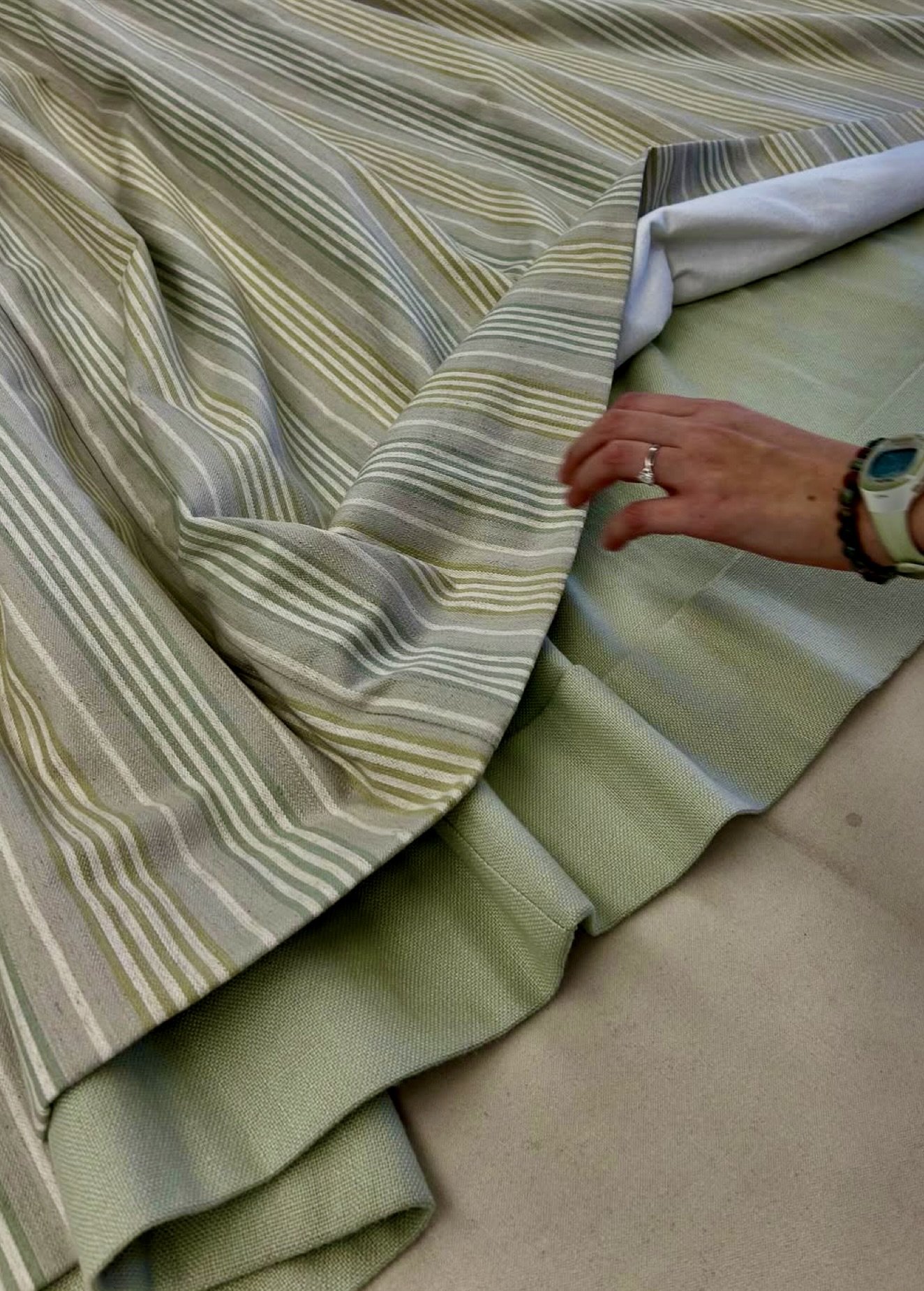
Interlining is an additional layer placed between the face fabric and the lining.
It is invisible once the panel is complete, but its impact is immediate.
Benefits of Interlined Drapery
• Adds body and weight
• Enhances fullness
• Improves insulation
• Softens light diffusion
• Increases acoustic absorption
• Creates a richer, more tailored look
Interlining is especially beneficial when using lightweight fabrics like silk or linen. It prevents limp panels and gives drapery a sculptural presence.
If you’ve ever walked into a space and thought, “These drapes feel substantial,” you were likely looking at interlined drapery.
Blackout Drapery: What Most Homeowners Don’t Know
Blackout is not just about fabric. It’s about construction.
True blackout performance depends on:
• Lining type
• Mounting height
• Return depth
• Overlap between panels
• Hardware placement
• Installation precision
Even the best blackout lining will fail if installation is not executed properly.
That is why our structured Final Measure process verifies architectural conditions before fabrication begins RMD Way (AI Summary with Asana ….
Layering must align with installation planning for optimal performance.
Why Hand Stitching Still Matters in Luxury Drapery
In custom workroom fabrication, certain elements are intentionally hand-finished.
These include:
• Blind hems
• Weighted corners
• Pattern matching
• Interlining tack points
• Specialty trim application
• Invisible return stitching
Hand stitching prevents distortion in delicate fabrics and maintains a clean, seamless finish from the front.
Machine-only construction often leaves visible puckering, tension lines, or compromised pattern alignment. True luxury drapery requires artisan craftsmanship.
Additional Layering Decisions That Impact Performance
Every custom drapery project involves technical decisions that affect the final result.
Fabric Weight
Lightweight linen requires different support than velvet.
Pleat Style
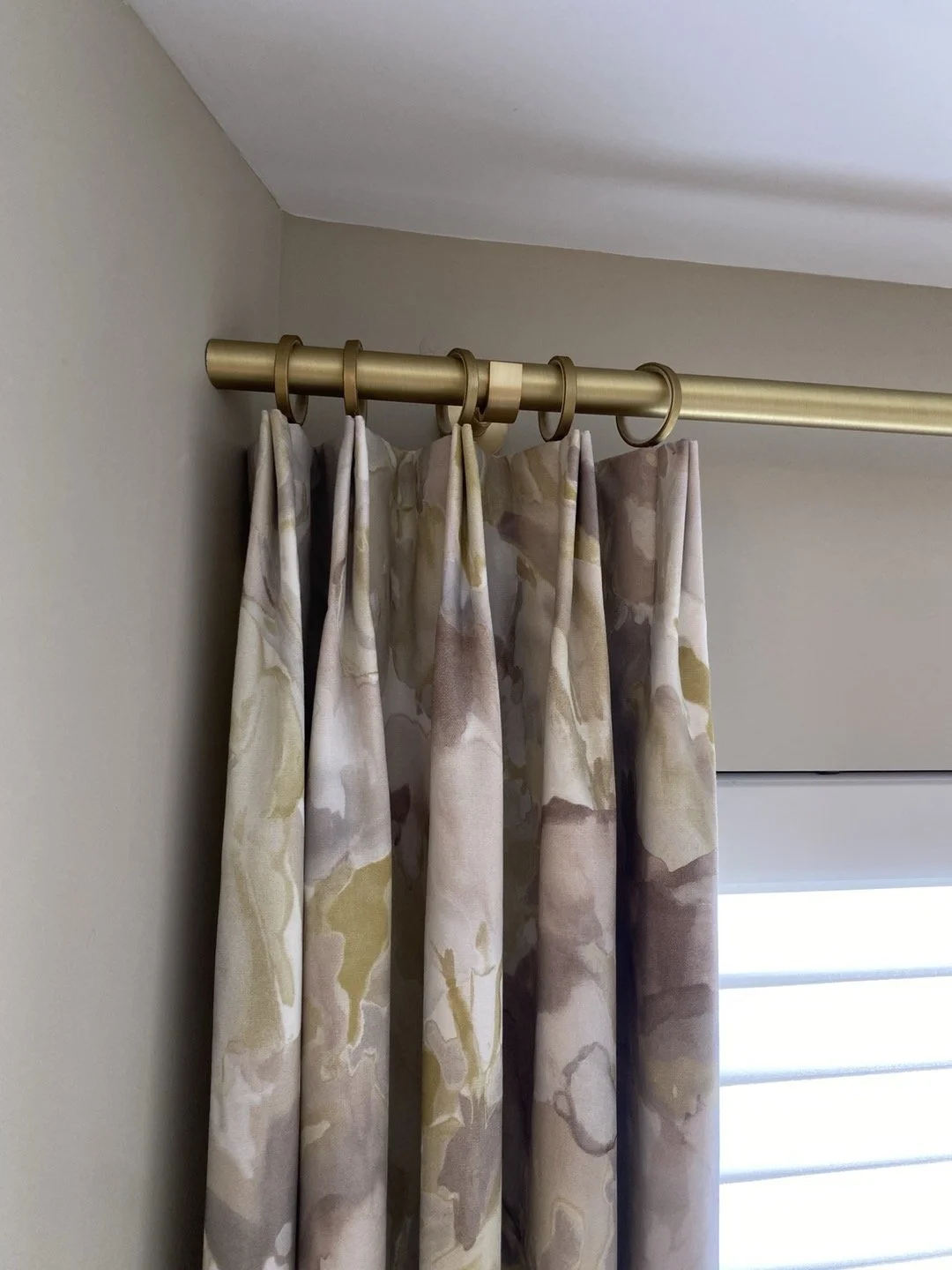
Pinch pleat, ripplefold, goblet, and cartridge headers each require specific internal construction.
Traversing vs Stationary Panels
Traversing panels need reinforced headers and precise engineering to ensure smooth operation.
Ceiling Height and Mounting Depth
Final measurements verify these architectural conditions before production. Layering decisions are always made in context with the room’s architecture and function.
The Difference Between Custom Drapery and Ready-Made Curtains
Mass-produced curtains often skip:
• Interlining
• Weighted hems
• Quality lining
• Hand finishing
• Proper header reinforcement
The result can include:
• Wrinkling
• Curling edges
• Fading
• Light leakage
• Uneven stacking
Layered custom drapery is engineered to perform for years.
How RMD Luxury Window Treatments Approaches Drapery Layering
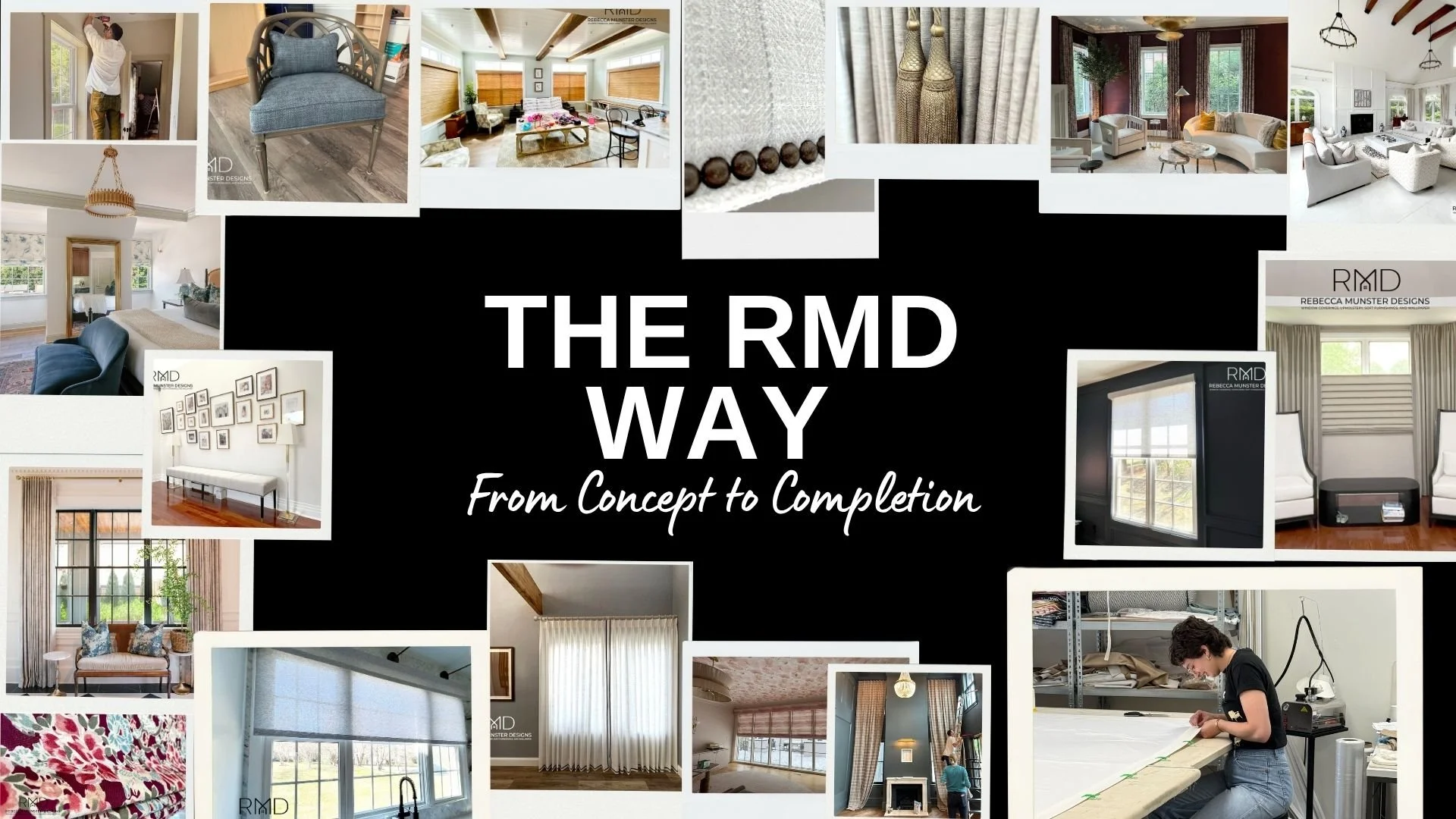
Our structured process ensures every layering decision aligns with design intent and installation reality.
From sales consultation to workroom packet preparation and installation planning, every layer is documented and reviewed before fabrication RMD Way;
Because drapery is not simply decorative fabric. It is architectural soft goods.
It is insulation. It is light control. It is craftsmanship. It is performance.
Considering Custom Layered Drapery?
If you are designing a primary bedroom, living space, or full-home window treatment plan, understanding lining, interlining, and blackout construction will help you make informed decisions that elevate both function and beauty.
If you would like expert guidance on selecting the right drapery construction for your home, schedule a consultation with RMD Luxury Window Treatments.
We design and fabricate custom draperies in our workroom, engineered for performance and tailored to your space.
Why the Best Luxury Homes Are Built by Design Teams Not Vendors
Luxury interior design collaboration with custom window treatments
When a home truly feels finished not just beautiful but calm intentional and effortless it is rarely the result of a single decision or a single provider.
It is the result of a team.
In luxury residential design the most successful projects are never built in silos. They come together through thoughtful collaboration between interior designers builders artisans installers and specialty partners who understand their role in the bigger picture. At RMD Luxury Window Treatments we see this every day. The homes that feel the best are the ones where the right partners are aligned from the start.
The Difference Between a Vendor and a Partner
A vendor delivers a product.
A partner protects a vision.
Vendors focus on transactions, pricing, lead times and fulfillment. Partners focus on outcomes, how the space works, how it feels and how every decision supports the client’s lifestyle.
When window treatments are treated as an isolated purchase the results often fall short. Measurements get rushed. Installation details are overlooked. Design intent gets diluted. The space looks done, but it does not feel complete.
When window treatments are integrated through a collaborative team everything changes.
Collaboration Is What Protects the Homeowner
For homeowners collaboration is not just a design philosophy: it is protection.
A coordinated team reduces costly mistakes and rework, anticipates challenges before they become problems, maintains consistency from design through installation, and preserves the emotional experience of the project.
This is especially critical with window treatments which touch light privacy comfort acoustics and energy efficiency all at once. These elements do not live on a spec sheet. They live in daily life.
When designers and window treatment partners work in sync the result is not just a beautiful room but one that supports how the client actually lives in it.
Why Designers Choose Long Term Partners
Interior designers do not partner lightly. Their reputation is built on execution not just vision.
The designers we work with value partners who understand the design intent and respect it, communicate clearly and proactively, document decisions and details, take ownership from measure through install, and show up professionally in their client’s home.
Strong partnerships allow designers to stay focused on creativity and client relationships knowing the execution is handled with the same level of care.
The RMD Approach Built for Teamwork
At RMD Luxury Window Treatments we do not position ourselves as a standalone vendor. We operate as an extension of the design team.
Our process is intentionally structured to support collaboration. Clear documentation from design through production. Final measures performed with installation in mind. In house craftsmanship for greater control and quality. Installation standards that respect the home and the client experience. Ongoing communication that keeps everyone aligned.
This approach allows designers to trust that what was envisioned on paper is what will be experienced in the space.
Why We Are Selective About Partnerships
Not every project and not every partnership is the right fit.
We intentionally work with designers, builders and trade professionals who value process, communication and shared accountability. This selectivity is not about exclusivity for its own sake. It is about protecting outcomes for our partners and for the homeowners they serve.
When the right team is assembled the home benefits.
The Result Homes That Feel As Good As They Look
The best homes do not just photograph well. They feel settled, calm and finished.
That feeling comes from alignment between vision and execution, between design and craftsmanship, and between everyone involved in the process.
Homes built by teams do not just look better.
They live better.
Interested in collaborating with a window treatment partner who understands teamwork at this level?
We would love to explore whether our Tiered Trade Program is the right fit for you.